521 - Outcomes of Distal Tibia or Tibia and Fibula Osteotomy in the Treatment of Idiopathic Tibial Torsion
Monday, April 27, 2026
8:00am - 10:00am ET
Publication Number: 4509.521
Eddie Geagea, Nemours Children's Hospital, Orlando, FL, United States; Sam Hovland, University of Central Florida College of Medicine, Orlando, FL, United States; Jason Malone, Nemours Children's Hospital, Orlando, FL, United States
Research Fellow Nemours Children's Hospital Orlando, Florida, United States
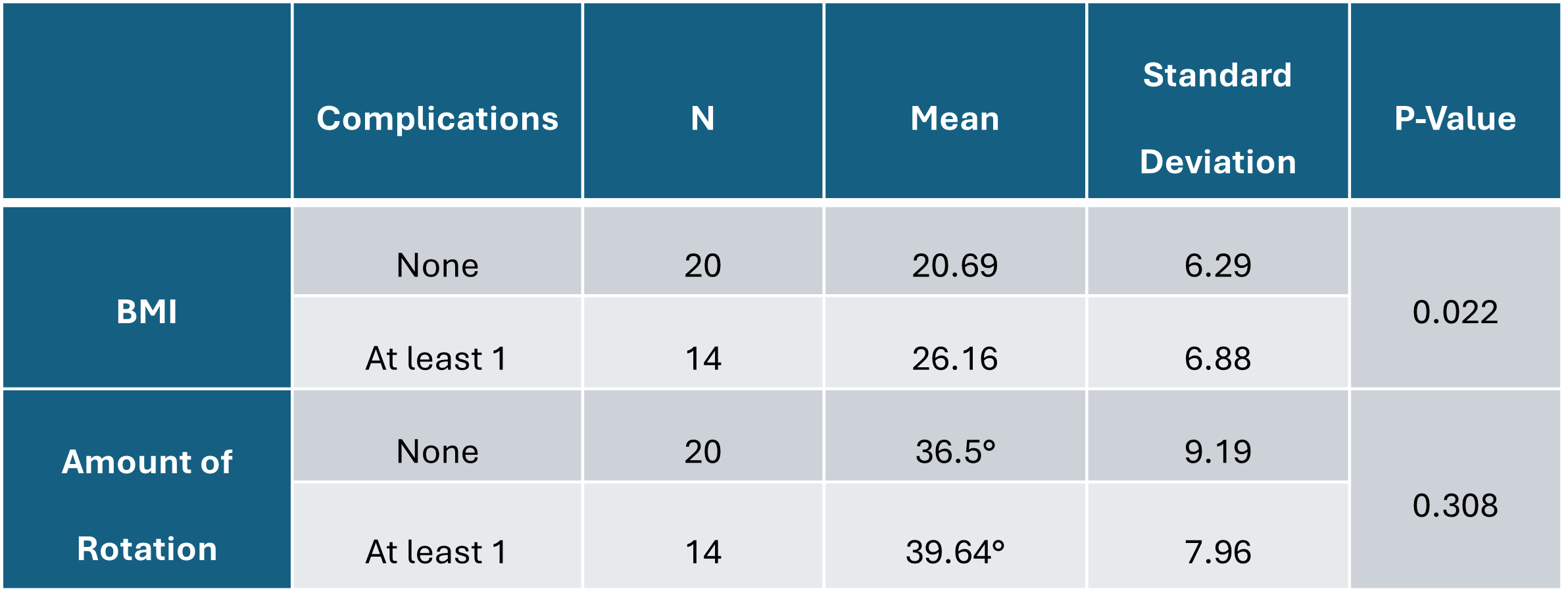
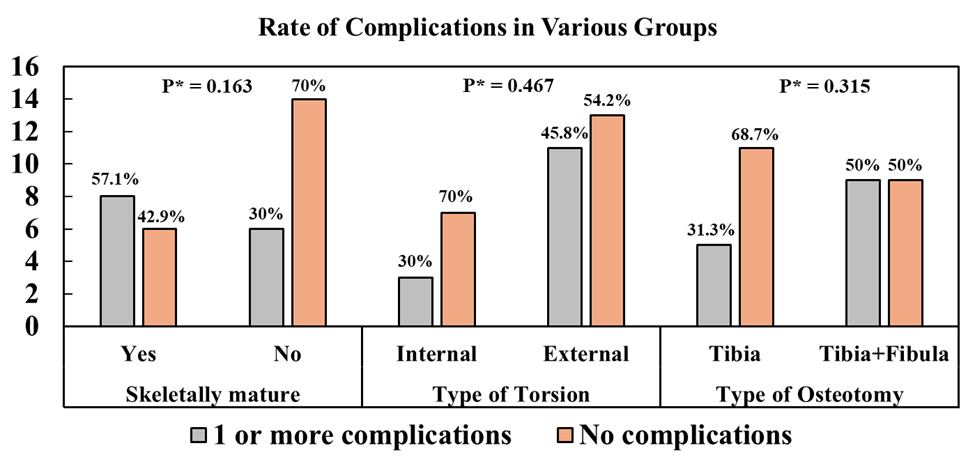
Background: Congenital tibial torsion is the rotation of the tibia in an internal or external direction throughout childhood. Theoutcomes in patients undergoing distal tibia osteotomy with isolated idiopathic tibial torsion (ITT) without syndromes or multipledeformities are not well studied. Objective: Because this procedure is common, defining outcomes can better prepare patients and physicians for postoperative expectations. Design/Methods: A retrospective case series on patients treated through a pediatric health system. Inclusion criteria: ITT treated with distal tibia osteotomy and distal tibia-fibula osteotomy from 2012-2022. Exclusion criteria: multiple deformities, any syndromes, prior infection, tumor, prior orthopedic surgery, or fracture. Demographic variables were collected. Complications were compared with univariant analysis using a Chi-square test. These groups were defined as Type of tibial torsion, osteotomy performed and skeletal maturity at time of operation. Results: 29 patients (34 limbs) met inclusion criteria. 11 females and 23 males. The mean BMI was 22.94, mean age at surgery was12 years old, mean surgical time 109.5 minutes, mean follow up 10 months, and the mean rotation 37.8°. Fifteen complications in14 limbs. 5 nerve complications, 5 wound complications. 11.8% major complication rate and an overall complication rate of 41.2%.BMI greater than 26.16 had a risk of at least 1 complication P-value of 0.022. Amount of rotation did not increase of complications in this study. 30% of patients with internal tibial torsion had at least one complication post-operation and 45.8% of patients with external torsion had at least one complication. 57.1% of skeletally mature patients had at least one complication.
Conclusion(s): Distal tibia and fibula osteotomies for ITT are generally safe procedures but not without risk. Increased BMI is correlated with complications while the amount of rotation was not correlated with increased complication rate. Skeletally mature patients had higher complications rate. Overall, it's relatively a safe procedure with a major complication rate of 11.8% and an average follow-up time of less than a year. This is the largest cohort with ITT undergoing distal tibia or tibia-and-fibula osteotomy without concurrent diagnosis of any syndromes or multiple deformities. Surgeons should be aware of the increased risk of complications in patients with elevated BMI. As all previous studies include patients with cerebral palsy, multiple-deformities, or other syndromes, this study provides practicing physicians with further insight on a population that has not yet been studied.
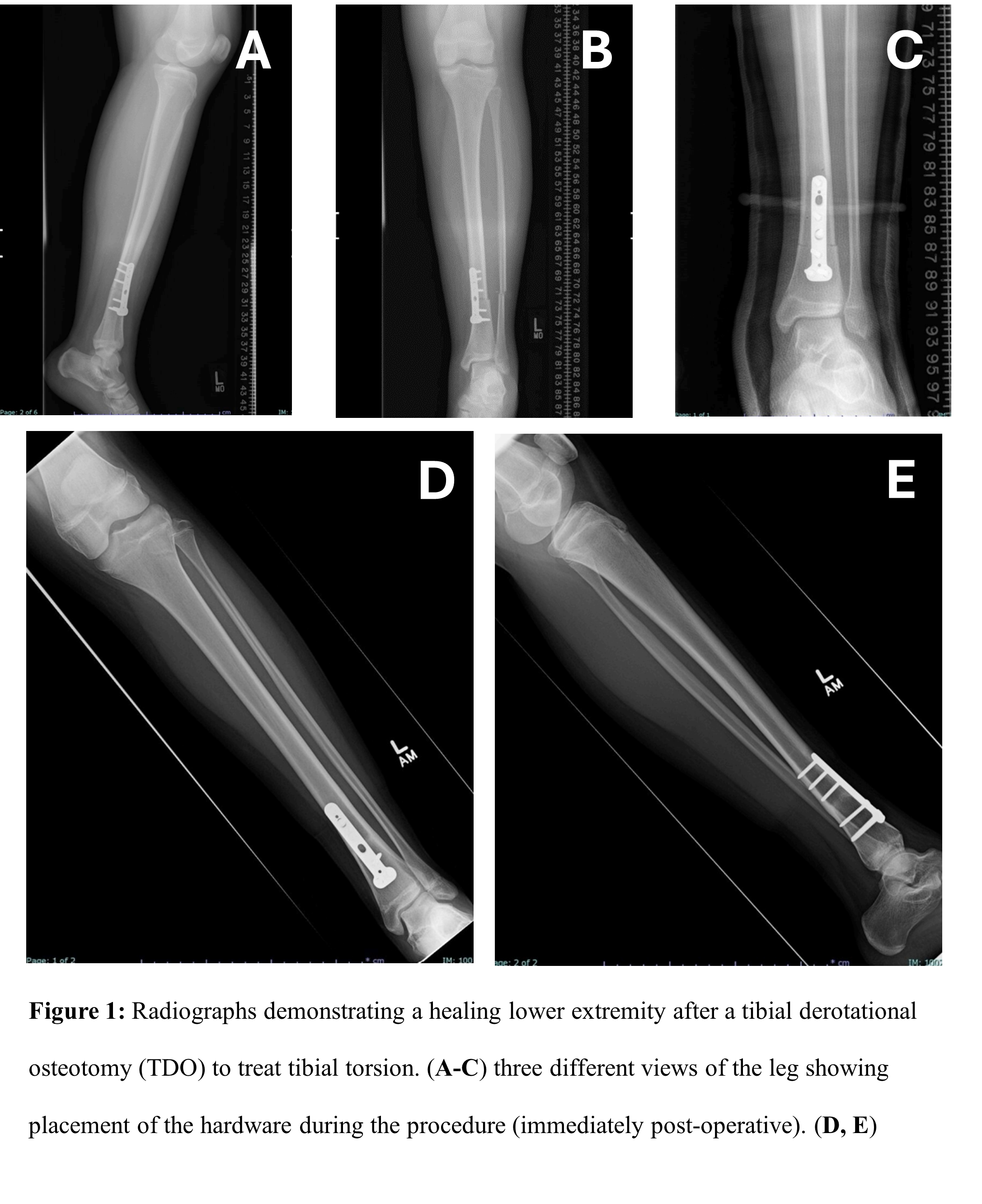
Radiographs demonstrating a healing lower extremity after a tibial derotational osteotomy (TDO) to treat tibial torsion
The effect of BMI and the amount of rotation performed during surgery on number of complications. Mean, standard deviation, and P-value are demonstrated. Equal variance was assumed for all variables.
Graph illustrating the effect of being skeletally mature, type of torsion, and type of osteotomy on the number of complications found with each category. Equal variance was assumed for these values.