578 - MicroSim: Educational assessment of novel short, targeted in-situ simulation in a tertiary NICU
Sunday, April 26, 2026
9:30am - 11:30am ET
Publication Number: 3559.578
Laura Ryan, National Maternity Hospital Dublin, Dublin 6W, Dublin, Ireland; Elizabeth H. Murphy, The National Maternity Hospital, Dublin, Dublin, Ireland; Carmel Maria. Moore, National Neonatal Tranport Team, Dublin, Dublin, Ireland; Linda Smiles, The National Maternity Hospital, Dublin, Dublin, Ireland; Anna Curley, NMH, dublin, Dublin, Ireland; Eoin O Currain, National Maternity Hospital, Dublin, Dublin, Ireland
Neonatal Research Fellow National Maternity Hospital Dublin Dublin 6W, Dublin, Ireland
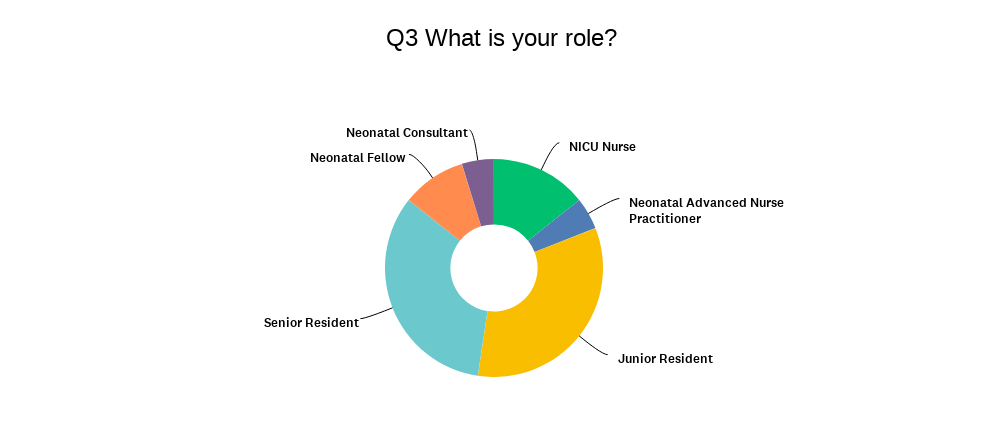
Background: Simulation-based education (SBE) is increasingly accepted for neonatology training, with focus now on optimising its delivery. We carried out a national survey, which identified time constraints as the greatest barrier to accessing SBE, leading to this pilot study of a novel solution. Objective: To evaluate the feasibility of 'MicroSim' as an educational resource: whether this novel format can improve training engagement in a busy neonatal intensive care unit without compromising training standards. Design/Methods: A national needs assessment survey, disseminated online October 2024, was designed by experts in neonatology/SBE, with learner input to ensure clarity and relevance. Development of the 'MicroSim' was through iterative process with experts and intended learners for content validity and integration of educational principles, guided by a constructivist educational framework and aligning with Bloom's taxonomy. Three sample 'MicroSims' were created: short, targeted simulations, lasting a maximum of 20 min (10 min each scenario/debriefing). A pilot study was carried out to evaluate feasibility: length of simulation, learning objective coverage analysis and learner feedback survey. Results: National survey (response rate 181/342 51%): 98/181(54%) felt current available SBE met training requirements, 121/181(67%) chose time constraints as the greatest barrier. Pilot study: 21 participants June-August 2025 (see Fig. 1). All learners completed SBE uninterrupted during clinical shifts. The mean length was 15.9 minutes (8.7 min scenario, 7.2 min debriefing). The longest simulation was 20 min, shortest was 13 min. Debrief times were 44% of the total simulation time (28% shortest, 58% longest). Learning objectives coverage analysis demonstrated substantial achievement of intended outcomes across both the simulation scenario and debrief. All (21/21) learners found 'MicroSims' useful for learning, of appropriate duration and preferable compared with traditional simulation, agreeing that they would be more likely to attend this format. Thematic analysis of interviews demonstrated that this format was better for time management, skill acquisition, increased engagement in and frequency of training, and that the debriefing sessions were more focused and tailored to the individual learners.
Conclusion(s): This study demonstrates that the 'MicroSim' format is a feasible educational intervention. All sessions were within the target timeframe, without sacrificing opportunity for thorough debriefing.