Session: Neonatal General 6: ID/Immunology/Renal/Genetics
462 - Predictive Value of Neonatal Infection Risk Factors, Antibiotic Initiation, and Sepsis Incidence in a Ten-Year Cohort of Respiratory Adaptation Failure
Saturday, April 25, 2026
3:30pm - 5:45pm ET
Publication Number: 2450.462
Outi Aikio, Oulu University Hospital, Oulu, Pohjois-Pohjanmaa, Finland; Satu Pesonen, University of Oulu, Oulu, Pohjois-Pohjanmaa, Finland; Anne-Maija K. Pitkänen, Institution University of Oulu, Oulu, Finland, Kemijärvi, Lappi, Finland; Dina Varlamova, Oulu University Hospital, Helsinki, Uusimaa, Finland
Specialist in Pediatrics and Neonatology Oulu University Hospital Oulu, Pohjois-Pohjanmaa, Finland
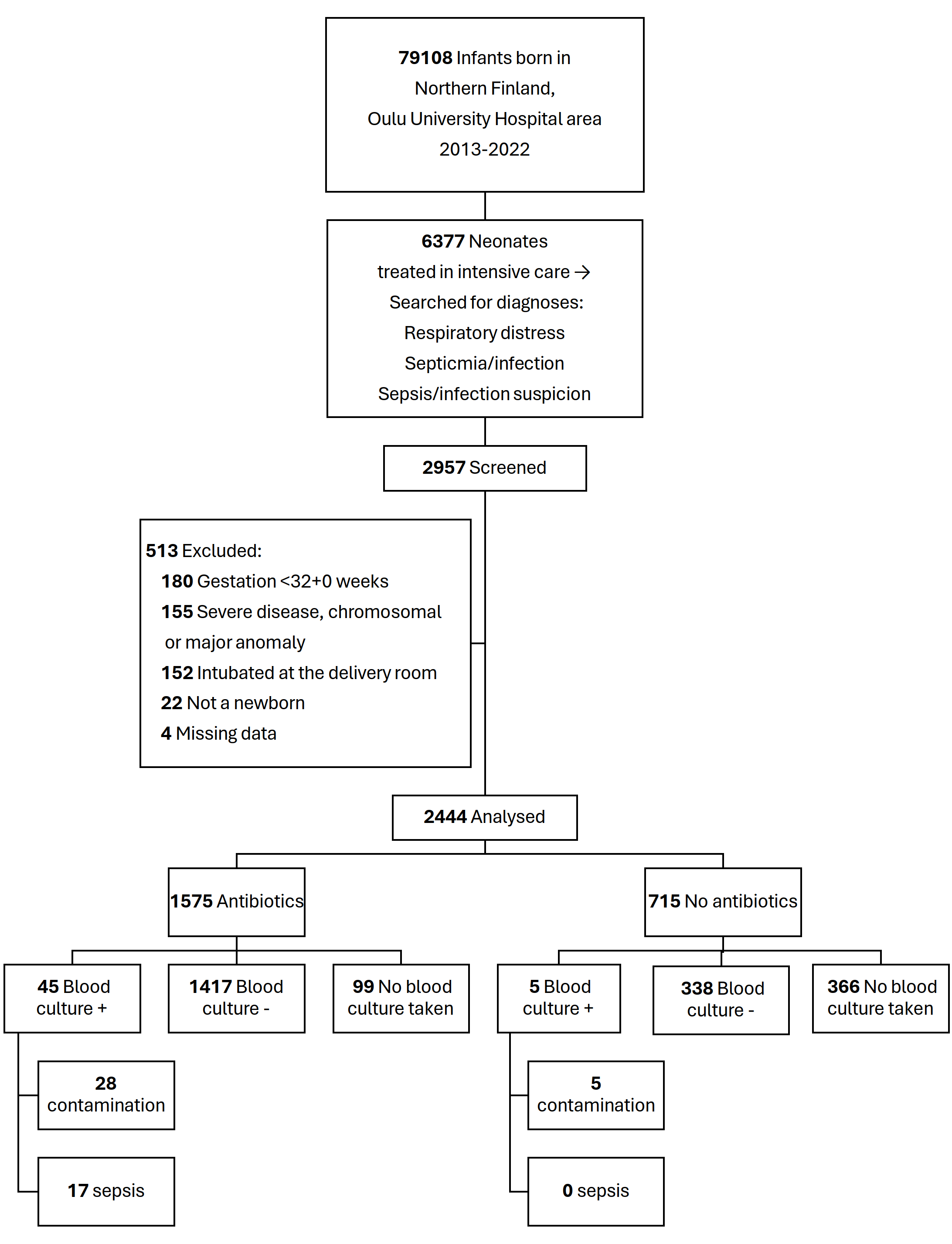
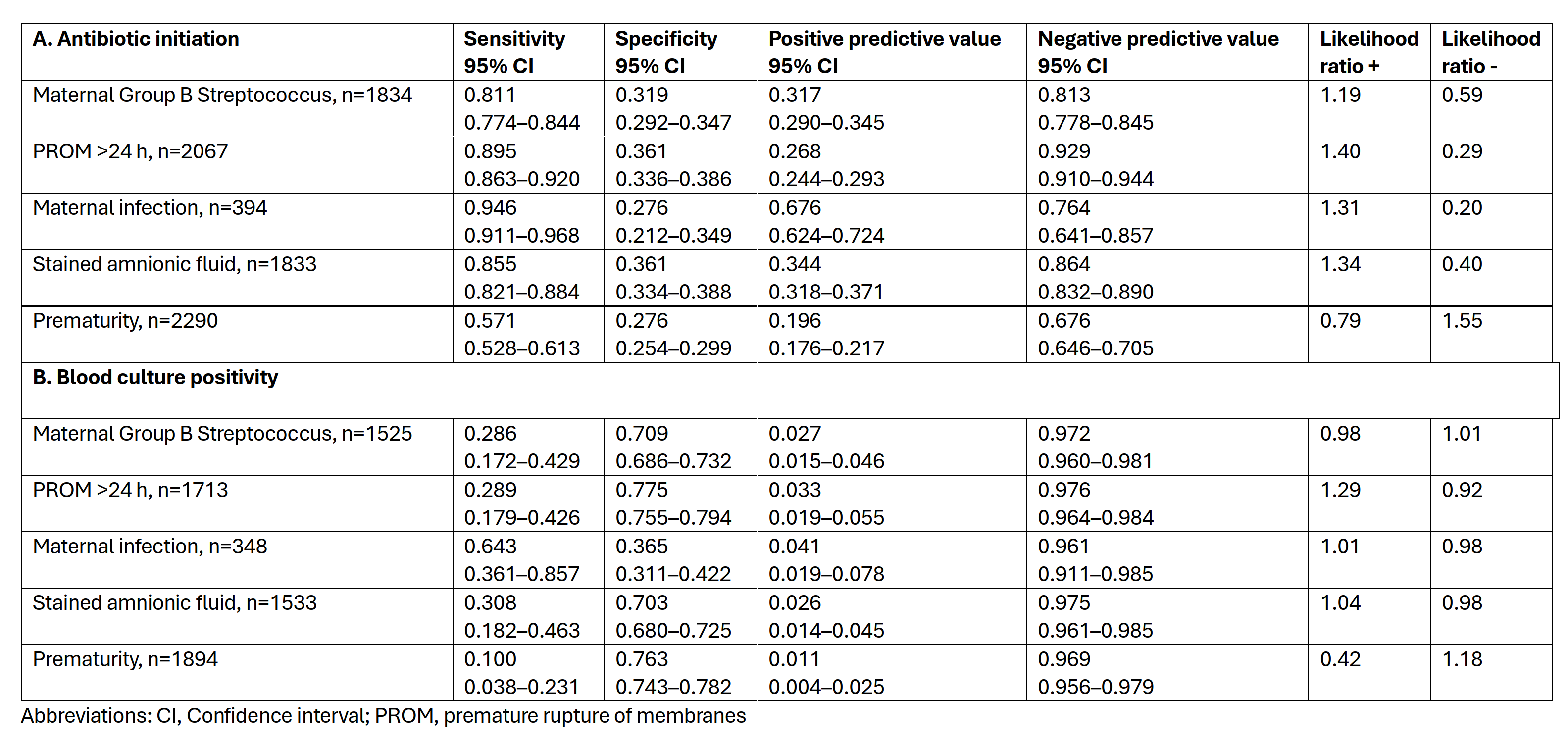
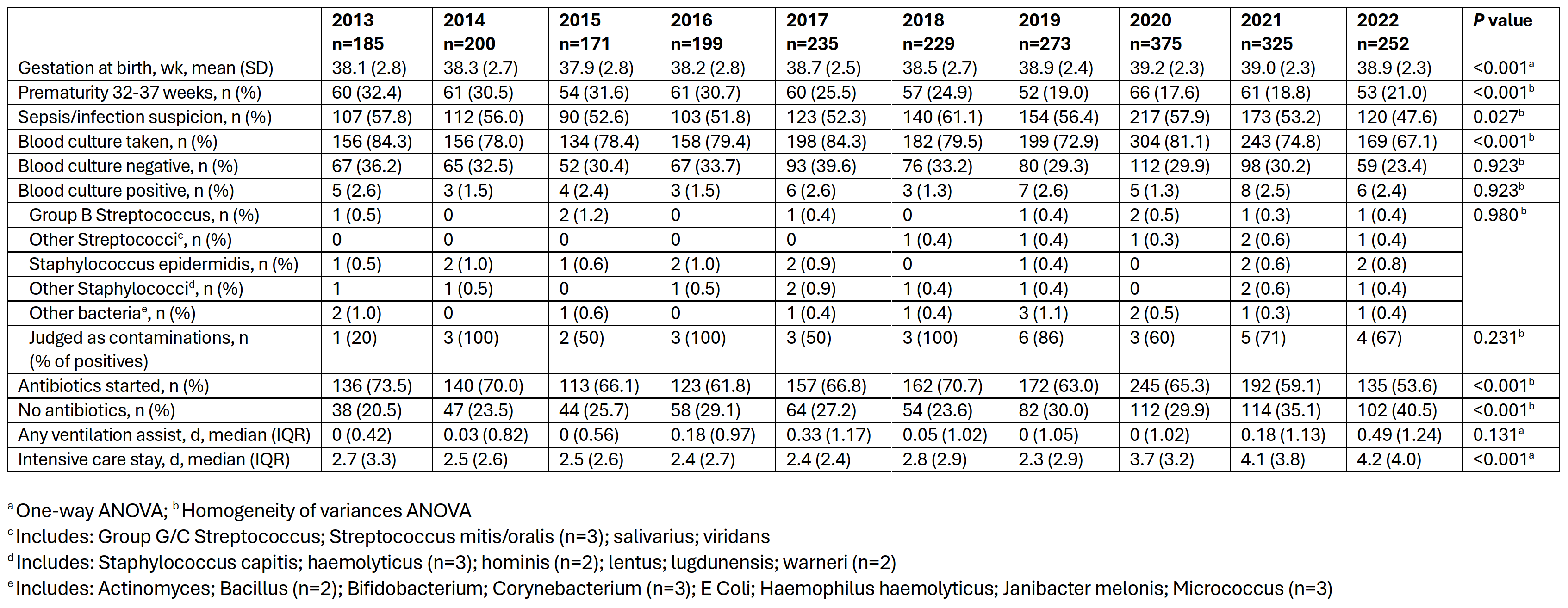
Background: Neonatal adaptation failure is the leading indication for admission to intensive care. Current guidelines recommend antibiotics for neonates with respiratory symptoms and infection risk factors, such as maternal infection signs, antibiotics, Group B Streptococcus (GBS) colonization, premature rupture of membranes (PROM), meconium-stained amniotic fluid, and preterm birth. While antibiotic use is widespread in neonatal intensive care, data on the predictive value of these risk factors for sepsis are limited. However, recent studies link early antibiotic exposure to long-term adverse outcomes via gut microbiome disruption and raise concerns about antibiotic resistance. Objective: To investigate antibiotic use, diagnostic accuracy of infection risk factors, and outcomes of neonates with respiratory adaptation failure over a ten-year period in intensive care. Design/Methods: This retrospective cohort included neonates admitted to Neonatal Intensive Care Unit (NICU) of Oulu University Hospital, Oulu, Finland, between I/2013 and XII/2022, due to respiratory distress and/or suspected infection/sepsis. Exclusion criteria were gestational age < 32+0 wk, severe respiratory distress requiring delivery room intubation, major anomalies, chromosomal disorders, and other severe diseases. After approvals, data were retrieved from the NICU database (Clinisoft®), and patient records (Esko®, Ipana®) were manually reviewed for infection risk factors, neonatal symptoms, findings, treatments, and diagnoses. Results: During 2013-2022, of 79108 newborns in Northern Finland, 6377 (8.1%) required intensive care (Figure). After diagnostic review, 2957 records were screened; 513 excluded, leaving 2444 cases (3.1%). Of these,1575 received antibiotics and 715 did not. 50 (2.0%) had positive (+) cultures and 17 (0.7%) were judged as true sepsis. The antibiotic-exposed had more often maternal infections (P <.001) and GBS (P <.001). Infants without antibiotics needed more respiratory support (P=.034) but were discharged earlier (P=.002). Most risk factors significantly predicted antibiotic use (ORs from 1.389 to 18.634), except PROM>7 days and preterm birth. Infection risk factors poorly predicted culture+ sepsis (Table 1). Over the study period, rates of respiratory adaptation failures, culture+ septicemias and negative culture findings remained stable, while suspected sepsis cases and antibiotic initiations declined (Table 2).
Conclusion(s): Antibiotics were widely used, yet culture+ sepsis was rare. Infection risk factors showed low diagnostic accuracy. Antibiotic strategies should be re-evaluated, and more precise diagnostics are needed.
Figure. Flowchart of the study population.
Table 1. Diagnostic accuracy of infection risk factors for A. Antibiotic initiation; B. Blood culture positivity
Table 2. Outcomes of the neonatal cohort treated in intensive care for adaptation failure during 2013-2022 (n=2444)