631 - Timing and Duration of Intranasal Insulin Treatment Differentially Alters Gene Expression Pathways in the Developing Hippocampus of Iron Deficient Rat Pups.
Friday, April 24, 2026
5:30pm - 8:00pm ET
Publication Number: 1608.631
Kathleen M. Ennis-Czerniak, University of Minnesota, Woodbury, MN, United States; Luke Carlson, University of Minnesota Medical School, Minneapolis, MN, United States; Thomas Bastian, University of Minnesota Medical School, Minneapolis, MN, United States; Raghavendra Rao, University of Minnesota Medical School, Minneapolis, MN, United States
Researcher University of Minnesota Woodbury, Minnesota, United States
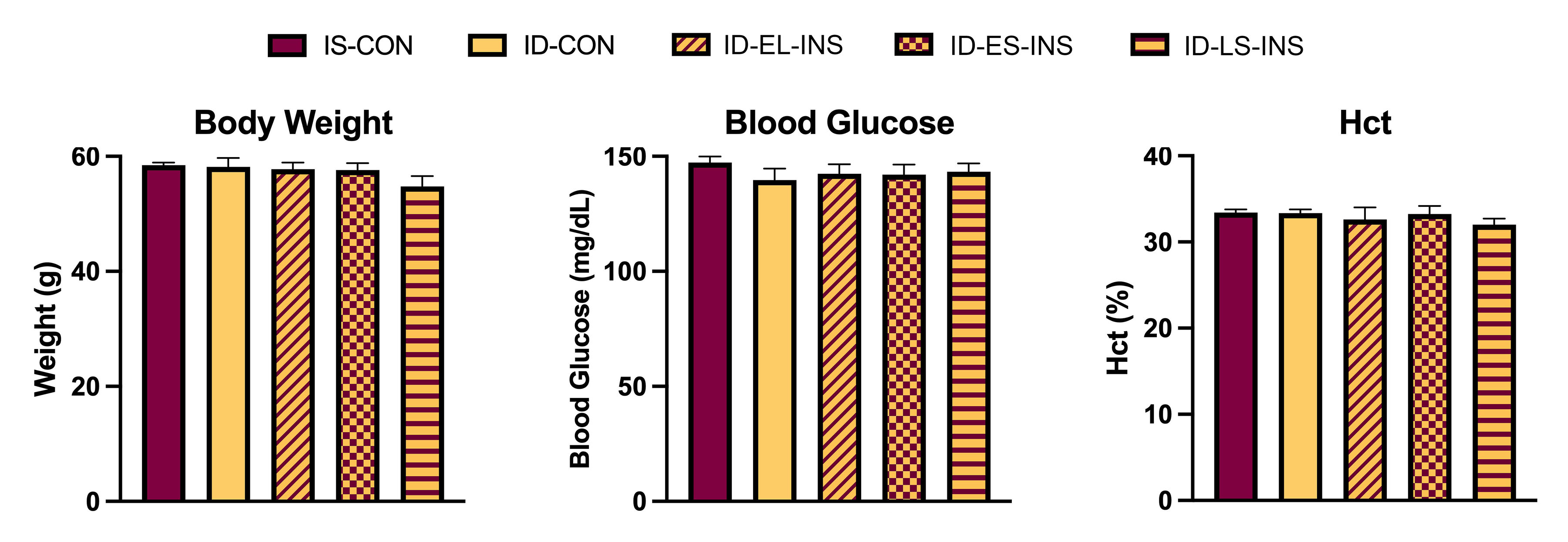
Background: Perinatal iron deficiency (PID) impairs energy metabolism, insulin signaling, synaptogenesis and neuronal structure in the developing hippocampus (HPC). Intranasal insulin administration (INS) improves HPC-mediated memory function in adult humans with Alzheimer's Disease and other cognitive disorders. Previously we showed that INS administration during postnatal days (P) 8-21 partially normalizes energy metabolism and synaptogenesis in the HPC of neonatal rats with PID. The effects of timing and duration of INS treatment on HPC transcriptome in PID is not known. Objective: Examine the effects of early (P8-14) or late (P14-21) INS treatment on HPC molecular pathways altered by PID in neonatal rats. Design/Methods: Perinatal ID was induced using a low iron (3-6 ppm) diet from gestational day 3 through postnatal day (P) 7, followed by an iron sufficient (IS; 200 ppm) diet until P21 (ID groups). IS group received the IS diet throughout. Intranasal insulin (0.3 IU) was administered to the PID-INS groups twice daily from either P8-14 (early-short; PID-ES-INS) or P14-21 (late-short; PID-LS-INS). Total RNA was isolated and profiled using next-generation sequencing (NovaSeq X+, Illumina). Gene expression profiles were characterized and expression patterns examined using Gene Set Enrichment Analysis (GSEA) and compared with the iron sufficient control (IS-CON), untreated PID (PID-CON) and a PID group treated with INS from P8 to P21 (early-long; PID-EL-INS) (n = 6/group). Results: At P21 body weight, blood glucose and hematocrit were not different among the groups (Fig. 1). Relative to the IS-CON group, pathways related to electron transport, TCA cycle, and ATP synthesis were downregulated in the ID-CON group, but not in the 3 PID-INS groups. Compared with the ID-CON, neuronal system pathway was upregulated in the PID-ES-INS and PID-LS-INS groups. INS/PI3K/AKT signaling was enhanced in the PID-EL-INS and PID-LS-INS groups (Fig. 2).
Conclusion(s): INS corrected the downregulated pathways related to electron transport, TCA cycle and ATP synthesis in the PID HPC, regardless of timing or duration of treatment. The beneficial effects on neuronal development and insulin signaling pathways differed by the timing and duration of INS treatment. Whereas both short INS courses (PID-ES and PID-LS) improved neuronal development, enhancement of INS/PI3K/AKT was seen in the PID-LS and PID-EL groups suggesting potential benefits on peak synaptogenesis (P14-21). INS treatment may be considered as an adjunct therapy for overcoming the adverse effects of perinatal ID.
Figure 1. P21 weight, blood glucose and hematocrit









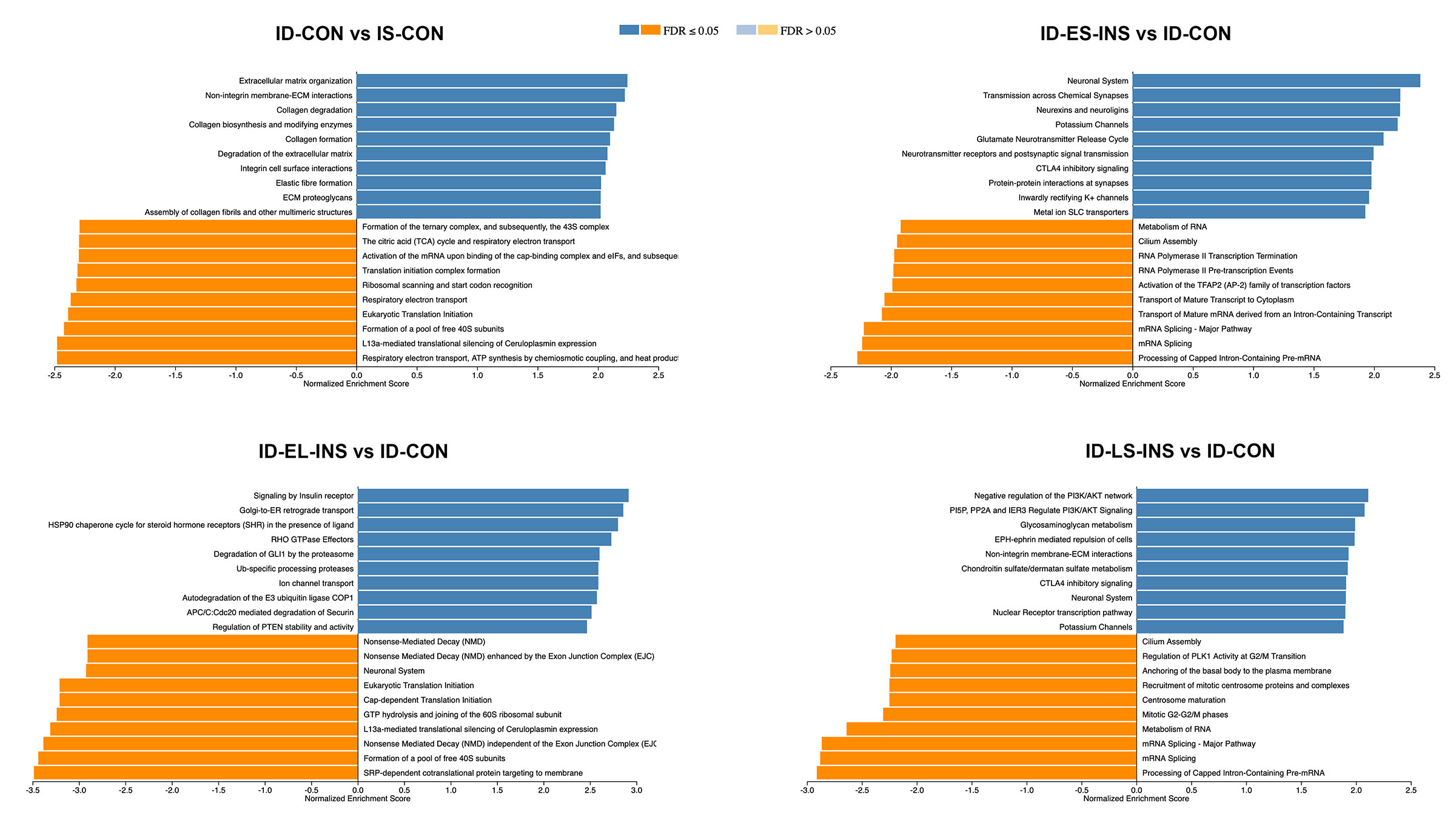 P21 Hippocampal RNAseq pathway analysis