467 - Impact of initiating resuscitation with an intact cord vs immediate cord clamping on the need of positive pressure ventilation among non vigorous preterms 34 weeks:Anopenlabelrandomisedcontrolledtrial
Friday, April 24, 2026
5:30pm - 8:00pm ET
Publication Number: 1449.467
najeeb ahmad, ABVIMS and Dr RML Hospital, new delhi, Delhi, India; arti &DR. maria, ABVIMS & Dr RML Hospital, Delhi, Delhi, India
Consultant ABVIMS and Dr RML Hospital New Delhi , Delhi, India
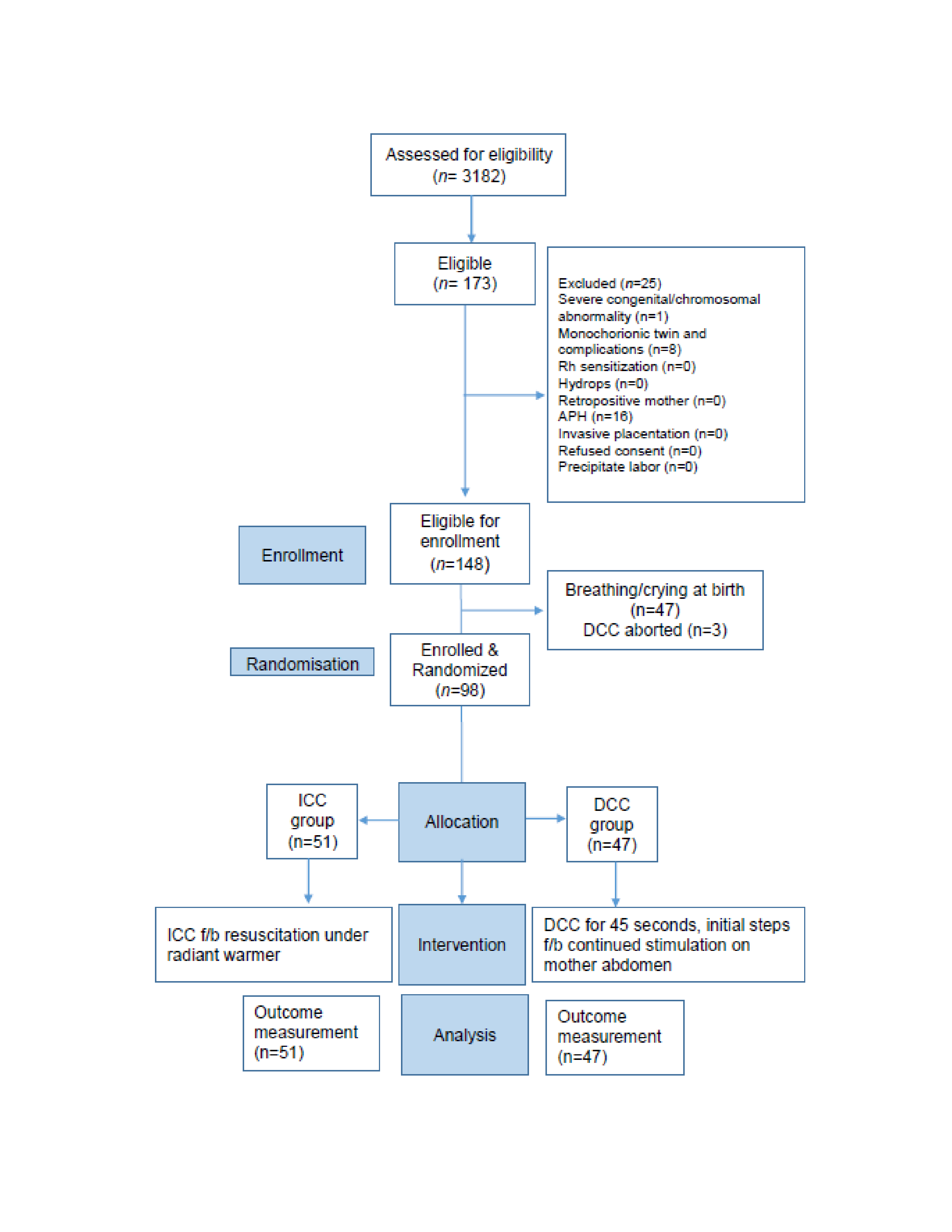
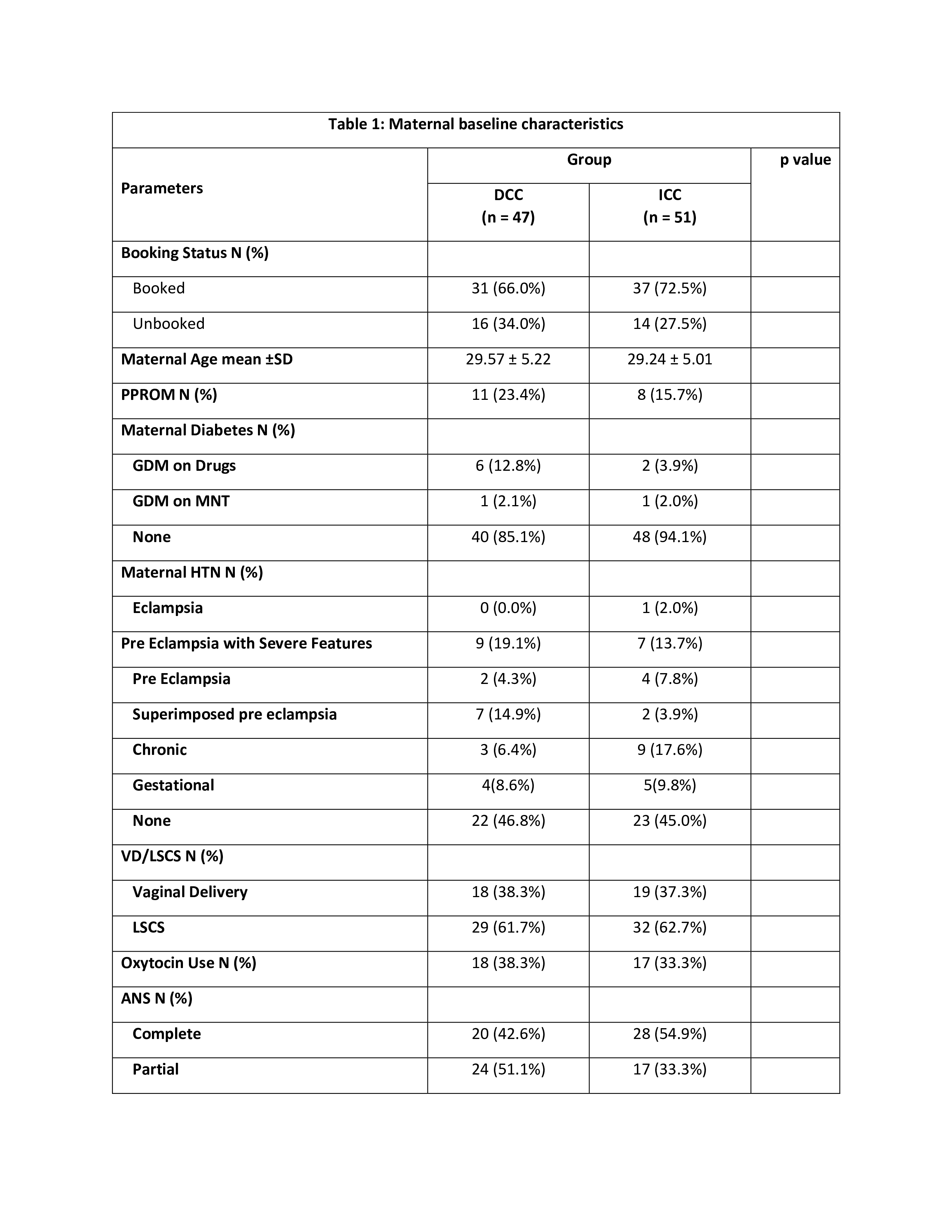
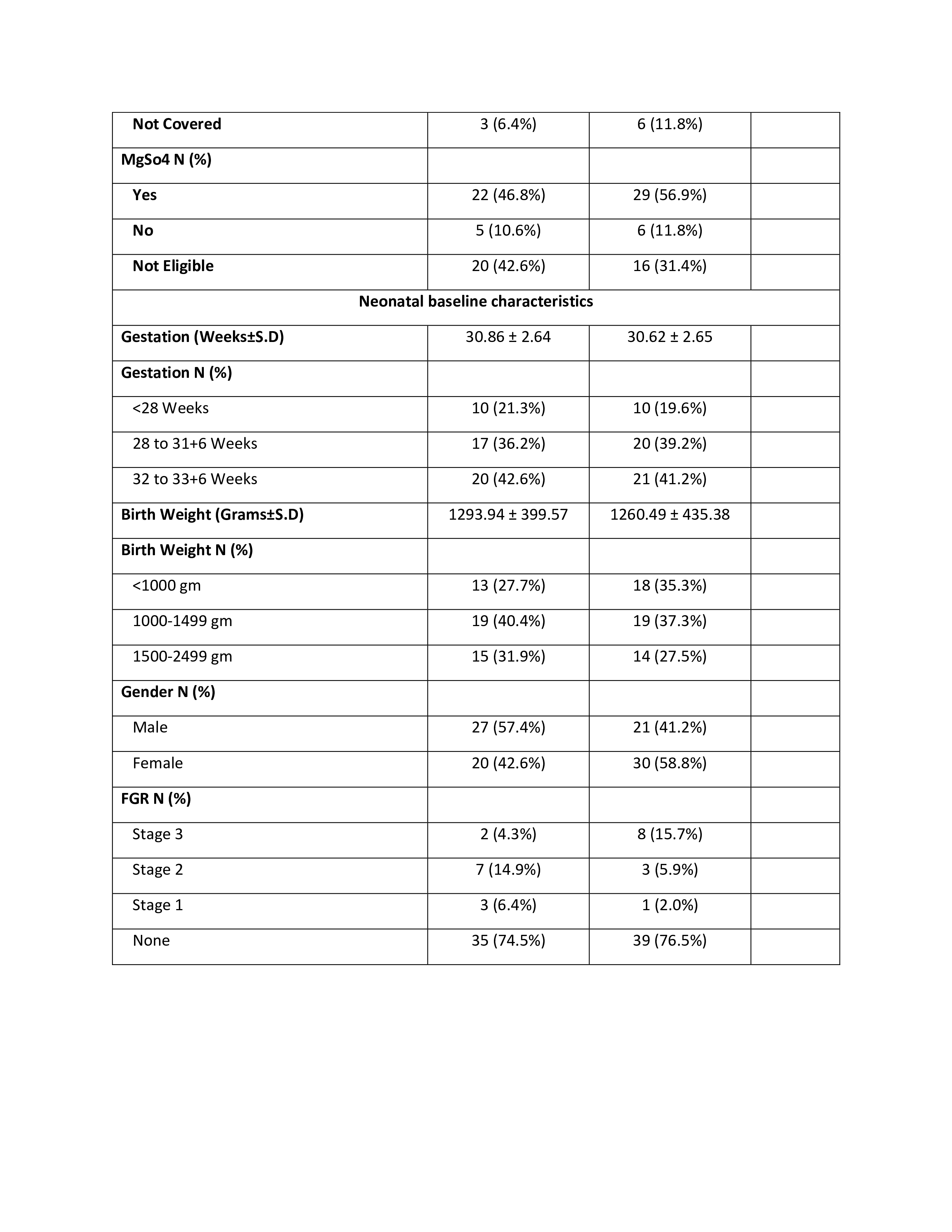
Background: Despite the promising results of delayed cord clamping and intact cord resuscitation still there is no standardized protocol for resuscitation with an intact cord in non-vigorous preterm neonates. Most studies have been conducted in high-resource settings using specialized resuscitation trolleys, which are not widely available in low middle income countries. The optimal timing of cord clamping remains unclear. Objective: Primary objective of the study was to study the impact of initiating resuscitation with an intact cord vs immediate cord clamping on the need of positive pressure ventilation among non vigorous preterm neonates ( < 34 weeks). The primary outcome was the proportion of non vigorous preterm neonates requiring positive pressure ventilation in whom resuscitation was commenced with an intact cord as compared to the standard practice. Design/Methods: This study was an open label randomized control trial. The study was conducted in the Department of Neonatology, ABVIMS and Dr. RML Hospital, New Delhi from 3rd August 2023- 31st December 2024. The Institutional Ethics Committee (IEC) reviewed and approved the study protocol [registration number TP (DM/Mch)10/2023)/IEC/ABVIMS/RMLH/1385]. The trial was registered with the Clinical Trials Registry of India after obtaining IEC approval (CTRI/2024/02/062956). All the information for the study was collected in a separate case record form duly maintained by the PI. It was shared only with investigators and co-authors from ABVIMS and Dr. RML hospital before, during, and after the study. Infants were randomized immediately after birth to delayed cord clamping (DCC) group or immediate cord clamping (ICC) group. Resuscitation in both the groups was performed as per protocol and outcome for the need of positive pressure ventilation (PPV) was assessed. Results: Amongst the 98 neonates enrolled, 47 were randomized to DCC group while 51 were randomized to the ICC group and analyzed as per intention to treat analysis (ITT). Among the 98 neonates analyzed, 20 (42.6%) of the participants in the group DCC had need for PPV, while 32 (62.7%) of the participants in the group ICC had need for PPV respectively, (RR 0.68; 95% CI 0.45-0.99, p=0.045). There was a significant difference between the two groups in terms of Combined APGAR score at 1 minute (p = 0.046) and in terms of Time to Spontaneous Breathing (Seconds) (p = 0.013), with the median Time to Spontaneous Breathing (Seconds) being higher in the ICC group.
Conclusion(s): Among non vigorous preterm neonates ( < 34 weeks) DCC significantly reduces the need of positive pressure ventilation.
The study flow has been depicted in Figure as per CONSORT guidelines