472 - Trends in Neonatal Intubations: Frequency, Success Rates, and Adverse Events at a Level III Perinatal Center
Friday, April 24, 2026
5:30pm - 8:00pm ET
Publication Number: 1454.472
Susanne Tippmann, Unimedizin Mainz, Neonatology, Mainz, Rheinland-Pfalz, Germany; Markus Greb, University Medical Center of the Johannes Gutenberg University Mainz, Mainz, Rheinland-Pfalz, Germany; Eva Mildenberger, University Medical Center Mainz, Mainz, Rheinland-Pfalz, Germany; Andre Kidszun, Inselspital Bern, Bern, Bern, Switzerland
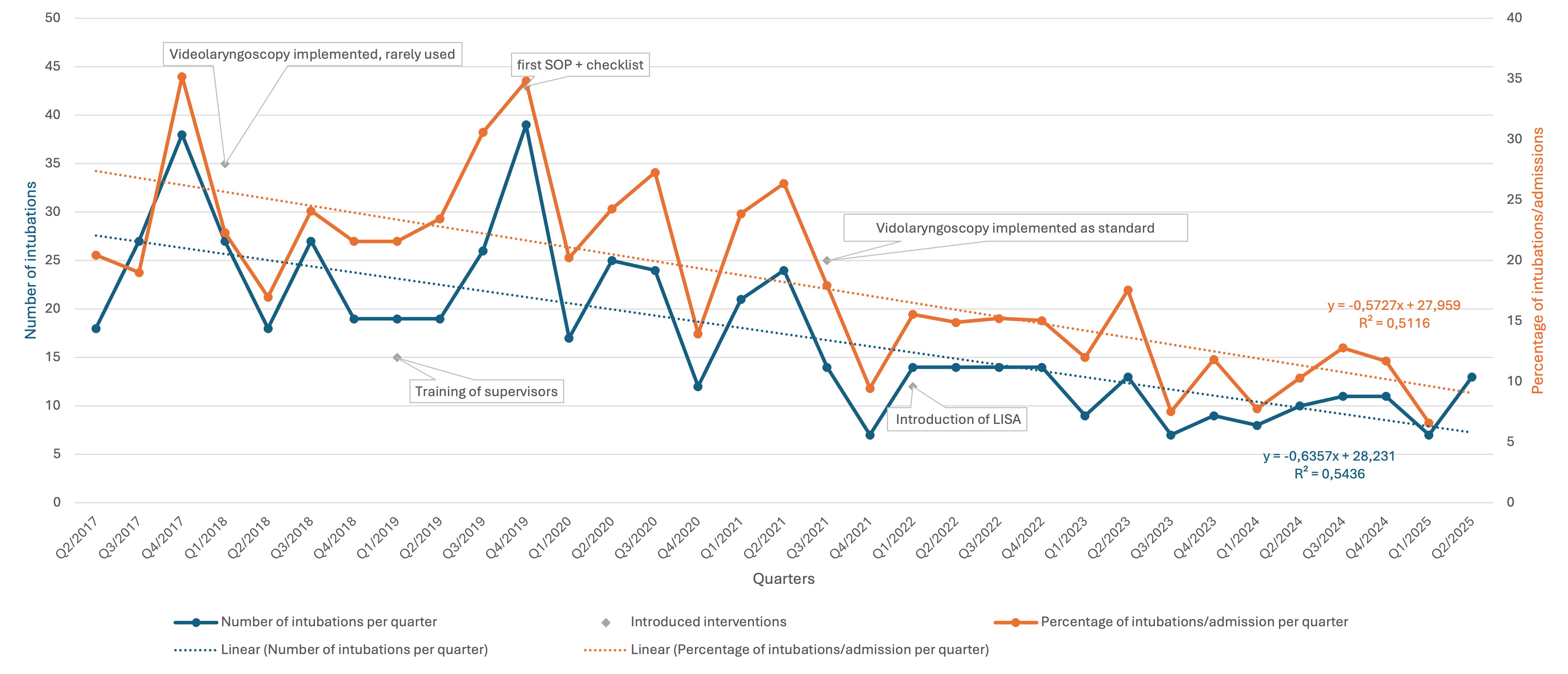
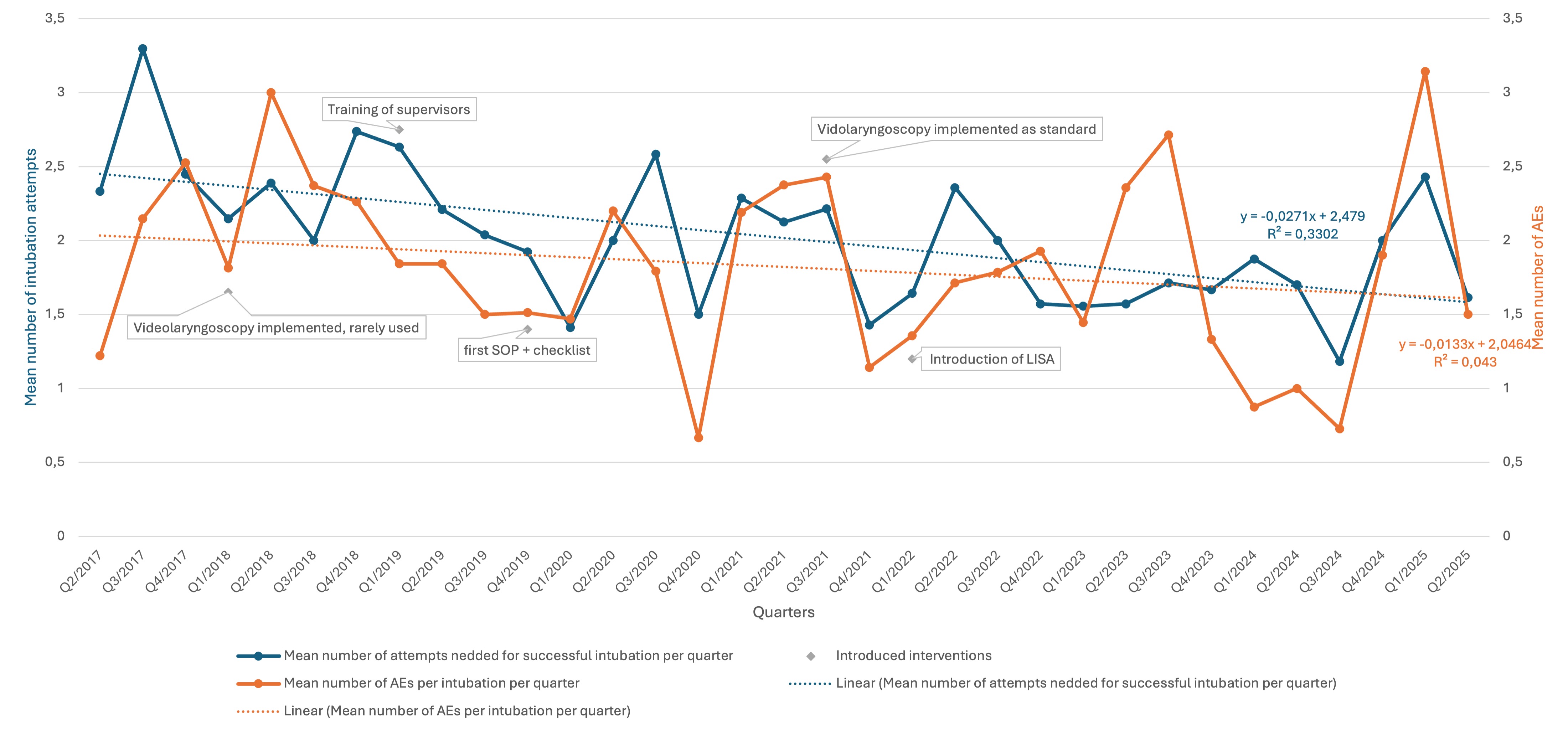
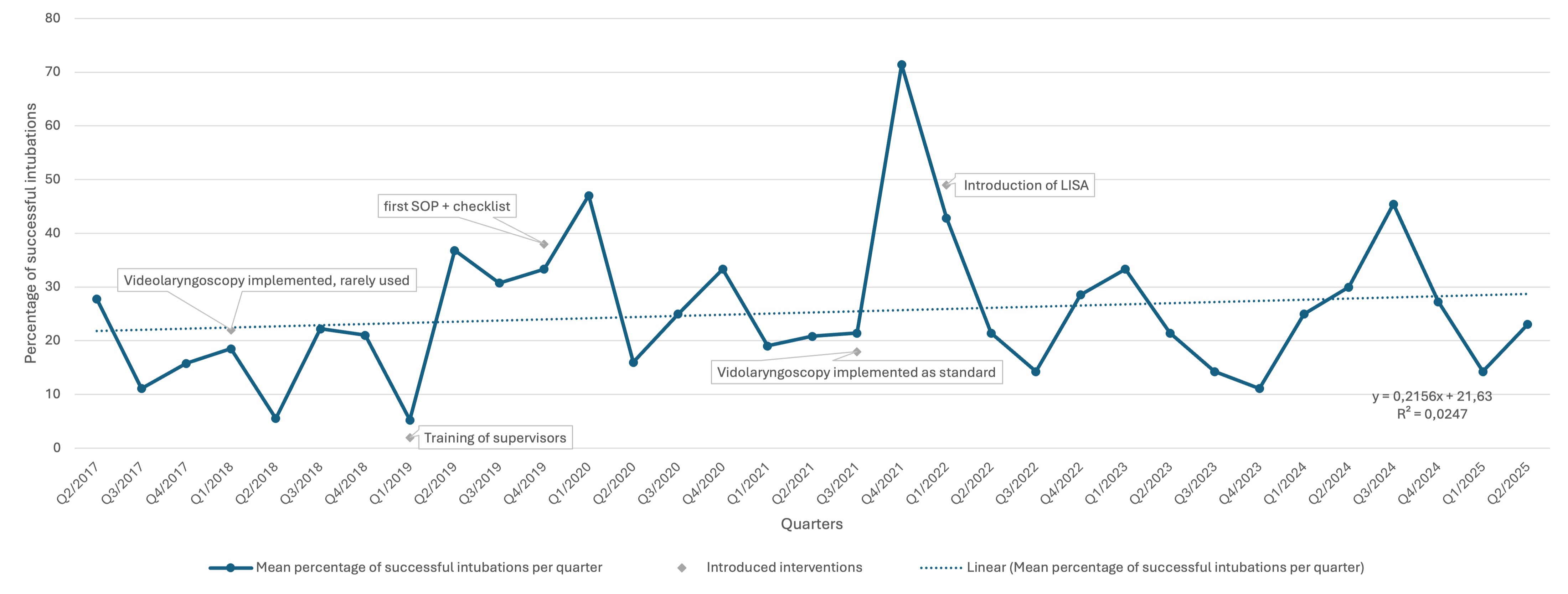
Background: As neonatal respiratory care increasingly shifts toward non-invasive support, intubations are thought to be performed less often, leading to fewer training opportunities for clinicians. This reduction in procedural exposure may contribute to lower success rates and higher rates of adverse events, underscoring the need to monitor intubation quality and outcomes over time. Objective: We aimed to assess trends in neonatal intubation frequency, success rates, and adverse events over an eight-year period, and to describe contemporaneous changes in intubation-related procedures and training. Design/Methods: We conducted a retrospective analysis of prospectively collected intubation data from April 2017 to April 2025 in a level III perinatal center in Germany. We analyzed (1) the number of intubations, (2) the number of attempts and adverse events (AEs), and (3) the proportion of successful intubations, defined as completion on the first attempt without any AE. AEs included bradycardia, oxygen desaturation, esophageal intubation, airway bleeding, equipment malfunction, or other procedure-related complications. Data were summarized descriptively and analyzed using linear regression by quarter to assess temporal trends. The procedural and training modifications (e.g., video laryngoscopy, checklists, standard operating procedures, including modifications in premedication and equipment, and supervisor training) were mapped to corresponding time periods for comparison. Results: A total of 579 intubations comprising 1,220 attempts were analyzed, including 302 procedures in the NICU and 277 in the delivery room. The total number of intubations decreased steadily from 2017 to 2025 (Figure 1). Both, the mean number of attempts per intubation and the frequency of AEs showed downward trends over time (Figure 2). In parallel, the proportion of successful first-attempt intubations without AEs increased (Figure 3). The timing of procedural and training changes - such as the introduction of video laryngoscopy, structured checklists, standard operating procedures, the implementation of less-invasive surfactant administration, and supervisor training - was mapped to the observed trends.
Conclusion(s): During the eight-year observation period, the number of neonatal intubations declined, while first-attempt success and procedural safety slightly improved. These trends may reflect the impact of structured training and procedural refinements implemented during the study period. Further analyses should explore the relative contribution of individual interventions and assess generalizability beyond this single-center cohort.
Figure 1: Number of intubations per quarter and ratio to NICU admissions, 2017-2025.
Figure 2: Quarterly trends in mean intubation attempts and adverse events.
Figure 3: Proportion of successful intubations - defined as first-attempt completion without any adverse event per quarter