








Neonatal General
Session: Neonatal General 8: Neurology II

Mingyan Hei, MD (she/her/hers)
Pediatrician-in-chief
Beijing Chidlren's Hospital, Capital Medical University
Beijing, Beijing, China (People's Republic)
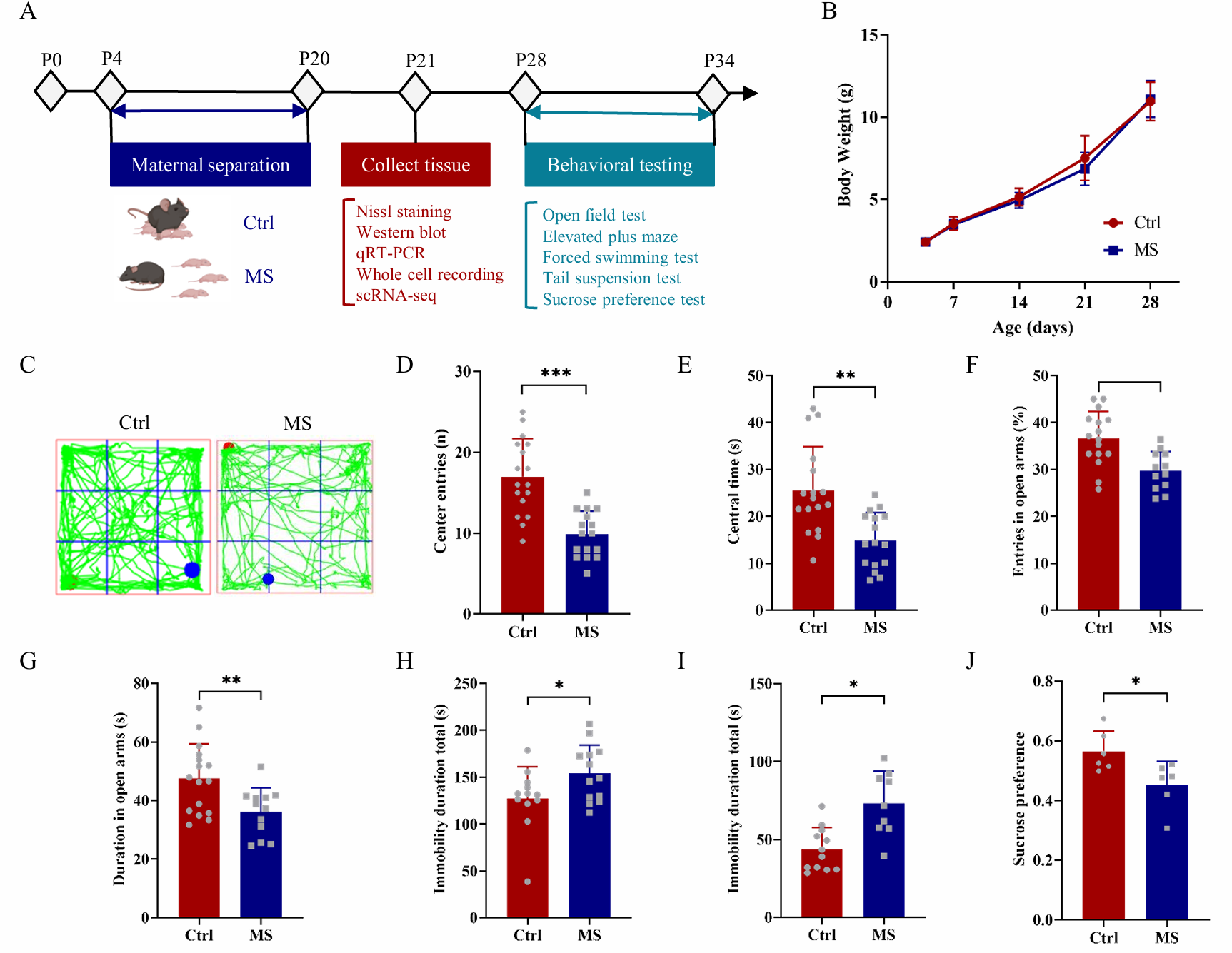 (A) Experimental timeline and behavioral paradigm. Mice in MS (P4-20) or controls (Ctrl) groups underwent a battery of behavioral tests during adolescence (P28-34). Brain tissues were collected at P21 for comprehensive analyses. (B) There was no significant difference in weight gain between the two groups at different time points. (C) The exploration trajectory map of mice during the open field test (OFT). (D) Entries into central zone in the OFT. (E) Duration in central zone during the OFT. (F) Percentage of entries into the open arms in elevated plus maze (EPM). (G) Duration in central zone during the EPM. (H) Immobility duration in the forced swim test (FST). (I) Immobility duration in the tail suspension test (TST). (J) Sucrose preference ratio in the sucrose preference test (SPT).
 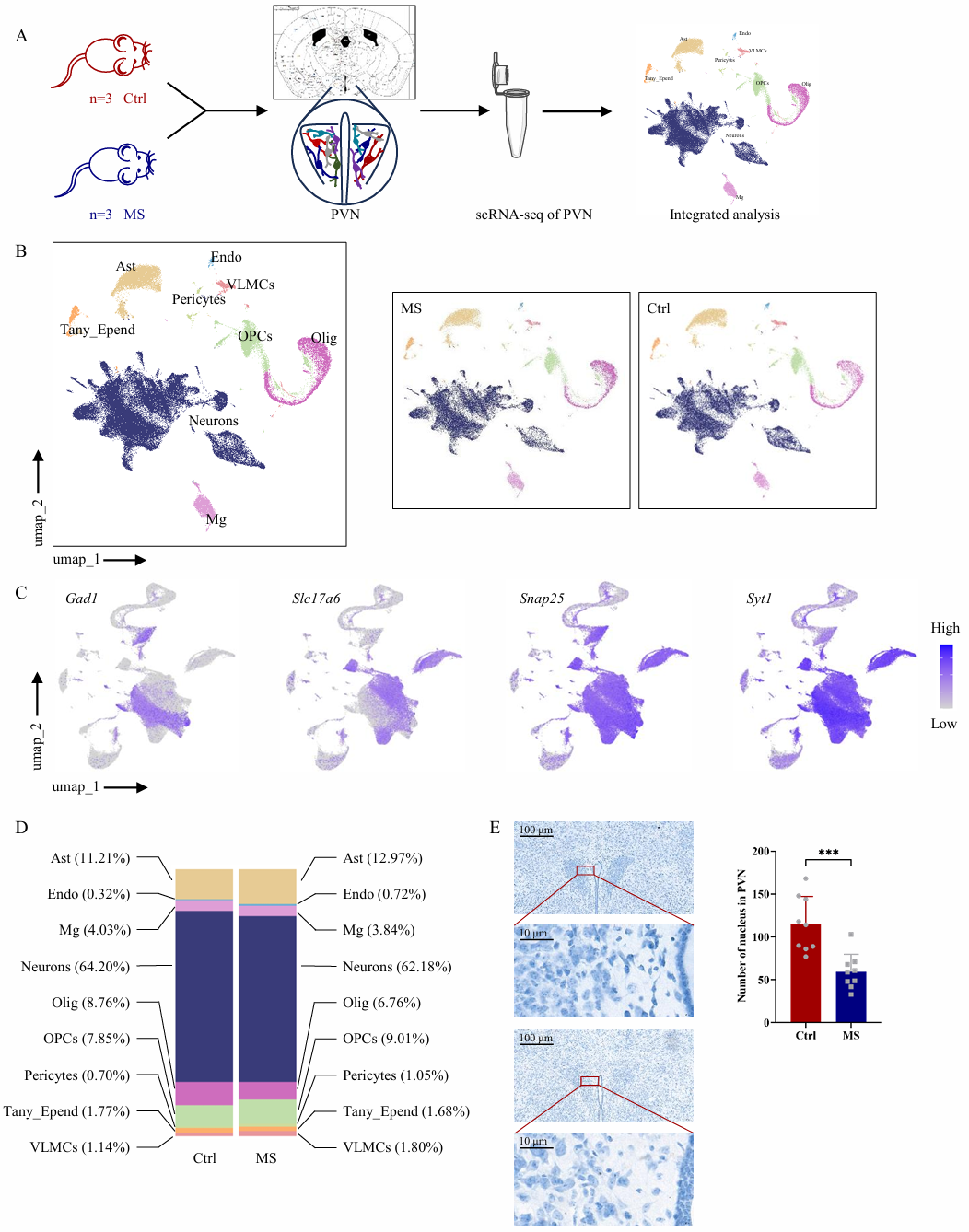 (A) Schematic illustration of the experimental workflow for scRNA-seq. (B) UMAP plot showing clusters of major 9 cells isolated from the PVN. (C) Identification of neuronal cell types by canonical marker genes expression. (D) Bar chart depicting the proportional abundance of major cell types identified by scRNA-seq between Control (Ctrl) and maternal separation (MS) groups. (E) Nissl staining on mice PVN sections.
 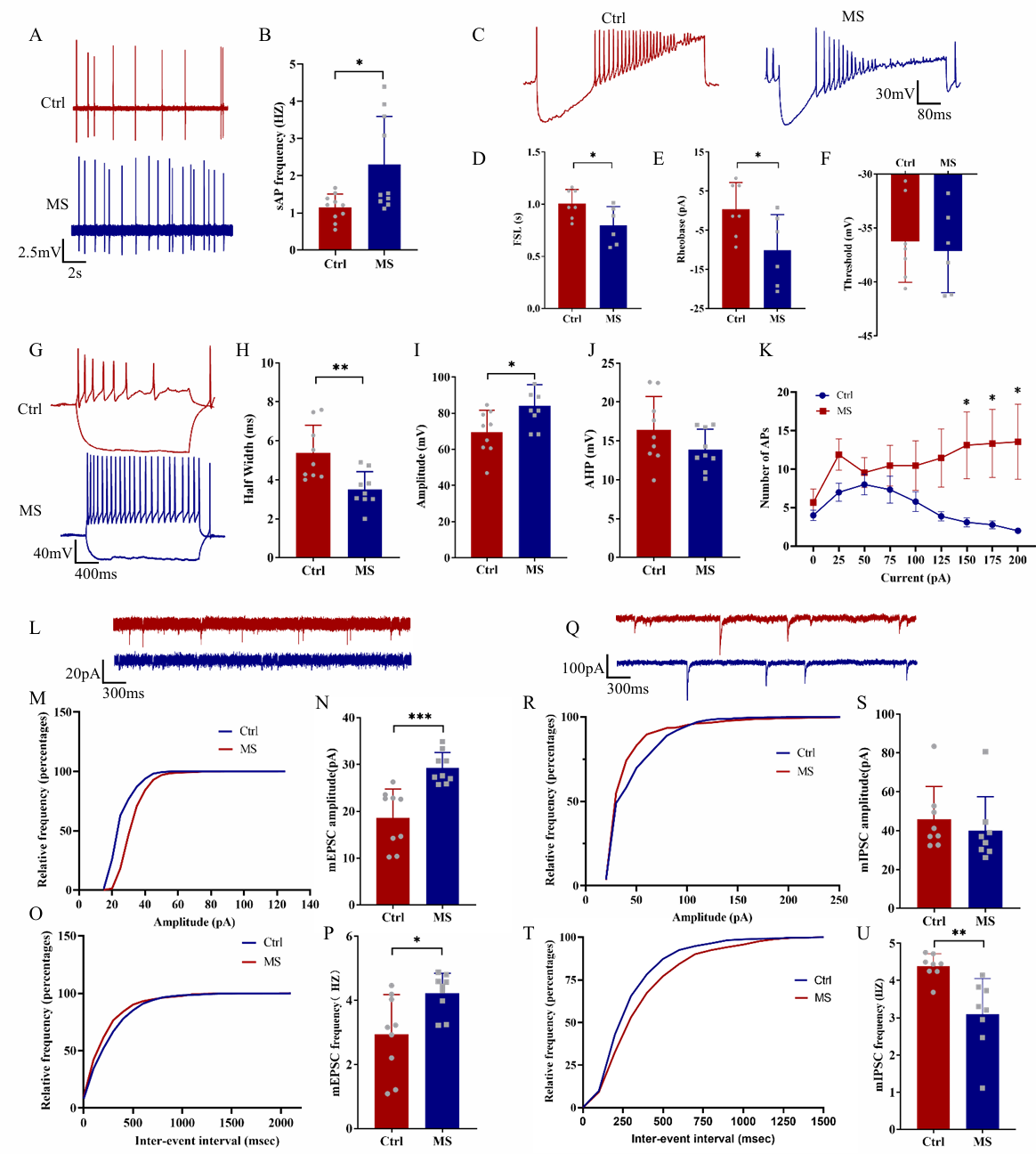 (A) Representative spontaneous firing of Ctrl and MS. (B) There was an effect of MS on spontaneous firing frequency compared to Ctrl group. (C) Representative eAP-ramp of Ctrl and MS. (D-F) There was an effect of MS on first spike latency (FSL) and threshold current. MS had no effect on threshold potential. (G) Representative eAP-step of Ctrl and MS. (H-J) There was an effect of MS on half width and amplitude. MS had no effect on afterhyperpolarization (AHP). (K) MS increased the number of action potentials evoked by current injections (150, 175, and 200 pA). (L) Representative mEPSCs of Ctrl and MS. (M-P) There was an effect of MS on amplitude and frequency. (Q) Representative mIPSCs of Ctrl and MS. (R-U) There was an effect of MS on amplitude. MS had no effect on frequency.