Session: Medical Education Trainee Ongoing Projects
TOP 2 - REWARD: Resident Experience and Wellbeing After Reflective Debriefing
Friday, April 24, 2026
5:30pm - 8:00pm ET
Publication Number: 1762.TOP 2
Mazal Hagler, Connecticut Children's Medical Center, West Hartford, CT, United States; Avnee Mistry, University of Connecticut School of Medicine, Hartford, CT, United States; Alexander H. Hogan, Connecticut Children's Medical Center, Hartford, CT, United States; Taylor Aglio, Connecticut Children's Medical Center, University of Connecticut School of Medicine, Hartford, CT, United States
Fellow UConn/Connecticut Children's Medical Center West Hartford, Connecticut, United States
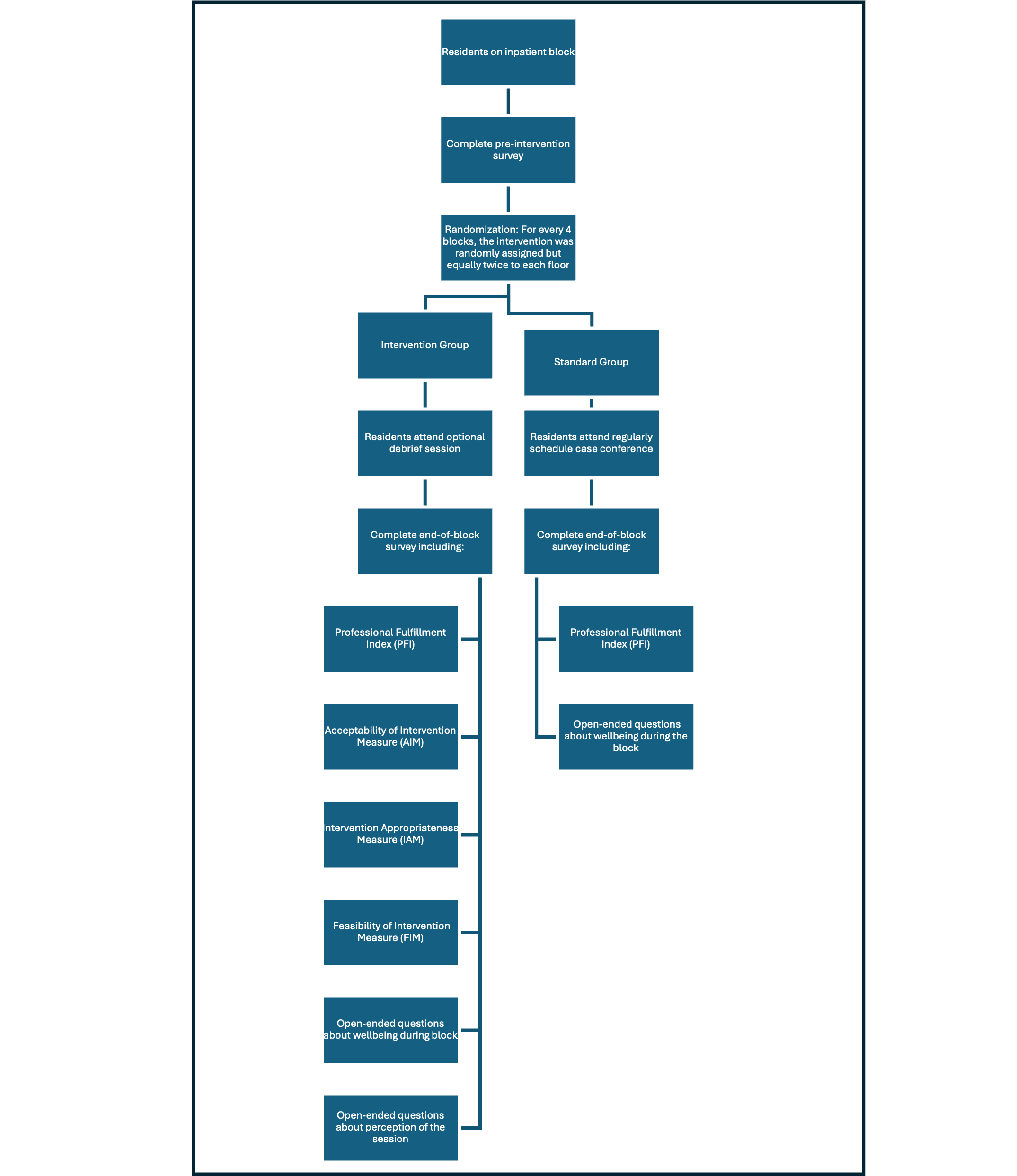
Background: In the United States, over 50% of pediatric resident physicians experience burnout, which has been linked to lower quality of care, increased medical errors, reduced work effort and productivity, and higher healthcare costs. Within pediatric graduate medical education, published interventions to mitigate resident burnout have included increased access to mental health services, wellness didactics, communication training, and retreats. While the use of debriefing and reflection has been studied in pediatric medical education, most of the literature surrounds clinical event debriefing. To our knowledge, there have been no studies dedicated to implementing and assessing the impact of end of inpatient rotation debriefing on resident wellbeing. Objective: This pilot study examines the feasibility, acceptability, and preliminary impact of end-of-block reflective debriefing sessions on pediatric resident professional wellbeing. Design/Methods: This mixed-methods pilot study, determined to be IRB exempt under 45 CFR 46.104(d)(3), was conducted on the inpatient pediatric units at a free-standing children's hospital from February 2025-January 2026. At the start of each block, residents were given an introduction to the study and a link to a baseline pre-intervention survey, which included questions related to demographic information and the Professional Fulfillment Index (PFI), a validated measure of professional fulfillment and burnout. Each block, one pediatric unit was randomly assigned to receive a semi-structured end-of-block debriefing, while residents on the non-assigned units participated in standard case-based learning. Sessions lasted 30-60 minutes and were led by a trained facilitator not involved in patient care that block. The sessions focused on strengths and challenges, growth and learning, opportunities for improvement, and support received. At the end of each block, residents completed a post-implementation survey that included the PFI. For those who participated in the debriefing, the survey also included a validated tool to assess intervention feasibility and acceptability, as well as open-ended questions to gather feedback about the intervention. Preliminary data from the first six months of the pilot study will be analyzed for differences in PFI scores between participants and non-participants and for statistical significance of feasibility and acceptability using paired and independent-samples t-tests. Qualitative analysis of free-text survey responses will be conducted, and responses will be categorized to identify distinct themes.
REWARD Study Design and Data Collection Flow Diagram