Session: Medical Education Trainee Ongoing Projects
TOP 12 - Evaluating the Feasibility and Educational Impact of Low-Cost DIY Point-of-Care Ultrasound Procedural Models for Neonatal Training
Friday, April 24, 2026
5:30pm - 8:00pm ET
Publication Number: 1772.TOP 12
Kelsey E. Moorman, University of Kentucky College of Medicine, Lexington, KY, United States; Anthony Haase, University of Kentucky College of Medicine, Lexington, KY, United States; Prasad Bhandary, University of Kentucky, Lexington, KY, United States; Paula A. Farrell, University of Kentucky College of Medicine, Lexington, KY, United States; Ianna Blanchard, University of Kentucky Children's Hospital, Lexington, KY, United States; Dmitry Strakovsky, DAF Services, LLC, Lexington, KY, United States; Chad M. Eby, University of Kentucky College of Medicine, Lexington, KY, United States; Rupin Kumar, University of Kentucky College of Medicine, Lexington, KY, United States
Fellow University of Kentucky College of Medicine Lexington, Kentucky, United States
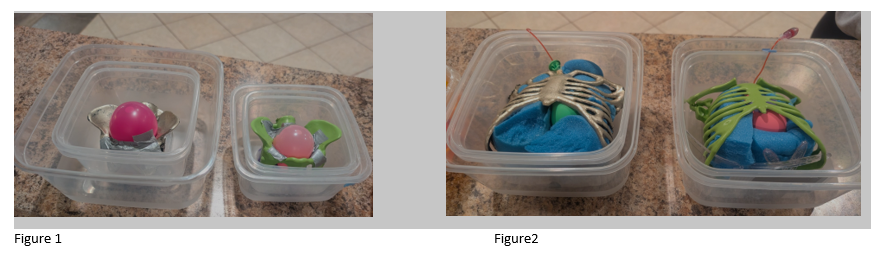
Background: High risk procedures such as lumbar puncture, pericardiocentesis and chest tube insertion are essential competencies but carry significant risk in neonates. Point-of-care ultrasound (POCUS) improves procedural accuracy and patient safety; however, access to neonatal-specific simulation phantoms is limited due to high commercial costs and lack of appropriately scaled models. Low-cost, ultrasound-compatible DIY phantoms may provide an accessible solution, but their educational validity and impact in neonatal POCUS training remain under-evaluated. Objective: 1) To design and construct low-cost, ultrasound-compatible neonatal procedural models using readily available materials. 2) To assess feasibility and evaluate learner-reported confidence changes following hands-on training using these models. Design/Methods: We developed innovative, low-cost DIY simulation models for key neonatal procedures: lumbar puncture, pericardiocentesis, thoracentesis, and suprapubic bladder catheterization. These models were constructed using a combination of readily available and inexpensive materials, including balloons, sterile gloves, sponges, food dye, zip ties, ping pong balls, gelatin and miniature store-bought skeletons. These models were expert-validated for their realistic feel, practical application, and sonographic accuracy.
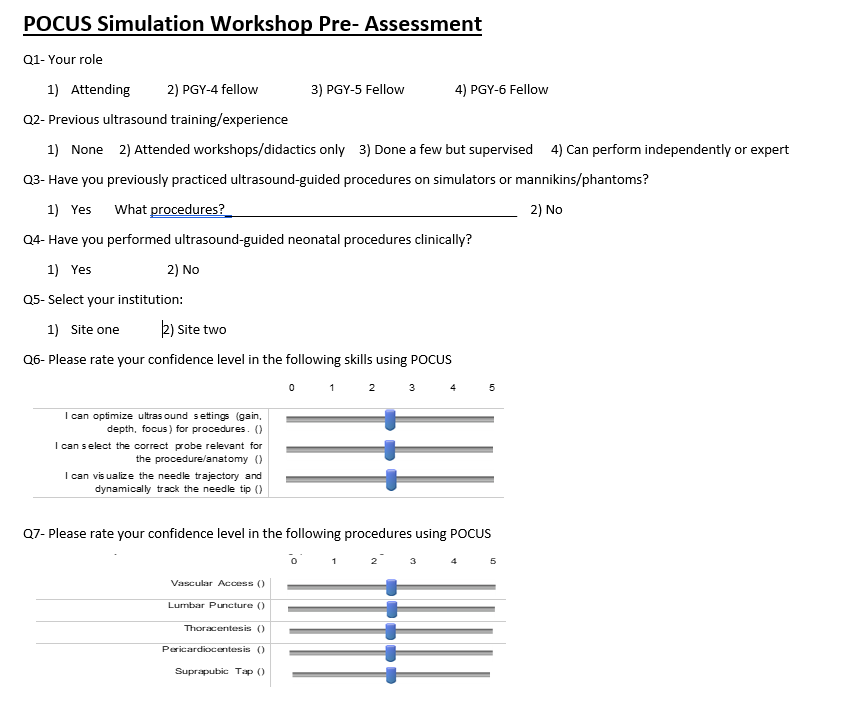
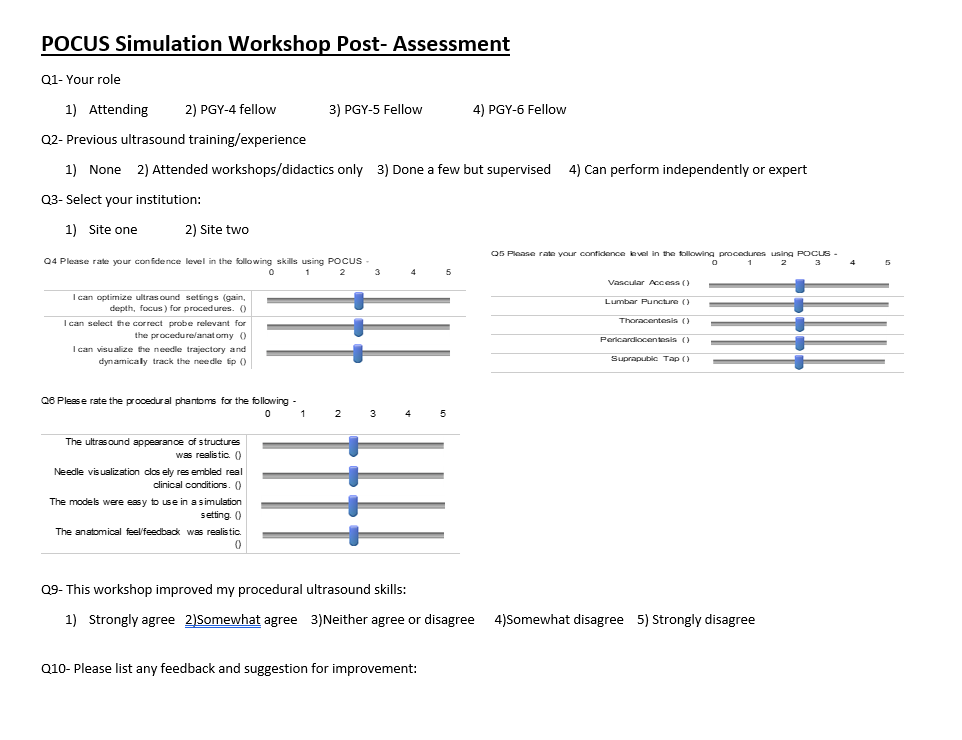
A two-hour POCUS didactic and training session was co-hosted between two neonatology fellowship programs, featuring hands-on instruction with the DIY models led by POCUS experts. Training efficacy was evaluated using pre- and post-session Likert scale surveys. These surveys measured changes in self-reported confidence for performing basic POCUS skills and essential, high-risk neonatal procedures with POCUS guidance. Study was IRB- exempt per our institution's IRB committee. Paired Wilcoxon signed-rank tests will assess differences in pre-/post-scores; descriptive statistics will summarize model feasibility and learner evaluation metrics.
Image 1: Example of Pre survey
Image 2: Example of Post survey
Figure 1 &2: DIY models for suprapubic bladder catheterization and pericardiocentesis