753 - A Clearer View: Leveraging Cardiac POCUS to Minimize NICU Radiation Exposure
Friday, April 24, 2026
5:30pm - 8:00pm ET
Publication Number: 1729.753
Feng Zheng, Cook Children's Medical Center, Fort Worth, TX, United States; Desiree McDonald, Cook Children's Medical Center, Fort Worth, TX, United States; Cristina Farrar, Cook Children's Medical Center, Corinth, TX, United States; Christopher F. Sawyer, Pediatrix, Fort Worth, TX, United States; Darryl Miao, Cook Children's Medical Center, Fort Worth, TX, United States
Physician Cook Children's Medical Center Fort Worth, Texas, United States
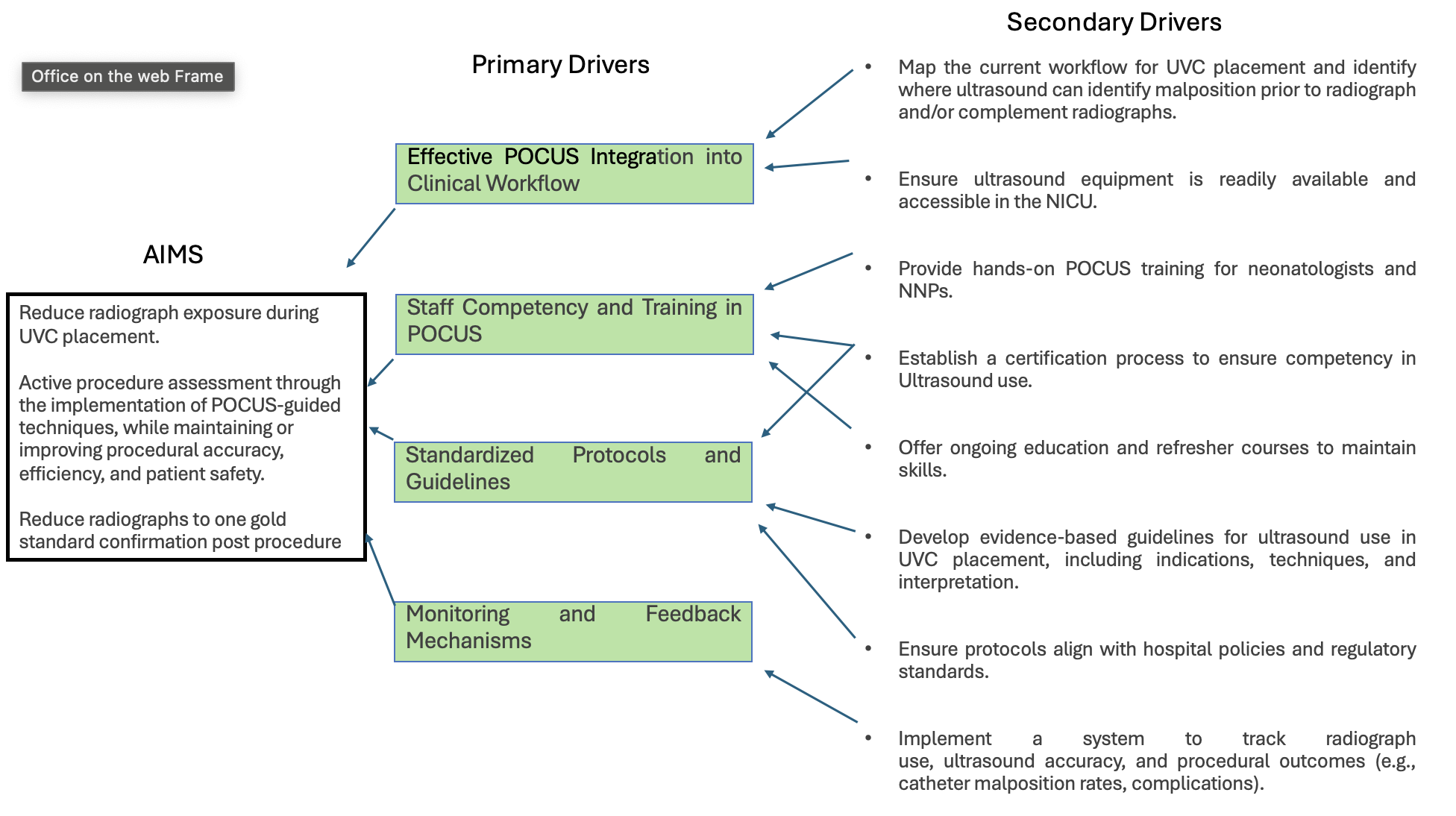
Background: Neonates in the NICU are frequently exposed to radiographs, increasing their cumulative radiation exposure and potential long-term risks. In our NICU, an umbilical venous catheter often necessitates multiple radiographs due to repositioning. Point-of-care ultrasound (POCUS) has been shown to expedite central line placement, allowing for real-time catheter assessment and adjustment. POCUS integration can reduce radiation exposure, imaging costs, and procedural time and improve overall patient safety. Objective: Cook Children's NICU is the only Level IV NICU in Fort Worth, Texas. With 106 beds, it offers a full range of pediatric subspecialties and surgical specialists, including newborn stroke, craniofacial surgery, heart surgery, and more. This initiative aimed to reduce radiograph utilization for UVC placement during admission by 20% by August 2025. Design/Methods: A series of Plan-Do-Study-Act (PDSA) cycles, a structured method for testing and implementing changes, was implemented. This iterative process allowed us to gradually refine and improve our approach.
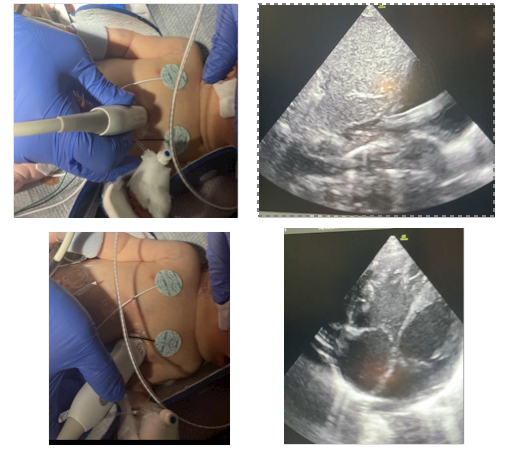
• PDSA 1: Map the current workflow for UVC placement and identify where POCUS can replace or complement radiographs. • PDSA 2: Develop evidence-based guidelines for POCUS use in UVC placement, including indications, techniques, and interpretation. • PDSA 3: Provide hands-on POCUS training for neonatologists, NNPs, and other relevant staff.
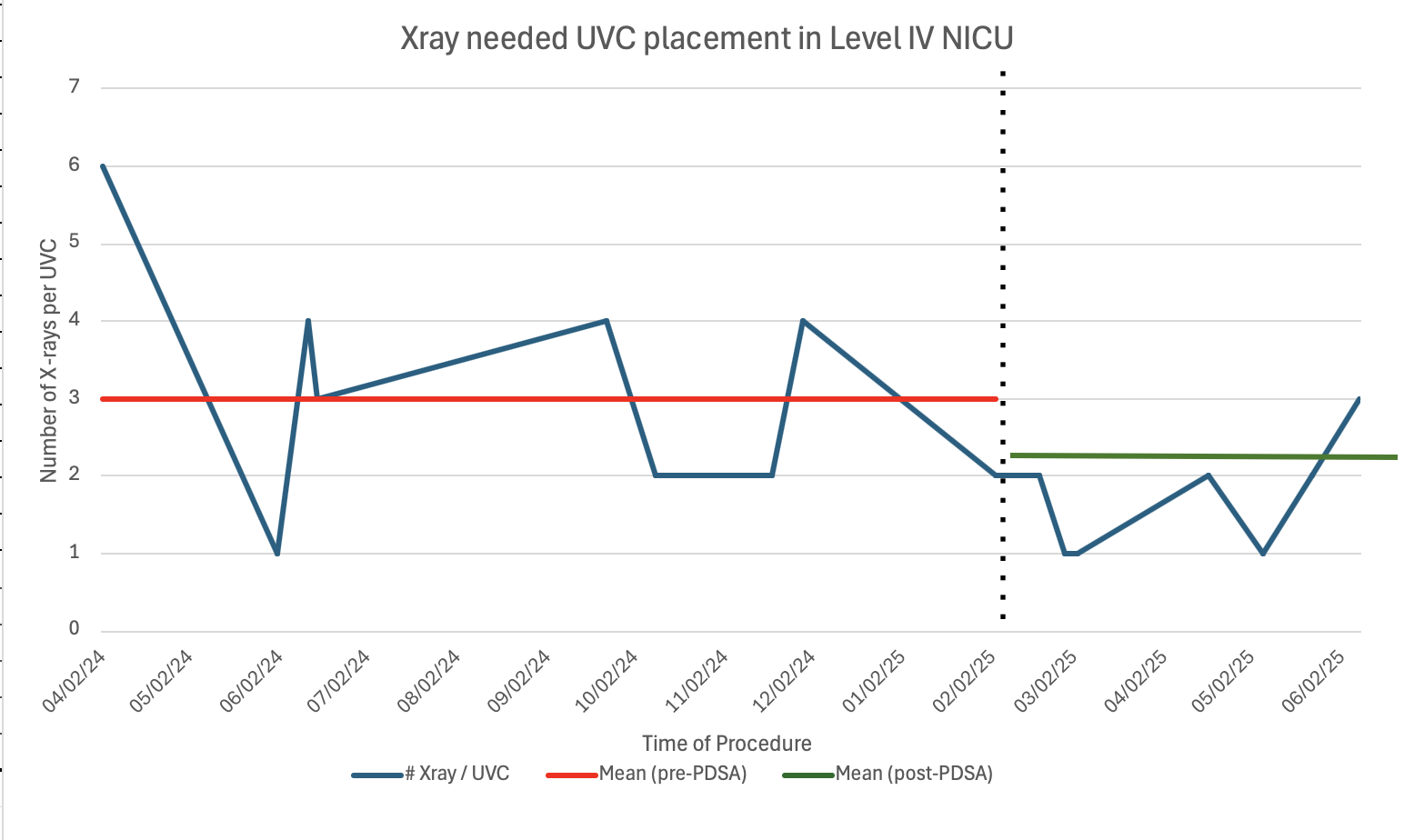
As part of our commitment to patient safety, we tracked balancing measures, including Vascular Injury, Thrombotic Events, or Infection, to assess the safety of the intervention. Results: Following implementation, the average number of radiographs required for UVC placement during NICU admission decreased from 3 to 1.6. Importantly, there was no significant increase in adverse events, including delayed diagnoses or escalation of care. This clear demonstration of the intervention's safety provides a secure foundation for its continued use, ensuring the highest level of patient care.
Conclusion(s): This quality improvement initiative has successfully achieved its goal of reducing unnecessary radiographs in the NICU without compromising patient safety. The standardized imaging protocols, interdisciplinary education, and POCUS integration have provided a sustainable approach to minimizing radiation exposure and optimizing resource utilization in neonatal care. These findings support the broader adoption of POCUS to enhance patient safety and procedural efficiency in NICUs, instilling confidence in this approach's positive outcomes.