Session: Health Equity/Social Determinants of Health 3
207 - Examining Racial Disparities in Home Feeding Tube Choices at Discharge for Infants in the Neonatal Intensive Care Unit
Friday, April 24, 2026
5:30pm - 8:00pm ET
Publication Number: 1196.207
Rachael Aldridge, Mercer University School of Medicine, Sharpsburg, GA, United States; Eva Proels, Mercer University School of Medicine, Macon, GA, United States; Chloe Gray, Mercer University School of Medicine, Macon, GA, United States; Kylie Tobey, Mercer University School of Medicine, Macon, GA, United States; Joleen Dako, Mercer University School of Medicine, Fayetteville, GA, United States
Medical Student Mercer University School of Medicine Sharpsburg, Georgia, United States
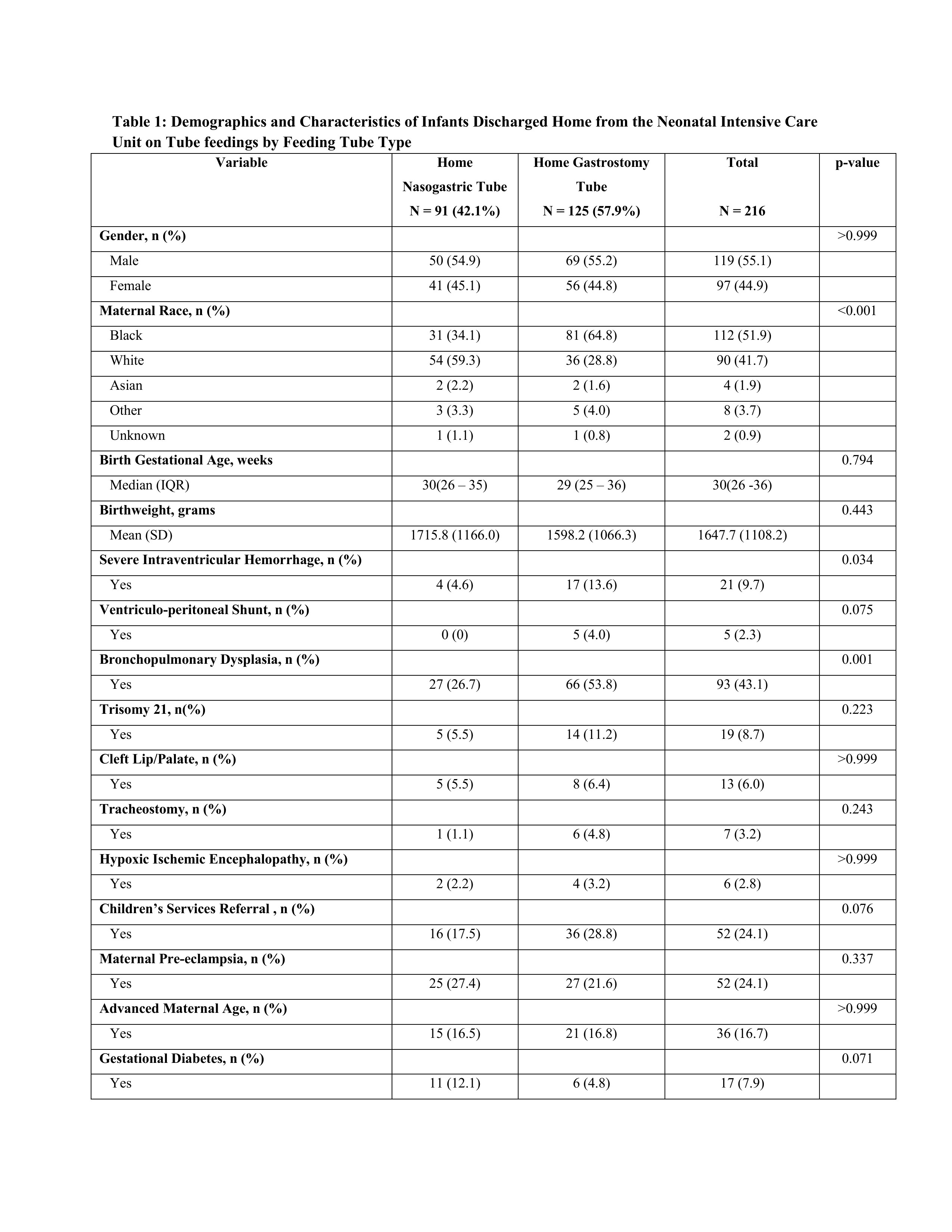
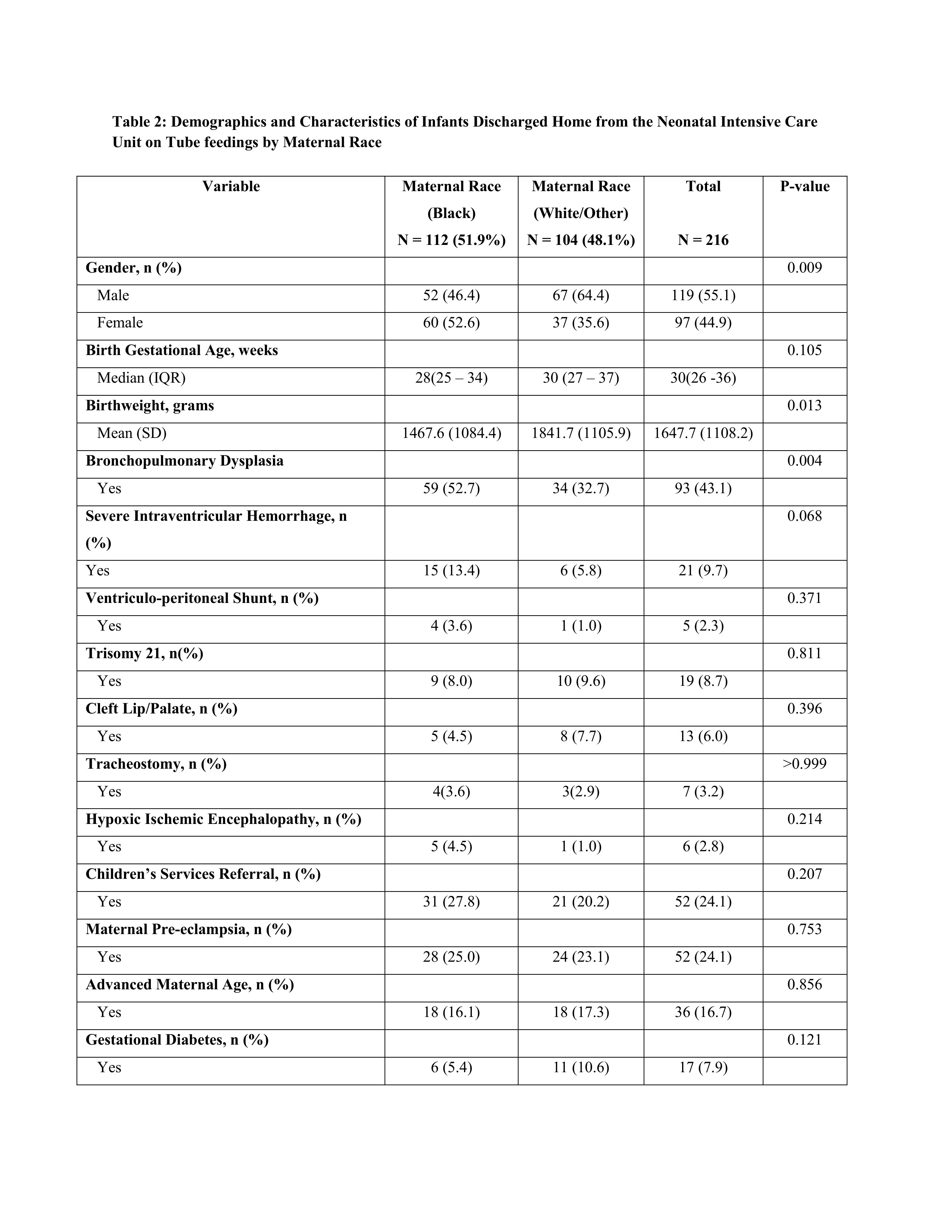
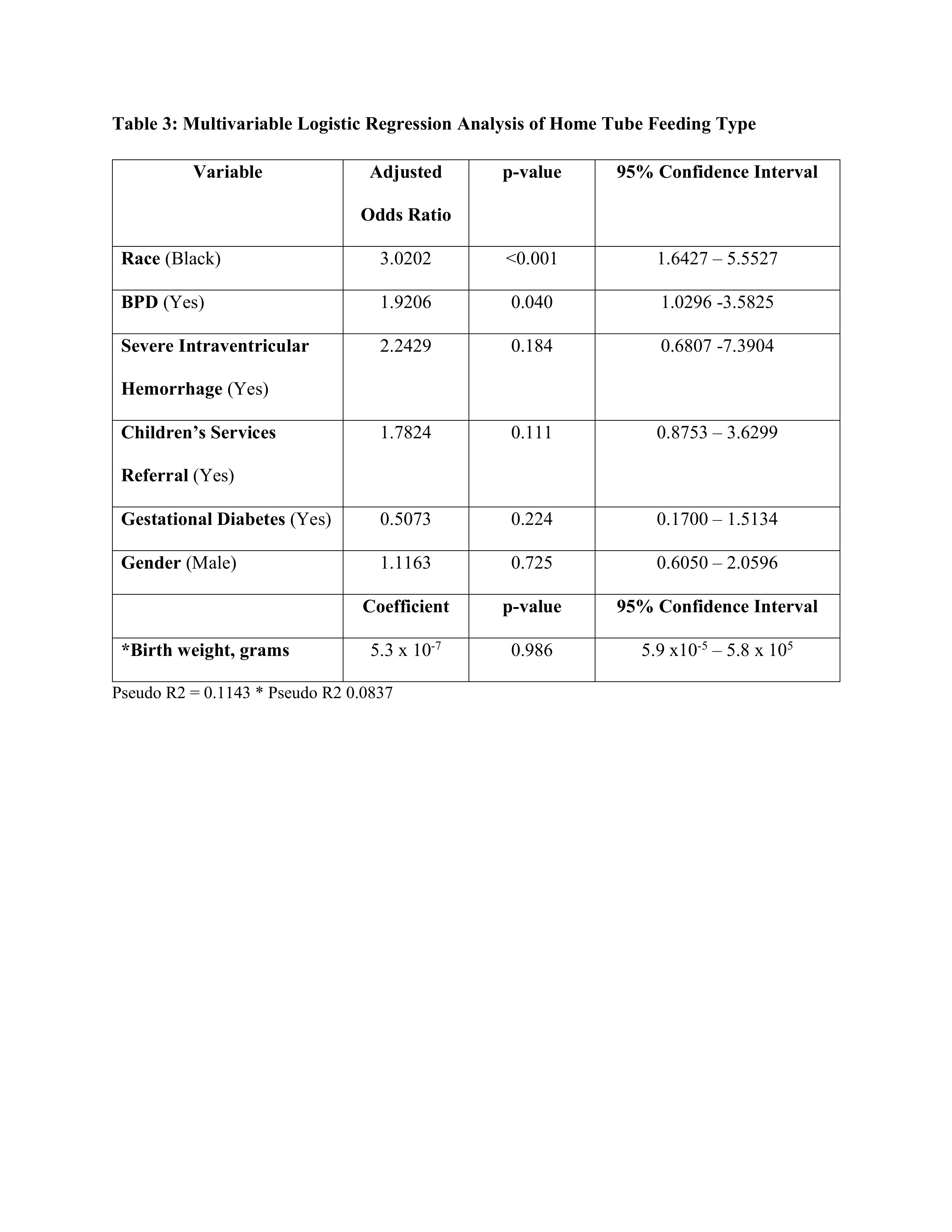
Background: Infants admitted to the Neonatal Intensive Care Unit (NICU) often struggle with oral feeding, with the two most prevalent kinds of enteral tube feedings used to circumvent this being gastrostomy tube (GT) feedings and nasogastric tube (NGT) feedings. Some studies have shown that infants discharged home with GT have more emergency room visits than infants discharged home with NGT. There are no rigid guidelines to help providers in choosing between the two types of tubes, and wide variation exists in clinical practices. Objective: To determine whether racial disparities exist in the choice between home GT versus NGT at discharge. Design/Methods: This was a retrospective chart review of all infants admitted from July 1st, 2021, until July 31st, 2024, who were discharged home with tube feedings from a level III NICU at a regional medical center. Infants who were transferred to the hospital primarily for GT placement were excluded from our analysis. We reviewed demographics, risk factors for home tube feeding and referrals to the Division of Family and Children Services (DFCS) for social concerns perceived by caregivers in the NICU. Data was analyzed using Fisher's exact test and independent t-test for bivariate analysis and multivariable logistic regression was used when controlling for potential confounding variables. Results: Of the 216 infants included in the study, 51.9% identified as Black, 41.7% identified as White and 6.4% identified as Asian/Other/Unknown race. 42.1% were discharged home with NGT and 57.9% were discharged home with GT. Of those discharged with GT, 64.8% were Black (p < 0.001), and of those discharged with NGT, 59.3% were White (p < 0.001). Black race was associated with Bronchopulmonary Dysplasia (BPD), (p=0.004), lower birth weight (p =0.013) and more female infants (p=0.009). Infants discharged home with GT were more likely to have severe intraventricular hemorrhage (IVH) (p =0.034) and bronchopulmonary dysplasia (BPD) (p=0.001). After adjusting for BPD, severe IVH, maternal gestational diabetes, gender, referrals to DFCS and birth weight, Black race and BPD were significant predictors for home GT with Black race being the stronger predictor (aOR =3.02; 95% CI 1.64 - 5.55).
Conclusion(s): We observed a racial disparity in the type of tube feeding for infants with home tube feeds. Further research is needed to understand the reasons for this disparity and guide equitable, evidence-based decisions.
: Demographics and Characteristics of Infants Discharged Home from the Neonatal Intensive Care Unit on Tube feedings by Feeding Tube Type
Demographics and Characteristics of Infants Discharged Home from the Neonatal Intensive Care Unit on Tube feedings by Maternal Race
Multivariable Logistic Regression Analysis of Home Tube Feeding Type