48 - Potential Misclassification of Hypoxic-Ischemic Encephalopathy (HIE) as a Cause of Death in Preterm Infants
Friday, April 24, 2026
5:30pm - 8:00pm ET
Publication Number: 1041.48
Grace A. Cudjoe, Mercy St. Vincent Medical Center, Toledo, OH, United States; Ifeanyi C. Obiakalusi, Mercy St Vincent Medical Centre, Toledo, OH, United States; Kehinde Obeto, Nationwide Children's Hospital, Oregon, OH, United States; Gagandeep Brar, Nationwide Children's Hospital, Toledo, OH, United States
Pediatric Resident Physician Mercy St. Vincent Medical Center Toledo, Ohio, United States
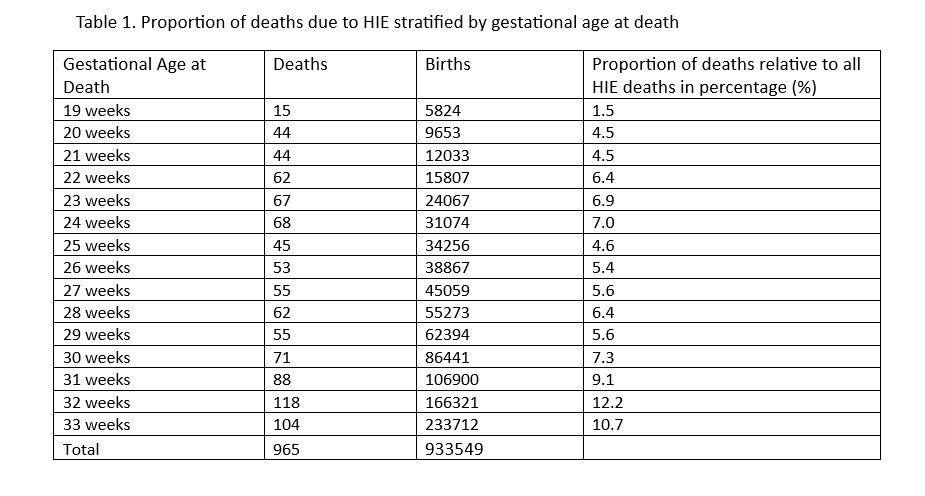
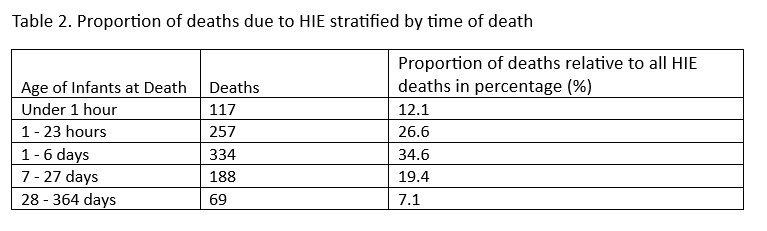
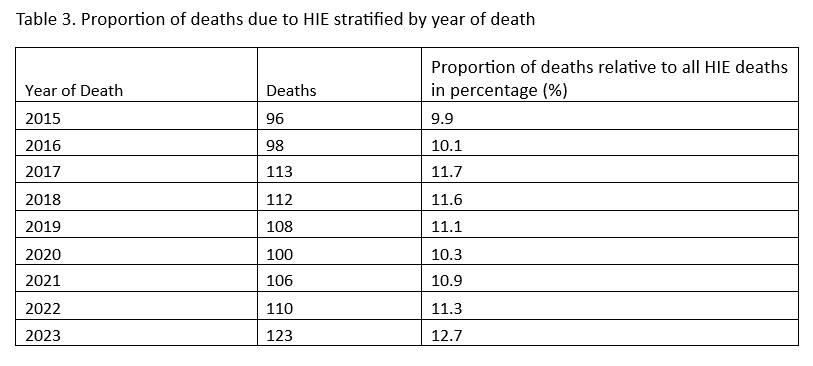
Background: Hypoxic-ischemic encephalopathy (HIE), the most common cause of neonatal encephalopathy, is a clinical syndrome of neurologic dysfunction in neonates born ≥35 weeks gestation resulting from a reduction in oxygen and blood flow to the brain near the time of birth. Diagnosing HIE in preterm infants (≤33 weeks) is clinically challenging, as the clinical features may be masked by physiological immaturity. Objective: We evaluated the frequency of HIE being reported as the cause of death for neonates born ≤ 33 weeks from 2015-2023. Design/Methods: We conducted a descriptive analysis using linked birth and infant death records from the Centers for Disease Control and Prevention Wide-ranging Online Data for Epidemiologic Research (CDC WONDER) database, which provides nationwide mortality data from U.S. death certificates. Neonates with HIE listed as the underlying cause of death between 2015 and 2023 were identified using ICD-10 codes P91.6 and P21, consistent with standard definitions in prior population-based studies. The proportion of deaths attributed to HIE were stratified by year, gestational age and time of death, expressed as percentages of all HIE-related deaths. No statistical analyses were performed, as the objective was to describe observed patterns. Results: Among the 933,549 live births delivered at ≤33 weeks, 965 reportedly died from HIE during the study period. A minority of deaths (1.5%) were reported as early as 19 weeks' gestation, compared with a higher proportion of 12.2% at 32 weeks (Table 1). Most deaths were concentrated in the early neonatal period, with 34.6% occurring between 1 and 6 days of life and 12.2% occurring within the first hour (Table 2). The proportion of deaths attributed to HIE was highest in 2023 (12.7%) compared with 2015 (9.9%) (Table 3).
Conclusion(s): HIE is recorded as a cause of death in preterm infants ≤33 weeks despite the absence of a validated diagnostic criteria in this age group. These findings raise concern about the accuracy of death certificate reporting and suggest possible misclassification of HIE among preterm infants ≤33 weeks. Establishing standardized definitions of HIE in this age group is needed to improve reliable neonatal mortality surveillance.
Table 1. Proportion of deaths due to HIE stratified by gestational age at death Gestational Age at death
Table 2. Proportion of deaths due to HIE stratified by time of death Time of Death
Table 3. Proportion of deaths due to HIE stratified by year of death Year of Death










 Gestational Age at death
 Time of Death
 Year of Death