Session: Health Equity/Social Determinants of Health 2
192 - Early Life Adversity Alters Academic, Behavioral, and Health Outcomes in Elementary School
Friday, April 24, 2026
5:30pm - 8:00pm ET
Publication Number: 1181.192
Anjali Gupta, Stanford University School of Medicine, Cary, NC, United States; Maxwell Hartshorn, Stanford University School of Medicine, San Francisco, CA, United States; Leilani Ivery, Lucile Packard Children's Hospital Stanford, San Francisco, CA, United States; Zoie Carter, University of Chicago Division of the Biological Sciences The Pritzker School of Medicine, Chicago, IL, United States; Jesse Tapia, Stanford University School of Medicine, San Jose, CA, United States; Harpreet Nijjer, Stanford University School of Medicine, Palo Alto, CA, United States; Isaias Martinez, Stanford University School of Medicine, Rosemead, CA, United States; Cheryl Tolomeo, Stanford University School of Medicine, Palo Alto, CA, United States; Cynthia R.. Rovnaghi, Stanford University School of Medicine, Palo Alto, CA, United States; Kanwaljeet J. S.. Anand, Stanford University School of Medicine, Palo Alto, CA, United States
Medical Student Stanford University School of Medicine Cary, North Carolina, United States
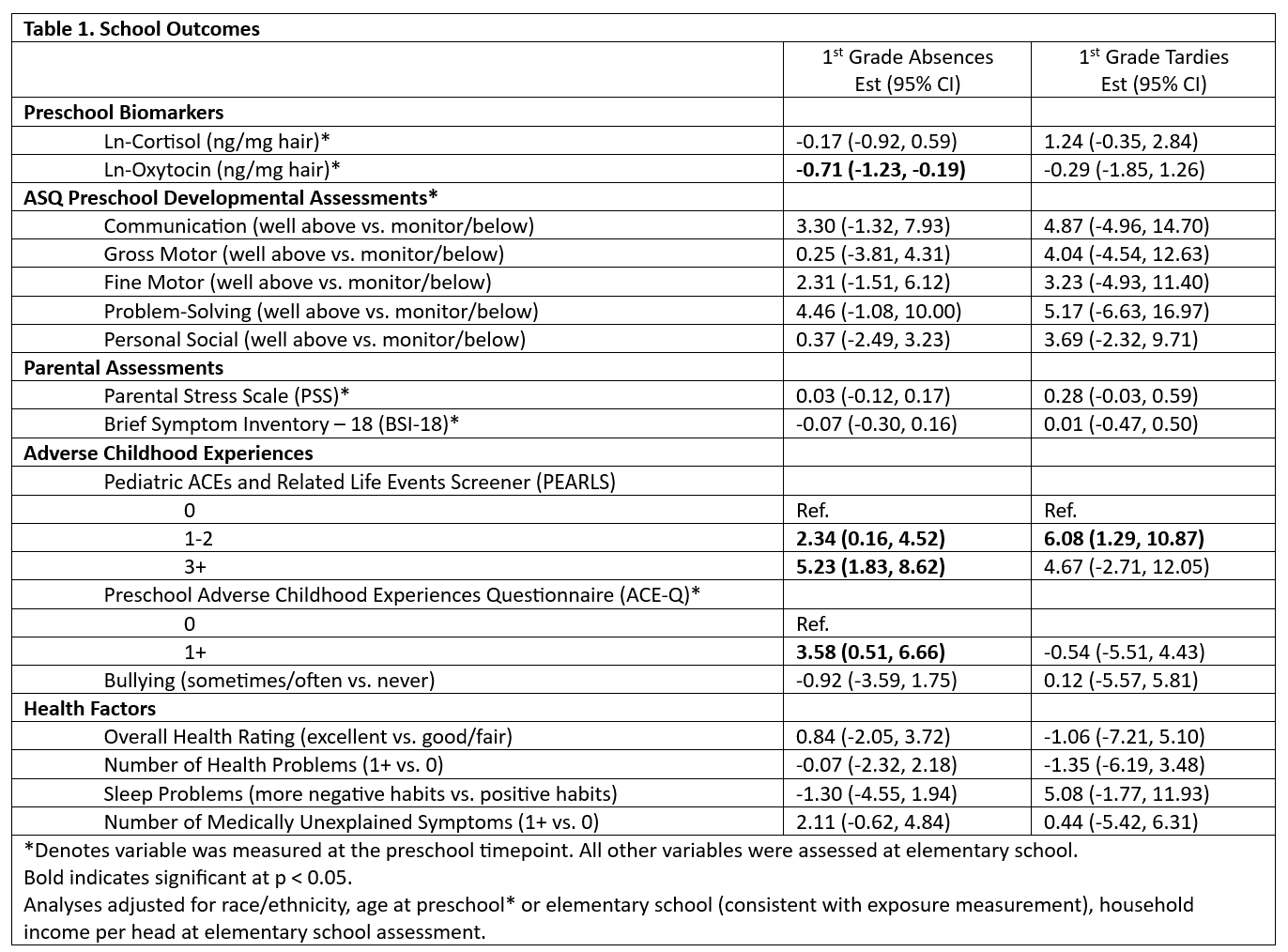
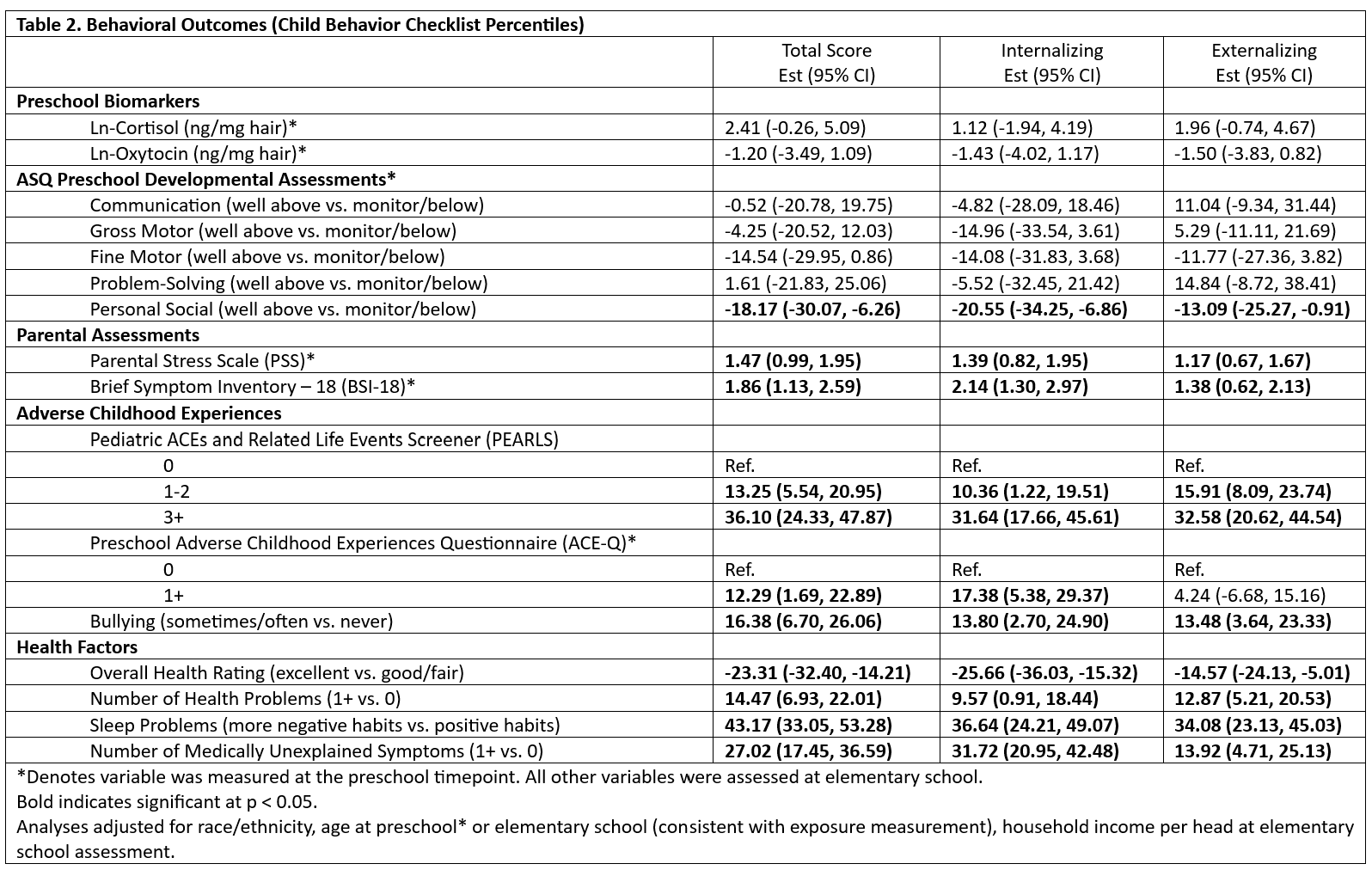
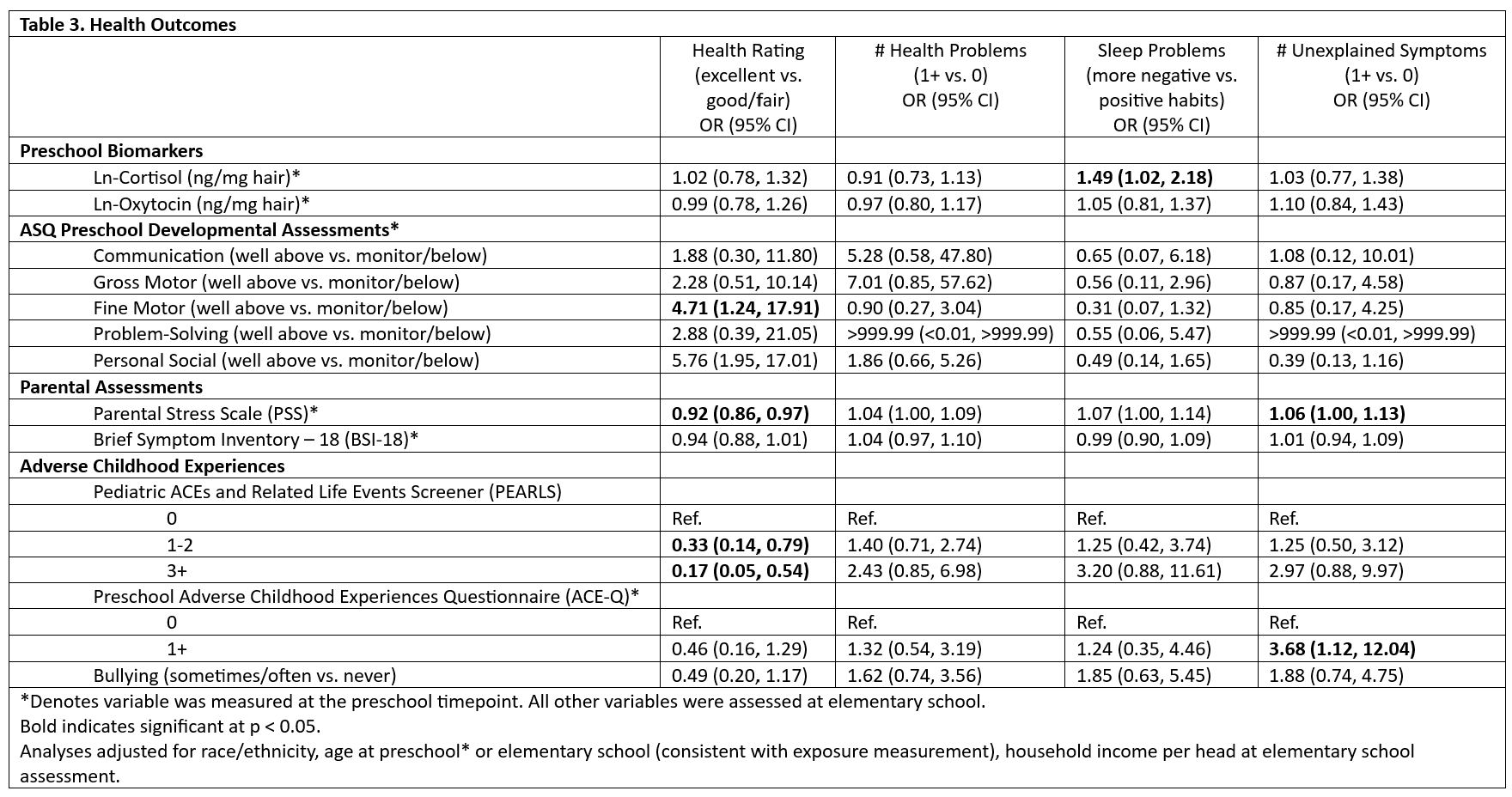
Background: Adverse Childhood Experiences (ACEs) have well-documented detrimental effects into adulthood, depending on the neurodevelopmental timing of exposure, and mediated via genetic-environment interactions and dysregulation of the hypothalamic-pituitary-adrenal (HPA)-axis. Limited data are available on the childhood effects of ACEs, during critical developmental windows, when interventions may be most beneficial. Objective: The purpose of this study was to identify preschool predictors of poor health, academic, and behavioral outcomes in elementary school. Design/Methods: The Hair Biomarkers Study (HBS-I) evaluated healthy preschool children using parent-reported surveys and painlessly obtained scalp hair to measure hair cortisol (HCC; ng/mg) and hair oxytocin concentrations (HOC; ng/mg), representing stressful and supportive experiences, respectively, using ELISA assays. Log-transformed data were used in analyses. Prospective follow-up assessment at elementary school age included school attendance (absences, tardies) data from report cards, parent-reported Child Behavior Checklist (CBCL; total score, internalizing and externalizing problems subscores), and parent-reported health outcomes (overall health, number of health problems, sleep problems, and number of medically unexplained symptoms). Multivariate linear and logistic regression models examined the associations between preschool factors and elementary school outcomes. Results: Most of the cohort (N = 189) was male (62%), White (41%), and living in a nuclear family (90%). In multivariate models, 1+ vs. 0 ACEs at preschool was associated with a 3.48 day increase in 1st grade absenteeism (95% CI: 0.55, 6.40), 12.29 percentile increase in CBCL Total Problems (95% CI: 1.69, 22.89), and 3.68-fold greater odds of having medically unexplained symptom(s) (95% CI: 1.12, 12.04). Higher HOC at preschool was associated with fewer school absences (β-est: -0.71; 95% CI: -1.23, -0.19), while higher HCC was associated with greater sleep problems (OR: 1.49; 95% CI: 1.02, 2.18). Parental stress was associated with internalizing (β-est: 1.39; 95% CI: 0.84, 1.94) and externalizing problems (β-est: 1.26; 95% CI: 0.77, 1.75), and lower child health ratings (OR: 0.92; 95% 0.86, 0.97).
Conclusion(s): ACEs exposure was consistently associated with poorer outcomes across all three domains of academics, child behaviors, and health. Collaboration among pediatricians, schools, mental health professionals, and community organizations will be crucial to mitigating the long-term effects of ACEs during later childhood.