Session: Health Equity/Social Determinants of Health 3
212 - From Recognition to Diagnosis: Disparities Along the Pediatric Concussion Care Continuum
Friday, April 24, 2026
5:30pm - 8:00pm ET
Publication Number: 1201.212
Lillian Voke, UMass Chan Medical School, Worcester, MA, United States; Yorghos Tripodis, Boston University School of Public Health, Boston, MA, United States; Arvin Garg, UMass Memorial Children's Medical Center, Worcester, MA, United States; Erin J. Meyer, UMass Memorial Children's Medical Center, Natick, MA, United States
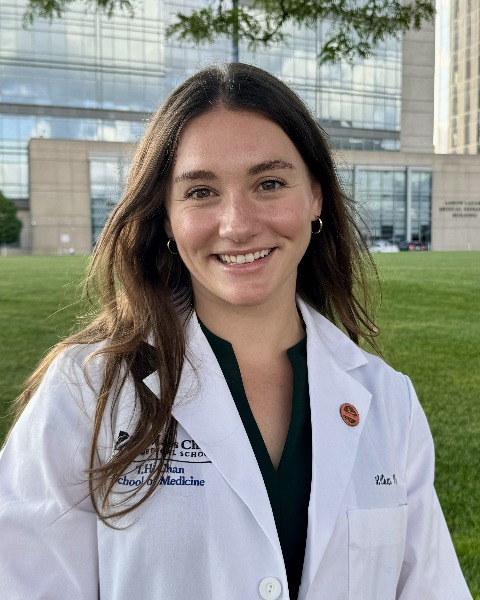
Medical Student UMass Chan Medical School Worcester, Massachusetts, United States
Background: Sociodemographic disparities across the concussion care continuum remain poorly understood. Objective: To examine associations between sociodemographic factors and caregiver-reported recognition, care-seeking, and provider-confirmed diagnosis of concussion. Design/Methods: We conducted a cross-sectional analysis of the 2023 National Survey of Children’s Health (NSCH), an annual nationally representative survey sent via the web and mail to caregivers of U.S. children ages 0-17 in English and Spanish. Our sample was restricted to school-aged children (6-17 years) with responses to concussion-related questions. Caregivers were asked, “Do you think this child has ever had a concussion or brain injury?” If yes: “Did you seek medical care from a doctor or other health care provider?” and, if yes, then: “Did a doctor or other health care provider tell you that this child had a concussion or brain injury?” Responses to these questions were the primary outcomes and reflected the concussion care continuum: recognition and reporting, care-seeking, and diagnosis confirmation. Weighted prevalence estimates were calculated, and adjusted odds ratios (aOR) with 95% confidence intervals (CI) were estimated using weighted logistic regression. Results: 33,475 children were included, representing a national estimate of 49,733,639. Weighted prevalence of concussion was 5.2% (95% CI 4.8-5.6). Children identifying as Black, Asian, Hispanic, and those in homes primarily speaking a non-English language showed significantly decreased adjusted odds of reported concussion (Table 1). Of those, 87.3% (95% CI 84.2-0.5) reported seeking care, and 89.6% (95% CI 87.2-91.9) of those who sought care had their concussion confirmed by a healthcare provider. Children who identified as Black were marginally less likely to seek care (aOR 0.41, 95% CI 0.17–1.00), and Asian and AI/AN or NH/PI children were less likely to have a confirmed diagnosis (aOR 0.13, 95% CI 0.05-0.35; aOR 0.12, 95% CI 0.03-0.42), as well as those whose caregiver’s highest education level was high school (0.48, 95% CI 0.23-0.99). No significant associations between ethnicity or household language and care-seeking or diagnosis confirmation were found.
Conclusion(s): Disparities in caregiver-reported concussion cases are also reflected in care-seeking and diagnostic confirmation, albeit to a lesser degree. This pattern may reflect limited power in subgroups or selection bias from exclusion of children whose concussions were not recognized by their caregivers. Future study is necessary to elucidate structural inequities in recognition and access to evaluation for concussion care.
Table 1. Table 1 (1).pdf Associations Between Lifetime History of Concussion, Care-seeking, and Diagnosis Confirmation and Sociodemographic Characteristics Among U.S. Children Ages 6 to 17 years from the 2023 National Survey of Children’s Health
Figure 1. Figure 1 (1).pdfCaregiver-reported responses on pediatric lifetime concussion history, care seeking, and diagnosis confirmation from the 2023 National Survey of Children’s Health