Session: Neo-Perinatal Health Care Delivery: Practices and Procedures 2
724 - Multi-disciplinary perspectives on communication quality in the Neonatal Intensive Care Unit (NICU)
Friday, April 24, 2026
5:30pm - 8:00pm ET
Publication Number: 1701.724
Katherine Guttmann, Icahn School of Medicine at Mount Sinai, Larchmont, NY, United States; Elizabeth Mari, Icahn School of Medicine at Mount Sinai, Flushing, NY, United States; Andrea Weintraub, Icahn School of Medicine at Mount Sinai, New York, NY, United States
Assistant Professor Icahn School of Medicine at Mount Sinai Larchmont, New York, United States
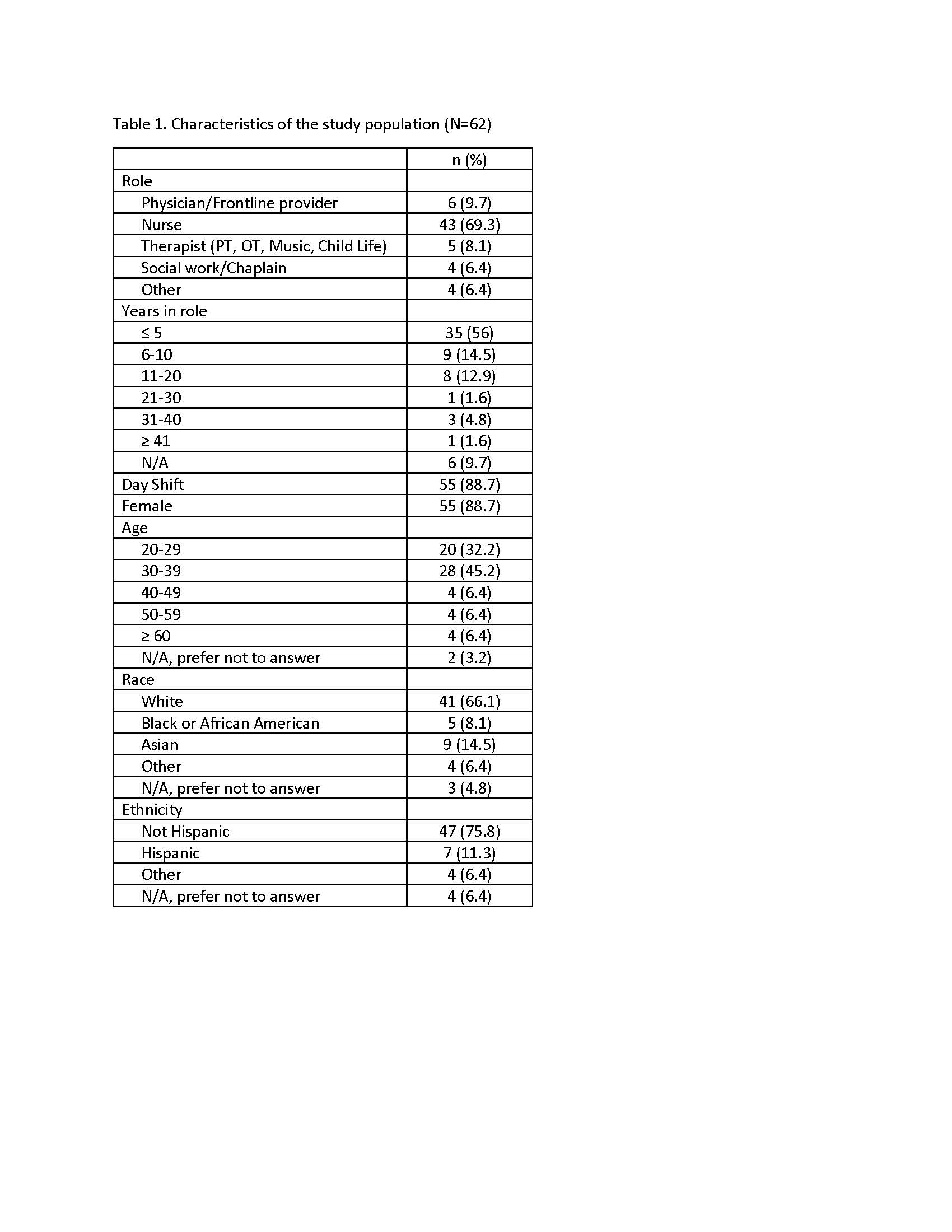
Background: Communication quality directly impacts patient and parent outcomes in the NICU. While NICU staff often endorse the sentiment that high quality communication is essential for excellent patient care, it is not clear that providers in different roles define 'high quality communication' in the same way. Objective: To explore multi-disciplinary perspectives of NICU personnel on communication quality. We hypothesized that perceptions would vary by role. Design/Methods: This phenomenological study explored the perspectives of NICU staff in a variety of roles on high quality communication in the NICU. One-question semi-structured interviews were conducted with NICU staff. Enrollment continued until thematic saturation was reached. Thematic analysis was used to explore and compare themes across disciplines. Results: Sixty-nine staff members were interviewed, and included 41 nurses, 14 physicians, physician assistants, and nurse practitioners, and 14 "other" providers (Table 1). Two thematic categories emerged: messaging and dynamics. Messaging sub-themes included: 1) clarity (setting goals; clear and direct language; avoiding jargon; ensuring parents understand) and 2) timing and approach (unhurried; frequent; timely; proactive) (Table 2a). Dynamics sub-themes included: 1) team interactions (inclusivity; respect; consistency) and 2) parent-centeredness (parents as key stakeholders; identifying and adapting to needs; creating a safe space; empathy; offering flexible modes of communication) (Table 2b).
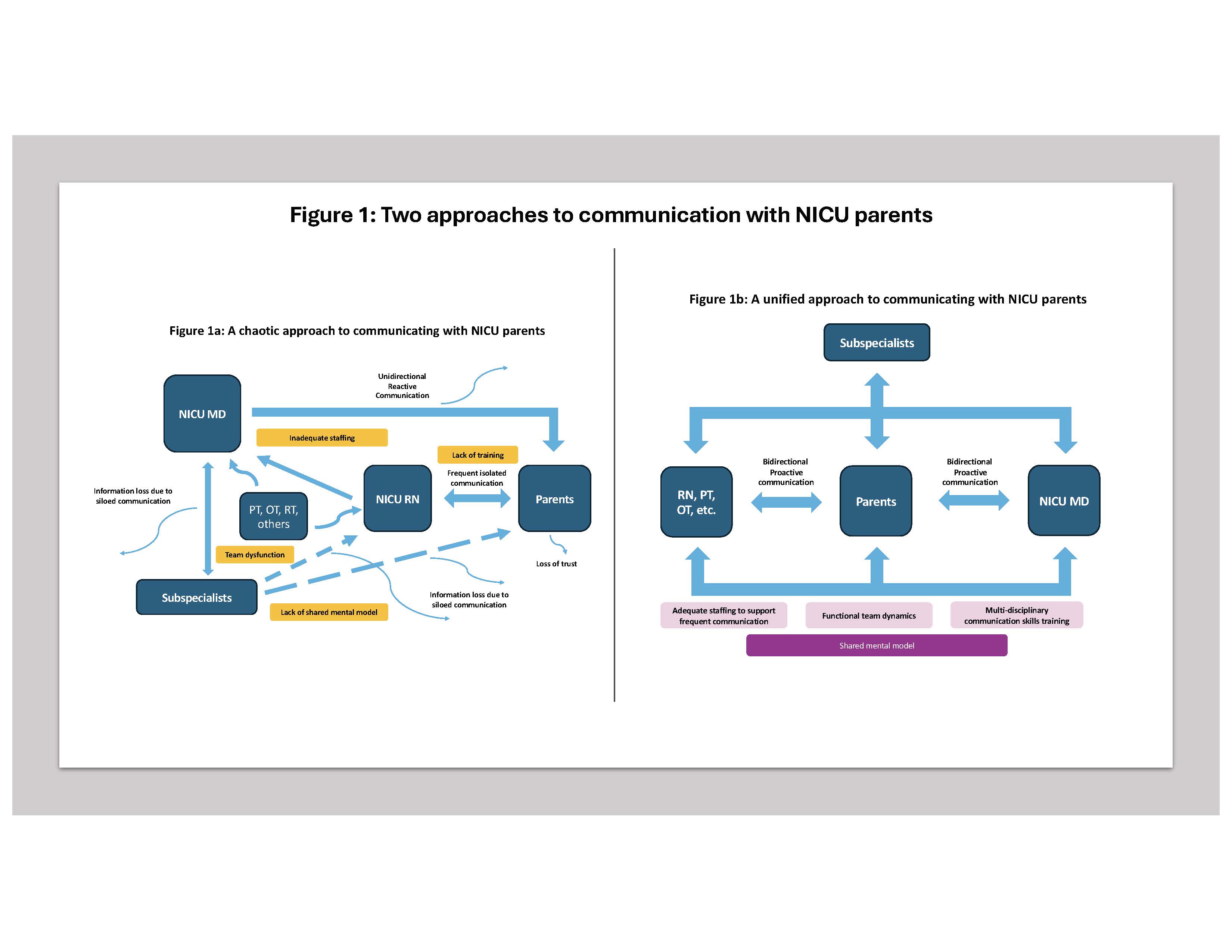
Conclusion(s): NICU staff prioritize clear and direct language and emphasize proactive, timely communication. Nurses identified inclusive and respectful team communication as essential, while physicians were less likely to include team dynamics in a definition of high-quality communication. Non-physician team members were also more focused on ensuring parent-centeredness than were physicians. Though staff across disciplines have different foci relative to communication quality, they cite excellent communication among teams as critical. The inclusion of participants in multiple provider roles in the current study, facilitated by its unique single-question design, resulted in a richer and more multidisciplinary perspective on communication quality in the NICU than has previously been captured. Improving team dynamics, equipping teams with a shared model of communication quality, and ensuring adequate staffing may improve communication. We propose a conceptual framework (Figure 1) as a first step towards such a shared model.
Table 1. Characteristics of the study population
Table 2: Study themes
Figure 1: Two approaches to communicating with NICU parents









.jpg)