481 - Feasibility of a Pilot Telehealth-based Pediatric ICU Follow-up (post-PICU) Program for Children with Complex Chronic Conditions and Report of Caregiver Perspectives.
Friday, April 24, 2026
5:30pm - 8:00pm ET
Publication Number: 1461.481
Ryan Hirschfeld, Stony Brook Children's Hospital, Stony Brook, NY, United States
Assistant Professor of Clinical Pediatrics Stony Brook Children's Hospital Stony Brook, New York, United States
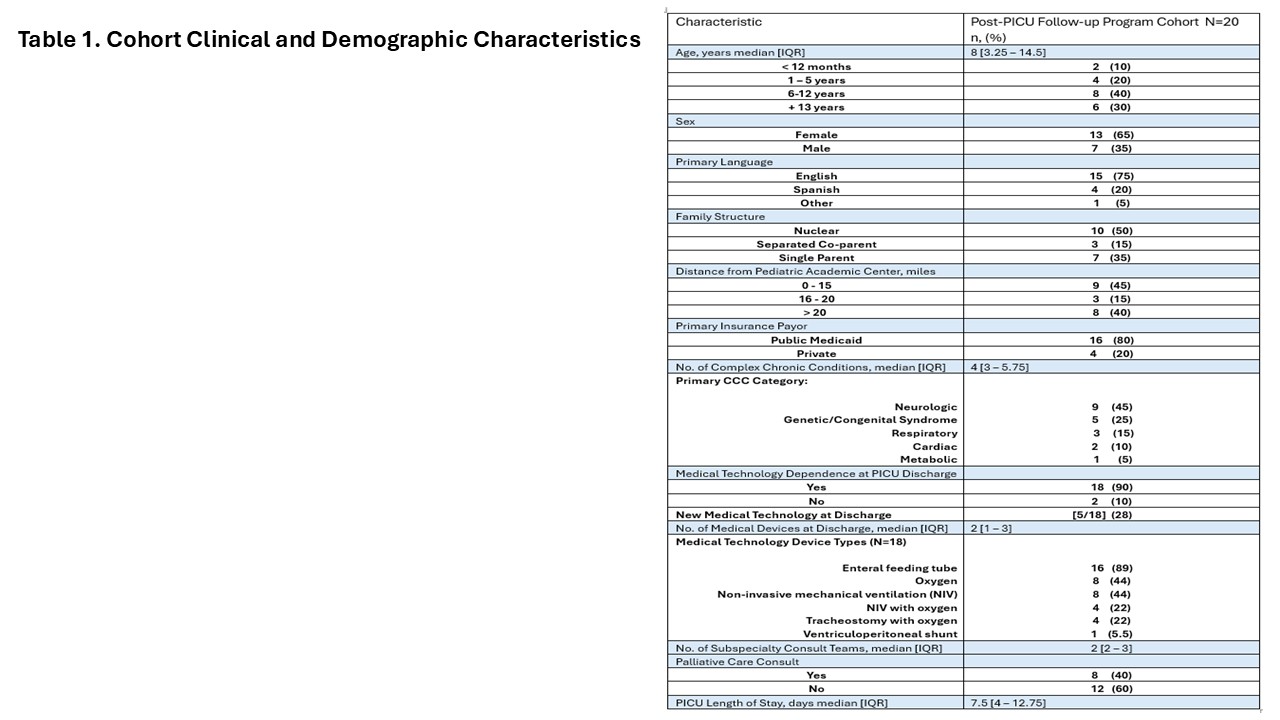
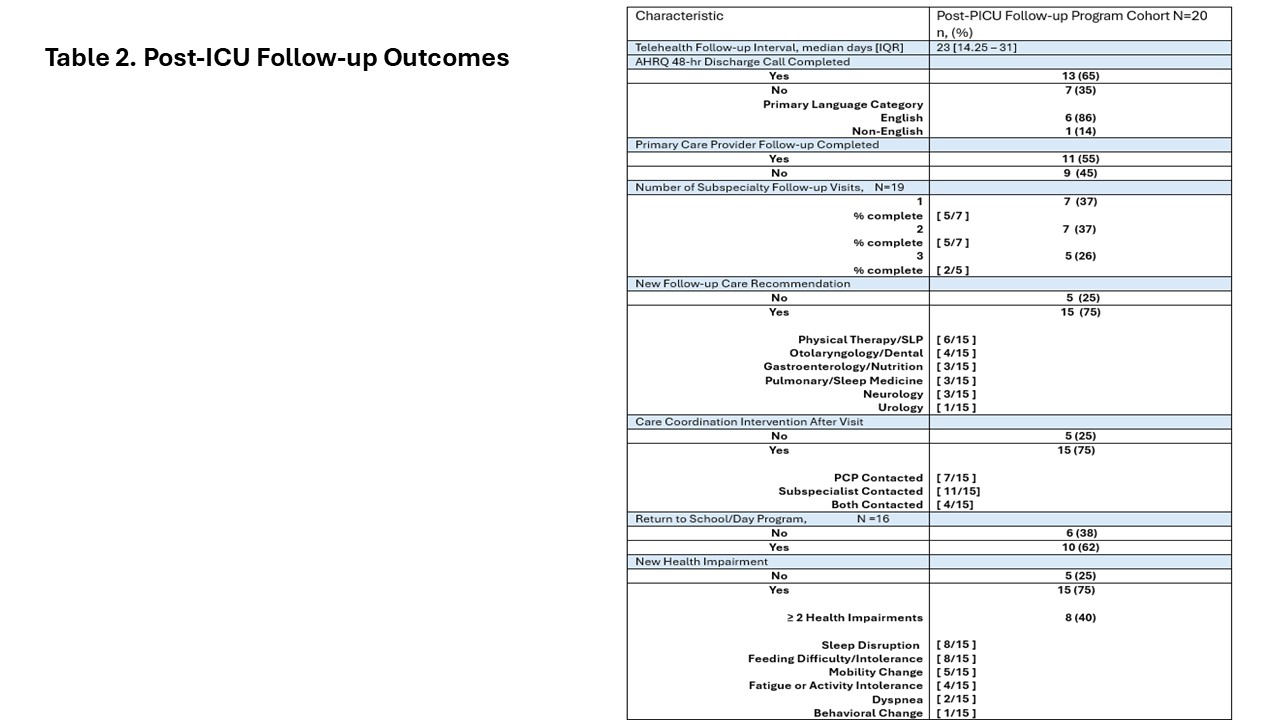
Background: The ICU-to-home transition is a vulnerable time for children with complex chronic conditions (CCCs). These children are underrepresented in post-PICU outcome research. To address this, a pilot telehealth post-PICU program was created to explore post-ICU care transition outcomes. Objective: To report the findings of this pilot post-PICU program targeting children with CCCs and review caregiver participant perspectives. Design/Methods: Between April 2024 - April 2025 children 0-18 years with ≥ 1 CCC requiring ongoing subspecialty care and homecare services at PICU discharge were invited to participate in the telehealth post-PICU program. The program targets (1) verification of follow-up (2) identification of discharge care plan challenges (3) screening for residual health issues (4) interaction with continuity providers. Caregiver participants were invited to take a 10-item survey assessing program acceptability, utility, and satisfaction. Results: Forty children were recruited, N=32 scheduled visits (80% uptake) and N=20 (63%) completed a telehealth visit a median of 23 days post discharge [Table 1]. At follow-up, 55% had a primary care visit. Nearly all were recommended for subspecialty follow-up, 63% (N=12/19) with ≥ 2 subspecialty follow-ups, yet only 58% (N=7/12) had attended or scheduled these visits [Table 2]. Two-thirds of caregivers (N=13/20) reported issues during the ICU-to-home transition related to accessing services, homecare resources and care plan communication [Figure 3]. Three quarters of post-PICU visits led to new service recommendations and care coordination interventions. Of 14 eligible caregiver participants, survey response rate ranged from 57 - 71% per item. Nearly all respondents agreed or strongly agreed that the program offered: (1) accessible care post discharge (2) useful review of care plans (3) validation of concerns. While most (N=7/9) indicated the visit met expectations, a third indicated the visit did not meet their child's needs. All respondents indicated satisfaction with their participation and would recommend participation to other families of children with CCC.
Conclusion(s): Post-PICU follow-up programs using current telehealth systems are feasible with promising uptake. While the program led to care coordination activities and participant satisfaction was positive, the program did not meet the care transition needs for many. Caregivers of children with CCCs face a myriad of issues during the ICU-to-home transition with notable gaps in routine follow-up and care services. Integration of post-ICU follow-up programs within a primary care model may help bridge gaps.
Table 1: Cohort Clinical and Demographic Characteristics










.jpg)
