274 - Educators in Action: A Mixed Methods Study of Pediatric Faculty on Teaching and Feedback Practices
Friday, April 24, 2026
5:30pm - 8:00pm ET
Publication Number: 1260.274
Martha J. Elster, University of California, San Francisco, School of Medicine, San Francisco, CA, United States; Jennifer Lee, University of California, San Francisco, School of Medicine, Walnut Creek, CA, United States; Helen Pu, University of California San Francisco, San Francisco, CA, United States; April Zaat, UCSF Benioff Children's Hospital Oakland, Oakland, CA, United States; Sandrijn van Schaik, University of California, San Francisco, School of Medicine, San Francisco, CA, United States
Associate Professor University of California, San Francisco, School of Medicine San Francisco, California, United States
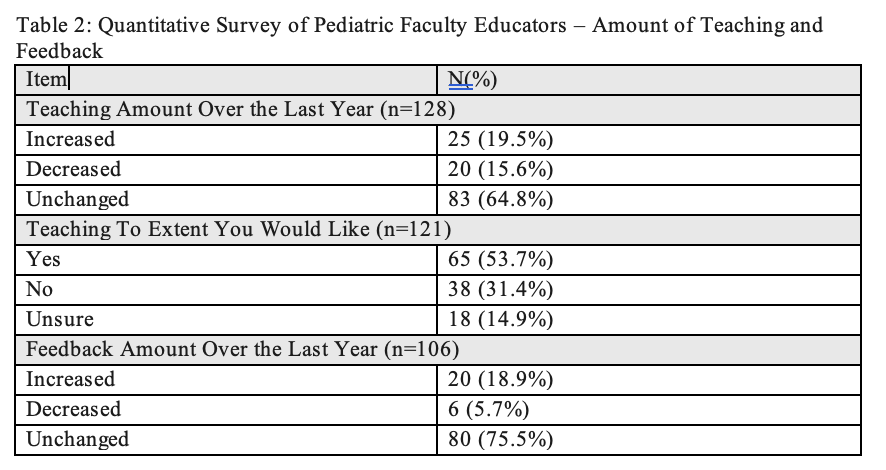
Background: Faculty in academic medicine face growing clinical productivity pressures that may diminish their interest and capacity to teach and provide feedback to trainees. How these forces shape faculty engagement in teaching and feedback - and what institutional supports might help sustain it - remains less understood. A clearer picture of current practices and needs can inform targeted efforts for educators to maintain sustainable, fulfilling careers. Objective: To explore how faculty engage in teaching and feedback within today's high demand clinical environments and identify factors influencing this engagement Design/Methods: We employed a sequential mixed methods study integrating quantitative and qualitative approaches of full-time Pediatrics faculty at the University of California, San Francisco. First, in March-June 2024 we conducted a survey asking about the frequency of teaching and feedback, changes in frequency over the past year, and mitigating factors. Data were analyzed using descriptive statistics and content analysis of free-text responses. Building on survey results, we conducted semi-structured interviews of 16 faculty in March-June 2025. Interview transcripts were inductively analyzed using thematic analysis. This study was approved by the UCSF IRB. Results: 139/384 (36.2%) faculty responded to the survey. 31.4% reported teaching less than they desired. 19% increased teaching over the last year, 15% decreased, and 65% stayed the same. Most faculty provided feedback to learners (82.8%) without changes in frequency. Open-ended responses reflected educators had ample education resources and opportunities to teach but also frustration with productivity pressures which compete with teaching time. Interview data shed more light on these tensions with three interrelated themes: 1) institutional complexity, resulting in difficulty navigating systems and resources for educational growth, 2) learning engagement, with challenges to do so effectively amid competing priorities, and 3) peer coaching, which is seen as a means to strengthen skills and sustain engagement.
Conclusion(s): Our findings revealed that despite a resource-rich educational environment, pediatric faculty experience friction between educational aspirations and productivity demands. A shared interest in peer coaching emerged, underscoring the need for structured programs to help navigate resources, promote learner engagement, and build teaching and feedback skills. Implementing such initiatives may enhance faculty effectiveness and success.
Table 3: Themes and Representative Quotations from Interviews with 16 Pediatrics Faculty Regarding Engagement in Educational Activities
Table 2: Quantitative Survey of Pediatric Faculty Educators - Amount of Teaching and Feedback
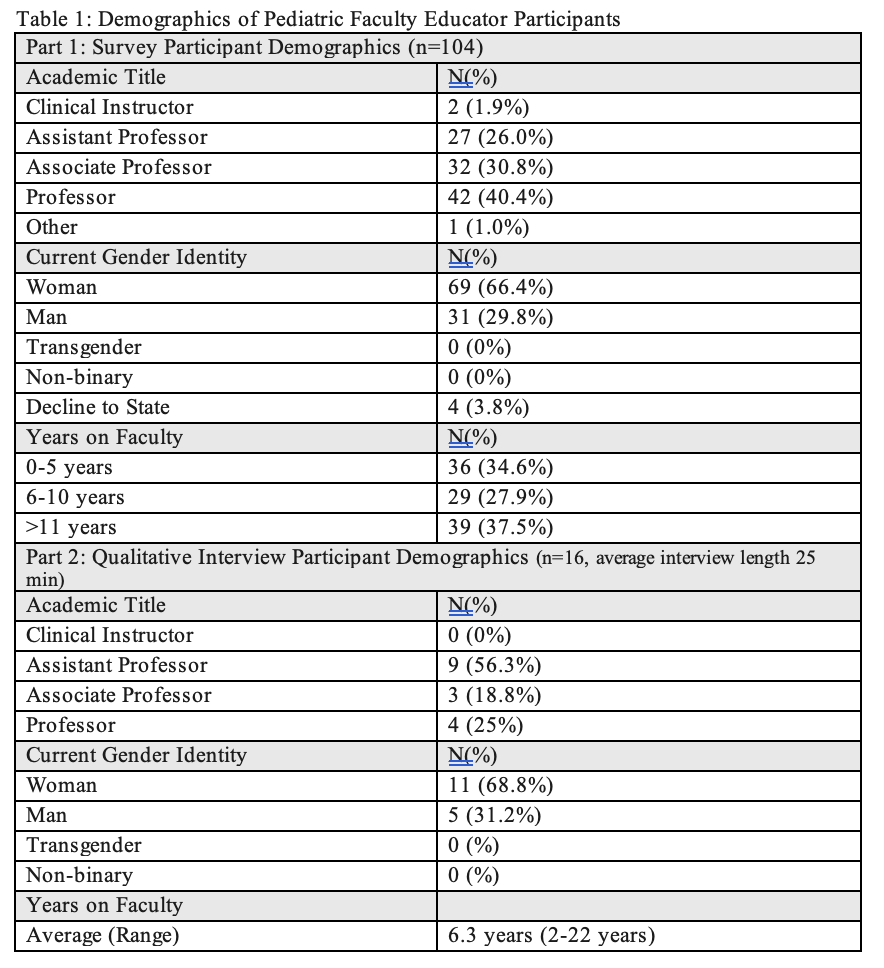
Table 1: Demographics of Pediatric Faculty Educator Participants










.png)