283 - Pre-Clerkship Mentorship Elective Improves Interest and Readiness for Pediatric Careers
Friday, April 24, 2026
5:30pm - 8:00pm ET
Publication Number: 1269.283
Jordan L. Brown, University of Arizona College of Medicine - Phoenix, Scottsdale, AZ, United States; Brigham Harrison, University of Arizona College of Medicine - Phoenix, Phoenix, AZ, United States; Lisa M. Grimaldi, University Arizona College of Medicine-Phoenix, Ohoenix, AZ, United States; Kevin Mesinas, University of Arizona College of Medicine - Phoenix, Phoenix, AZ, United States
Medical Student University of Arizona College of Medicine - Phoenix Scottsdale, Arizona, United States
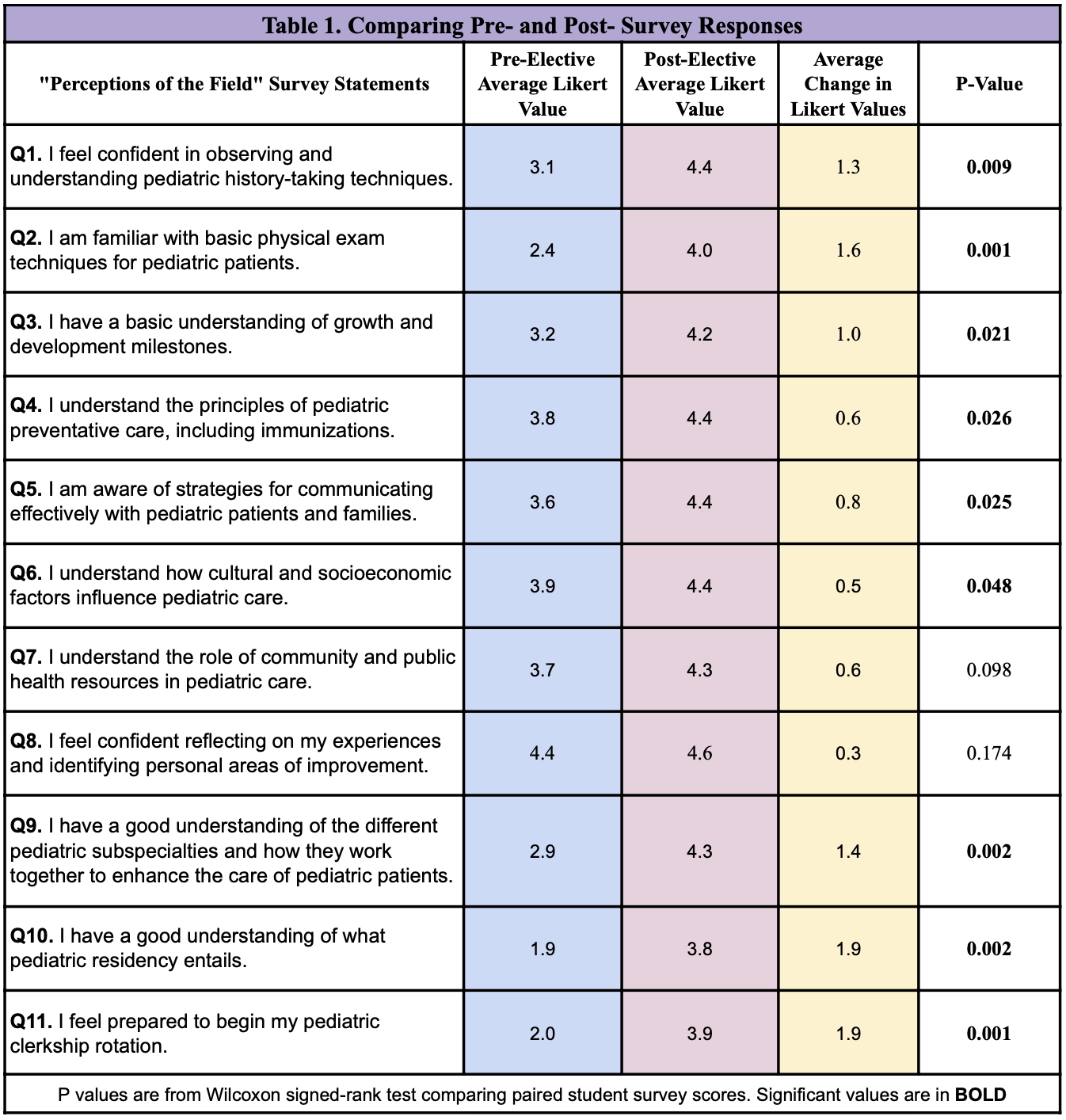
Background: The United States is facing a growing shortage of pediatricians, partly due to limited exposure to pediatrics during undergraduate medical training. To address this, we created a pediatric mentorship elective for first-year medical students. Objective: We aimed to increase early exposure to pediatrics to increase medical students' understanding of pediatric practice, preparation for pediatrics clerkship, and interest in pediatric careers. Design/Methods: Interested first-year medical students were paired with pediatric physician mentors based on shared personal and professional interests. Participants shadowed mentors in clinical settings for at least 15 hours, observing patient care and exploring pediatric practice across subspecialties. Pediatric mini-lectures and a post-elective debrief session were offered for additional structured learning. Pre- and post-elective surveys using a 5-point Likert scale assessed changes in knowledge and interest in pediatrics. Survey data were analyzed using descriptive statistics and the Wilcoxon signed-rank test to compare pre- and post-responses. Results: Fourteen of 130 students (10.8%) enrolled in the first cohort. All students completed pre- and post-surveys (100%). Significant increases were observed in confidence with pediatric history-taking and physical exam, understanding pediatric growth and developmental milestones, preventive care, communication, and sociocultural factors influencing care (Table 1). Key responses showing improvement included understanding pediatric subspecialties (p=0.002, 2.9 pre vs. 4.3 post), knowledge of pediatric residency (p=0.002, 1.9 pre vs. 3.8 post), and preparation for pediatric clerkship (p=0.001, 2.0 pre vs. 3.9 post). The average likelihood of choosing a pediatric specialty increased from 70.7% to 76.4%. Fourteen students (100%) committed to continuing meetings with their mentor for ongoing mentorship. Narrative responses highlighted increased commitment to pediatrics, enhanced readiness for clerkships, application of classroom knowledge to clinical practice, development of mentorship, and solidification of professional identity.
Conclusion(s): This pediatric mentorship elective enhanced pediatric knowledge, strengthened pediatric clerkship preparedness, and solidified students' commitment and enthusiasm to pursue careers in pediatrics. We hope that ongoing mentorship and exposure to pediatrics during medical school will increase the number of students entering the pediatric workforce.
Table 1. Comparing Pre- and Post- Survey Responses