Session: Health Equity/Social Determinants of Health 2
198 - The Association between Early Intervention Enrollment and 18–24-month Neurodevelopmental Outcomes of Preterm Infants by Insurance Status
Friday, April 24, 2026
5:30pm - 8:00pm ET
Publication Number: 1187.198
Mallory Go, Brown University, Providence, RI, United States; Julia Mayne, Women & Infants Hospital of Rhode Island, Providence, RI, United States; Betty R. Vohr, Women & Infants Hospital, Alpert Medical School of Brown University, Bristol, RI, United States; Richard Tucker, Women & Infants Hospital of Rhode Island, Providence, RI, United States
Researcher Brown University Providence, Rhode Island, United States
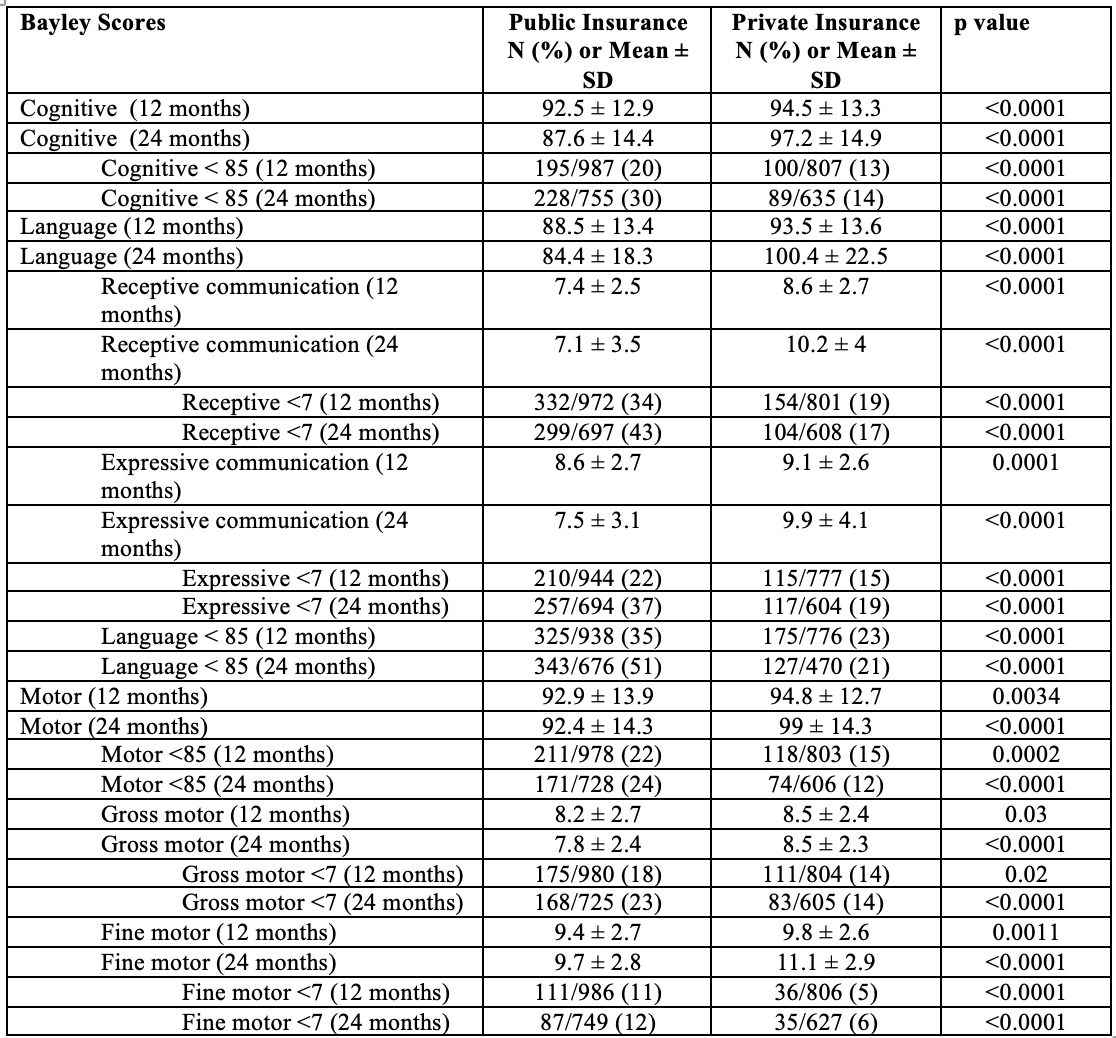
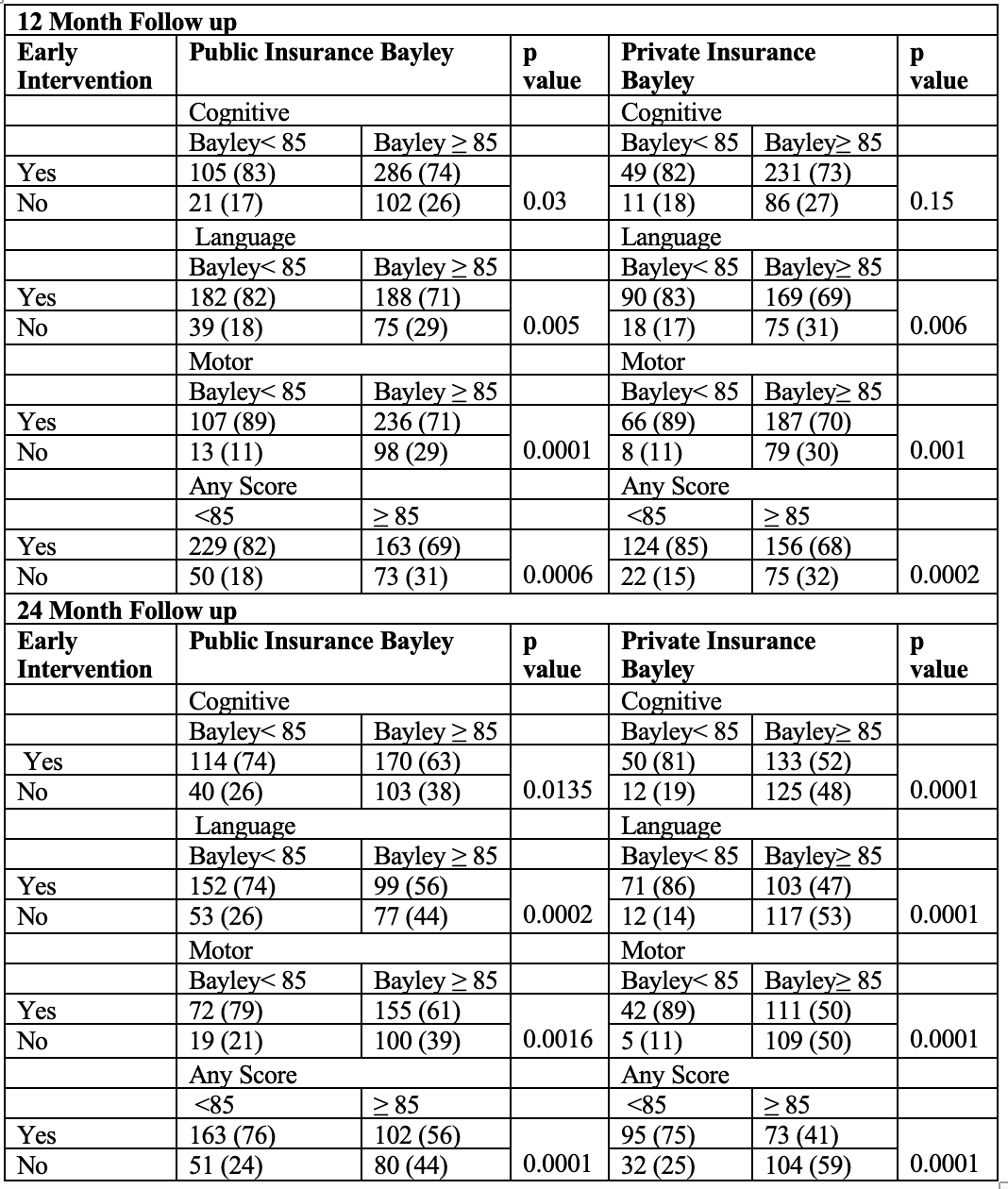
Background: Preterm infants are at increased risk of delays and qualify for free outpatient services targeting motor, cognitive, and communication skills. Objective: We aimed to identify neurodevelopmental trajectories of preterm infants on by insurance and associated Early Intervention (EI) enrollment - a federal grant program run by individual states afforded to children 0-3. We compared Bayley-III 12- and 24-month language, motor, and cognitive scores of preterm infants by insurance coverage. Design/Methods: We conducted a retrospective cross-sectional analysis on a convenience sample of preterm infants born less than 34 weeks of gestation with Bayley development assessments in the Neonatal Follow-Up program. The data were analyzed using t-tests, Wilcoxon tests, chi-square, Fisher's exact tests, and ANOVA. Results: At 12 months, no significant EI enrollment differences were found between private and public insurance for infants with Bayley scores < 85: Cognitive (19% vs 21%), Language (23% vs 21%), and Motor (17% vs 12%). At 24 months, rates remained similar for Cognitive (22% vs 28%), Language (19% vs 28%), and Motor (18% vs 20%) scores < 85, with no significant insurance-based differences across domains.
Conclusion(s): Insurance status was not significantly associated with EI enrollment, however, patients with public insurance consistently had significantly higher rates of cognitive, language, and motor scores less than 85, indicating delays that need EI services. While the trend of language delays and EI enrollment at 24 months showed a larger percentage of children not enrolled in EI, enrollment in EI between groups did not differ significantly, indicating infants with developmental delays were appropriately referred and engaged in EI services in RI among infants born preterm. Bayley scores were consistently lower among infants with public insurance, potentially reflecting the effects of financial and emotional stressors associated with socioeconomic status on cognitive and behavioral delays in children.
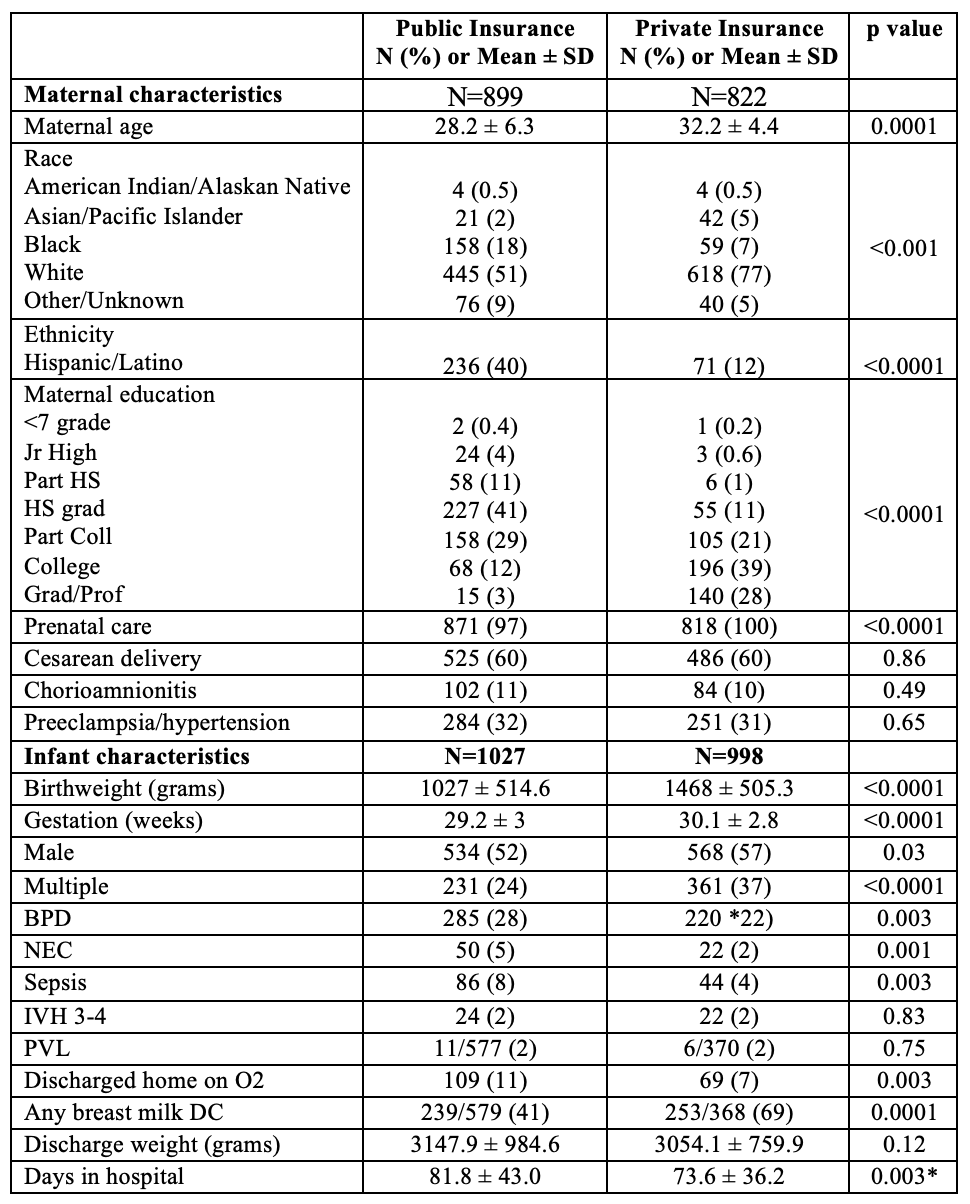
Table 1. Maternal and infant characteristics 2012-2023
Table 2. Bayley Scores by Insurance
Table 3. Early Intervention and Bayley Scores by Insurance