620 - Premature Digestion Differentially Affects Insulin, Cortisol, and IgA Content of Donor Milk-Derived Products: Implications on Bioavailability
Friday, April 24, 2026
5:30pm - 8:00pm ET
Publication Number: 1597.620
Eli Malkovskiy, University of Rochester, Golisano Children’s Hospital, Rochester, NY, United States; Laura E. Cole, University of Rochester School of Medicine and Dentistry, Rochester, NY, United States; Kirsi Jarvinen-Seppo, Golisano Children's Hospital at The University of Rochester Medical Center, Rochester, NY, United States; Kristin M. Scheible, Golisano Children's Hospital at The University of Rochester Medical Center, Rochester, NY, United States; Carl DAngio, Golisano Children's Hospital at The University of Rochester Medical Center, Rochester, NY, United States; Thomas G. O'Connor, University of Rochester Medical Center, Rochester, NY, United States; Ann Dozier, University of Rochester School of Medicine and Dentistry, Rochester, NY, United States; Casey Rosen-Carole, Golisano Children's Hospital at The University of Rochester Medical Center, Rochester, NY, United States; Bridget Young, University of Rochester, Golisano Children’s Hospital, Rochester, NY, United States
Medical Student University of Rochester, Golisano Children’s Hospital Rochester, New York, United States
Background: Human milk delivers bioactive components to the infant's intestinal tract. The extent of bioactivity maintained during the digestive process is not well understood; even less is known about bioactivity of donor human milk (DHM) and fortified/concentrated DHM-derived products. Objective: This study utilizes DHM/DHM-derived products to evaluate the impact of simulated premature digestion on the bioactive components of cortisol, insulin, and immunoglobulin A (IgA), using an in-vitro model. Design/Methods: 46 individual lots of DHM-derived products, including DHM (20 kcal/oz) and DHM-derived fortified products (24, 26, 28, and 30 kcal/oz), were subjected to standardized simulated in-vitro premature digestion, simulating gastric and intestinal phases, using a consensus static in-vitro model as described by Ménard et al. Using immunoassays, we compared concentrations of cortisol (in the fat compartment of milk), insulin, and IgA (in the skim compartment) across the pre-digestion, post-gastric, and post-intestinal phases. Matched pairs t-tests were used to compare the percent change in concentration between digestive stages. One-way ANOVA was used to compare average percent changes between DHM product types. Results: Differences in digestive outcomes were observed between bioactive components, and between fortified vs. un-fortified DHM.
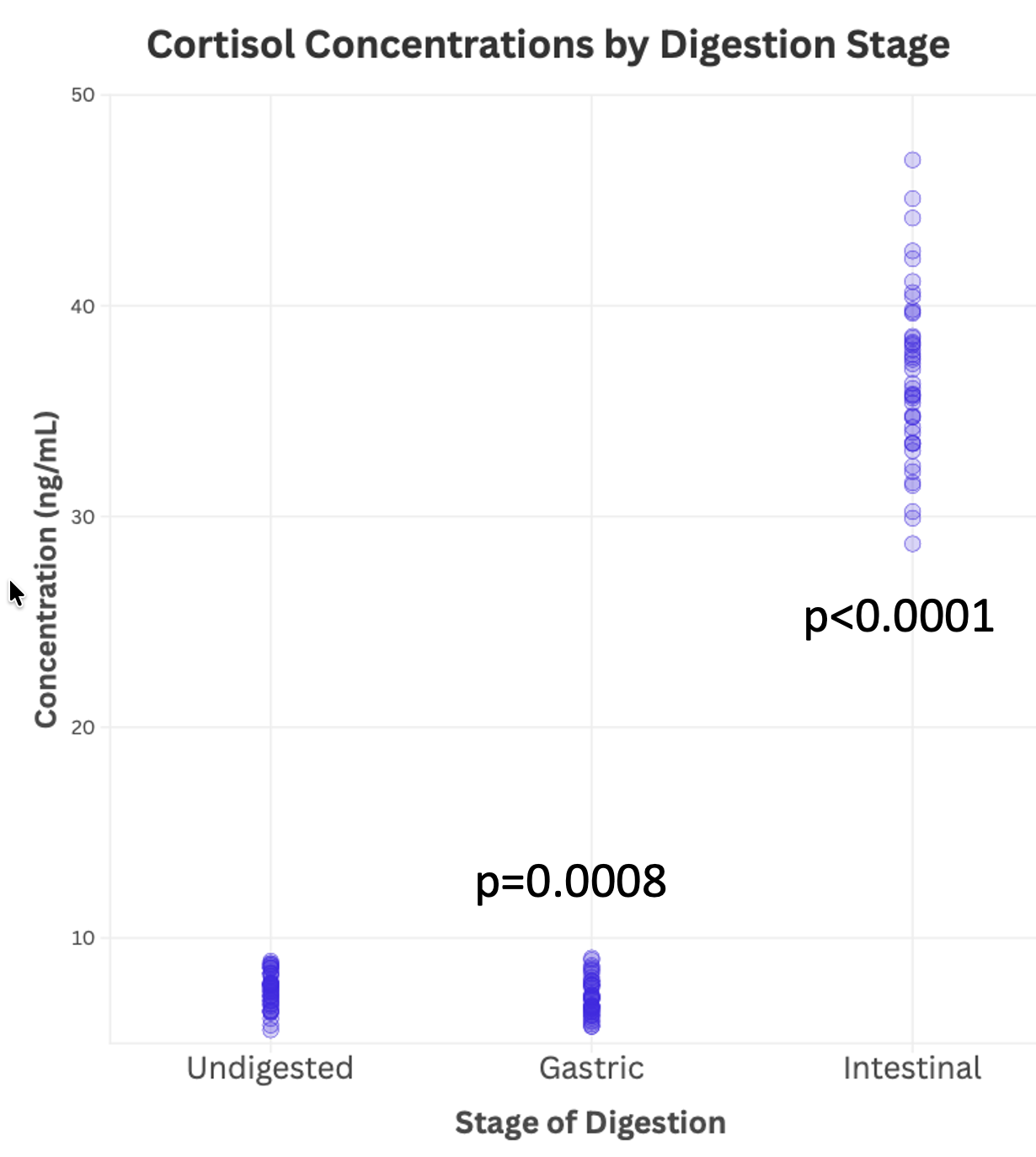
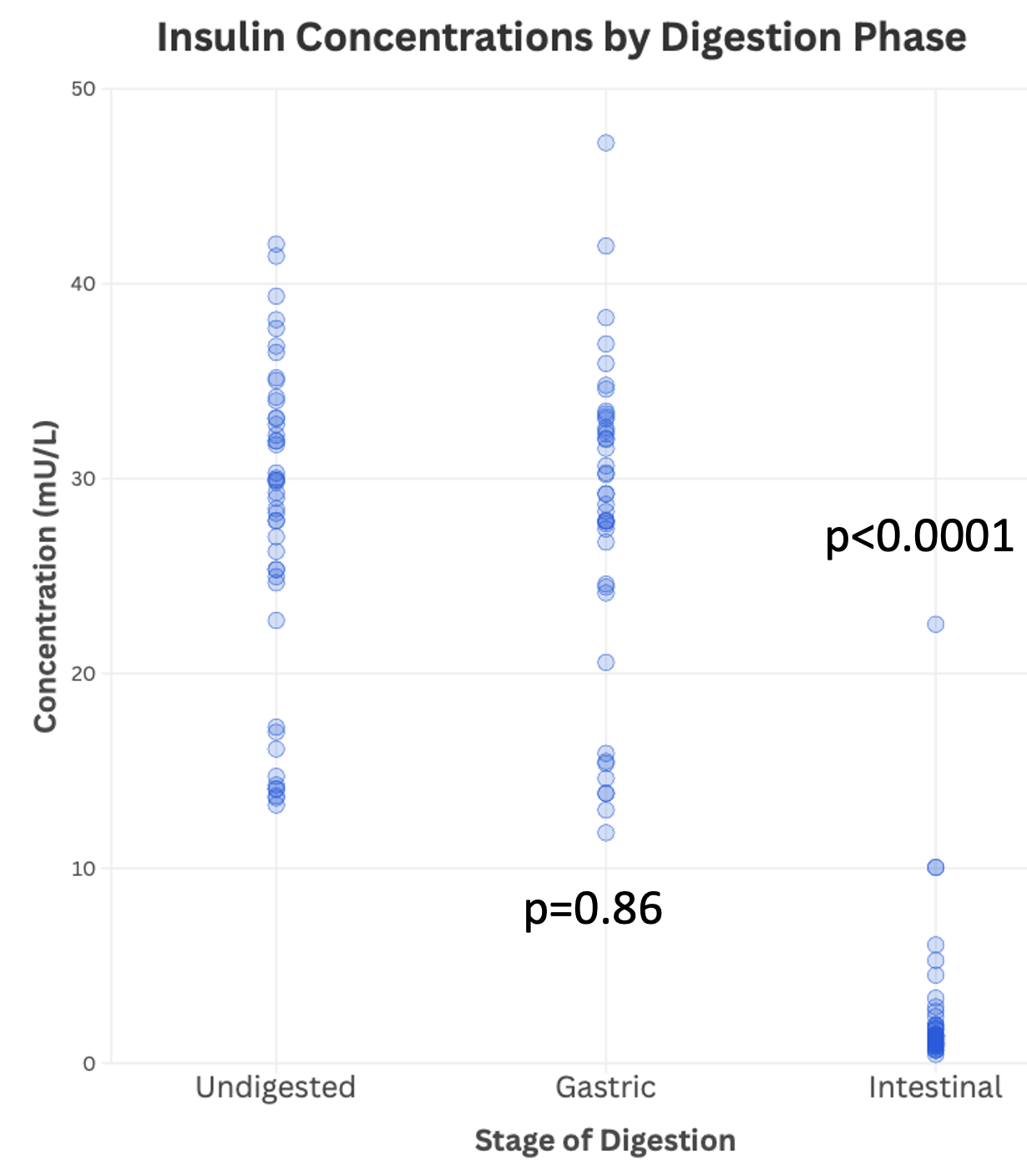
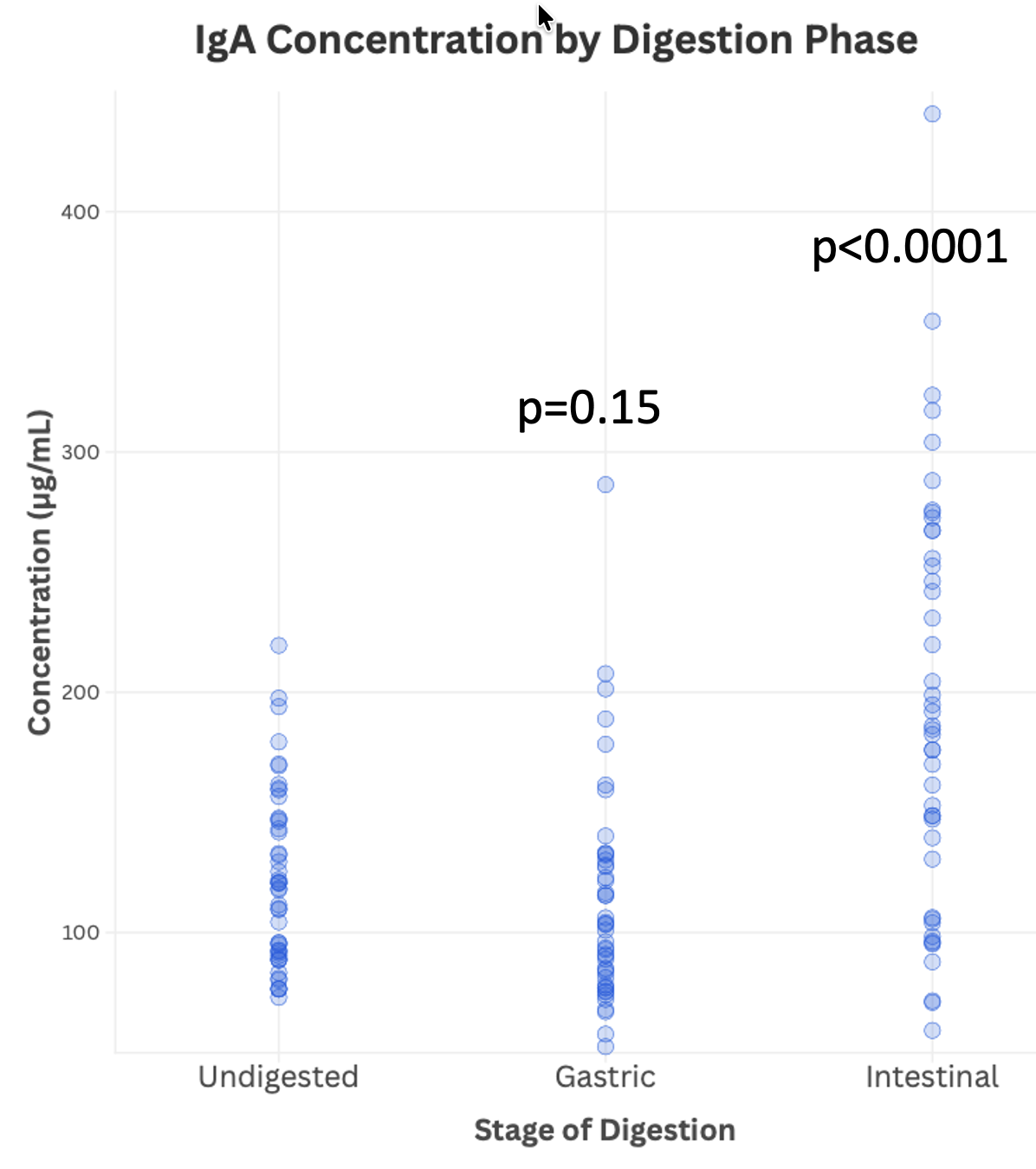
Gastric Digestion: On average, cortisol decreased by 4.1± 8.5% (p=0.0008) during gastric digestion. Cortisol decreased in all fortified products, although cortisol did increase in unfortified DHM (p < 0.0001). Both insulin and IgA concentrations were unchanged by gastric digestion, neither in fortified nor unfortified DHM.
Intestinal Digestion: Cortisol increased by 414 ± 66% (p < 0.0001) during intestinal digestion. This increase in cortisol was more pronounced in less fortified DHM products (≤24 kcal/oz) compared to highly fortified products (>24 kcal/oz; p< 0.0001). Insulin decreased by 89.4 ± 18.8% (p < 0.0001) during intestinal digestion, both in fortified and unfortified DHM. IgA increased by 79.5 ± 79.5% (p < 0.0001) during intestinal digestion. This increase in IgA was more pronounced in highly fortified DHM-products (>24 kcal/oz; p< 0.002).
Conclusion(s): The presence of bioactive compounds in DHM is maintained, at least through gastric digestion. Bioavailability of cortisol and IgA may increase following intestinal digestion, potentially due to liberation from binding proteins and lipase activity on the milk-fat-globule. Fortified-DHM products may be digested differently than DHM in a premature intestinal tract.