275 - Using a Co-Teaching Team to Enhance Research Proposal Feedback in an Online Medical Education Graduate Research Course
Friday, April 24, 2026
5:30pm - 8:00pm ET
Publication Number: 1261.275
Tara McKinley, Cincinnati Children's Hospital Medical Center, Greendale, IN, United States; Jennifer M. Brady, Cincinnati Children's Hospital Medical Center, Cincinnati, OH, United States; Daniel Herchline, Cincinnati Children's Hospital Medical Center, Cincinnati, OH, United States; Lisa Herrmann, Cincinnati Children's Hospital Medical Center, Cincinnati, OH, United States; Francis Real, Cincinnati Children's Hospital Medical Center, Cincinnati, OH, United States; Melissa Klein, Cincinnati Children's Hospital Medical Center, Cincinnati, OH, United States
Assistant Professor Cincinnati Children's Hospital Medical Center Greendale, Indiana, United States
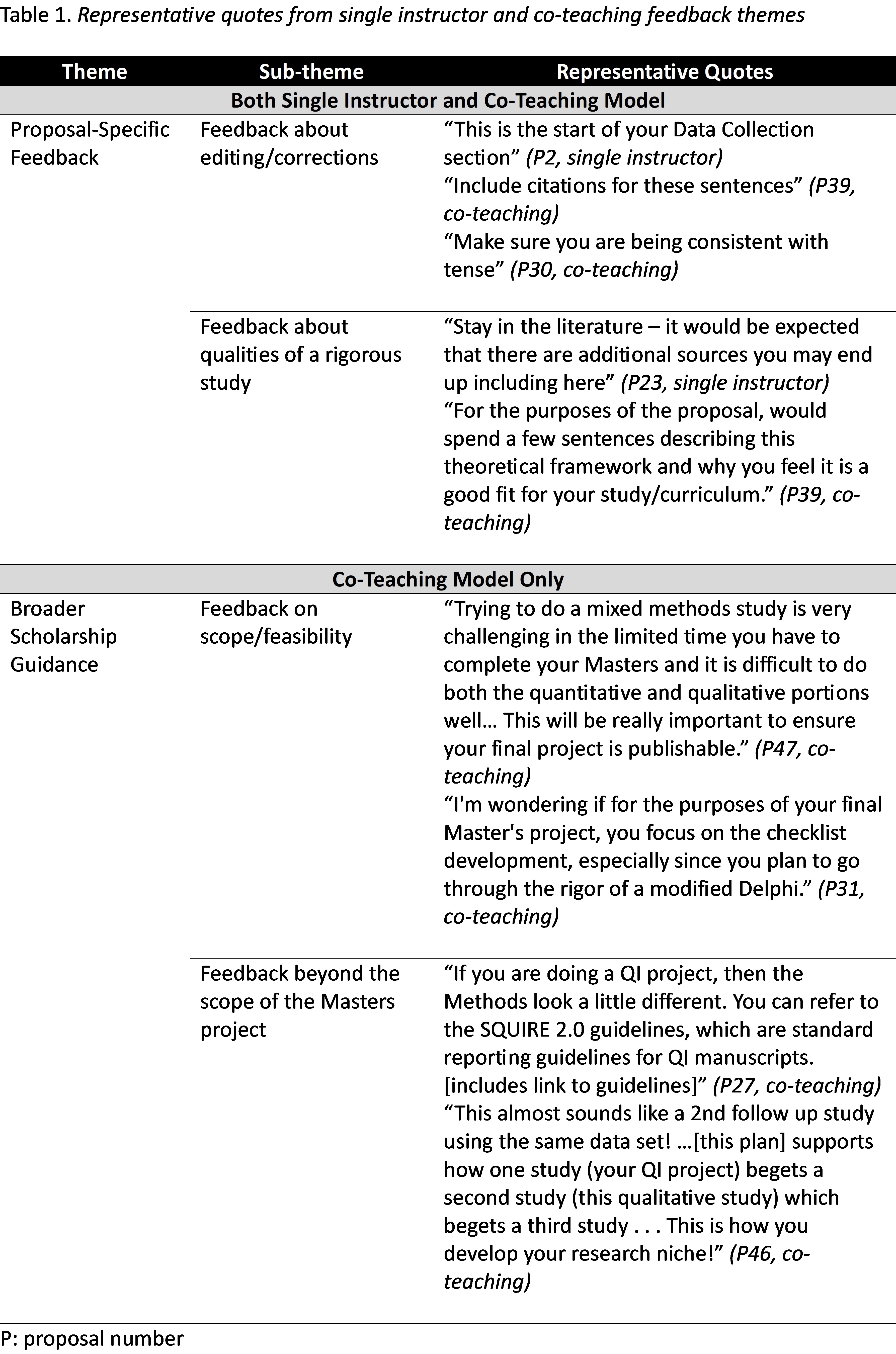
Background: Co-teaching is an education model in which a team of instructors with different but complementary areas of expertise share teaching duties. Though common in K-12 settings, literature on co-teaching in online, graduate and research education is sparse. To enhance the quality of feedback and promote rigorous educational research among students in a post-graduate level medical education research course, we implemented a co-teaching model facilitated by both physician and non-physician instructors, both with medical education research experience. Objective: Explore how feedback on research project proposals in a Masters-level Education Research course differed between a single instructor and co-teaching model. Design/Methods: Using a pragmatic worldview, we emphasized real-world application and maintained flexibility in study design. This qualitative study analyzed research project proposal feedback provided by a single non-physician instructor model and a co-teaching model. All instructors had medical education research experience. Two authors independently analyzed de-identified feedback comments on first drafts of student proposals guided by Hattie and Temperley's work on effective feedback, focusing on feedback about the task, the process of writing, self-regulated learning, and about the self. The research team met to review codes and revise the coding tool. We then re-coded proposals; the team reviewed final codes, and themes. Results: Fifty-three proposals (single instructor model: n=22; co-teaching model: n=31) were analyzed, and we identified two themes: Proposal-Specific Feedback, identified in both teaching models, and Broader Scholarship Guidance, noted in only the co-teaching model. Subthemes of Proposal-Specific Feedback included specific feedback about editing and corrections and about qualities of a rigorous study within the project plan. Subthemes unique to the co-teaching model related to self-regulated learning, specifically providing feedback on rigorous study design and scholarly writing beyond the scope of the assignment and Masters project, providing resources for further exploration and discussing project scope and future project plans (Table 1).
Conclusion(s): In our Masters-level medical education research course, the co-teaching model supported self-regulated learning by guiding students to increase rigor in their study design, develop their research agendas, and consider broader methodologies. These benefits suggest potential value in fostering independent scholarship practices.
Representative quotes from single-instructor and co-teaching feedback themes