226 - Advancing neonatal care where it’s needed most: Evaluation of a novel training model for neonatal providers in sub-Saharan Africa
Friday, April 24, 2026
5:30pm - 8:00pm ET
Publication Number: 1215.226
Meredith R. Hickson, Michigan State University College of Human Medicine, Grand Rapids, MI, United States; Henna Shaikh, University of Washington School of Medicine, Seattle, WA, United States; Tanvi Sumit, Case Western Reserve University School of Medicine, Cleveland, OH, United States; Samudragupta Bora, University Hospitals Rainbow Babies & Children's Hospital, Case Western Reserve University School of Medicine, Cleveland, OH, United States; Samantha Button, Institute for Child Healthcare Africa, Arusha, Arusha, Tanzania; Philip R. Fischer, Mayo Clinic Children's Center, Rochester, MN, United States; Lisa Dyck, St. Boniface Hospital, Landmark, MB, Canada; Scott Guthrie, Children's Hospital at Erlanger, Chattanooga, TN, United States; Brandon R. Hadfield, University of Texas Health Science Center at San Antonio Joe R. and Teresa Lozano Long School of Medicine, Kailua, HI, United States; Ndini I. Lukumay, Maternity Africa, Arusha, Arusha, Tanzania; Kendra K. Martinez, Baylor College of Medicine, Katy, TX, United States; Evelyine J. Mushi, Stellenbosch university, Cape town, Western Cape, South Africa; Beatrice Odongkara, Gulu University Teaching Hospital, Gulu, Gulu, Uganda; Godbless Philipo, University of Minnesota, Minneapolis, MN, United States; Sharla Rent, Duke University School of Medicine, Chapel Hill, NC, United States; Hilda Stanslaus. Ruhimingunge, Stellenbosch University, Cape town, Western Cape, South Africa; Tina M. Slusher, University of Minnesota, Minneapolis, MN, United States; Pauline Wanjiku, AIC Kijabe Hospital, KIAMBU, Central, Kenya; Stephen J. Swanson, University of Minnesota Medical School, Vadnais Heights, MN, United States
Assistant Clinical Professor Michigan State University College of Human Medicine Grand Rapids, Michigan, United States
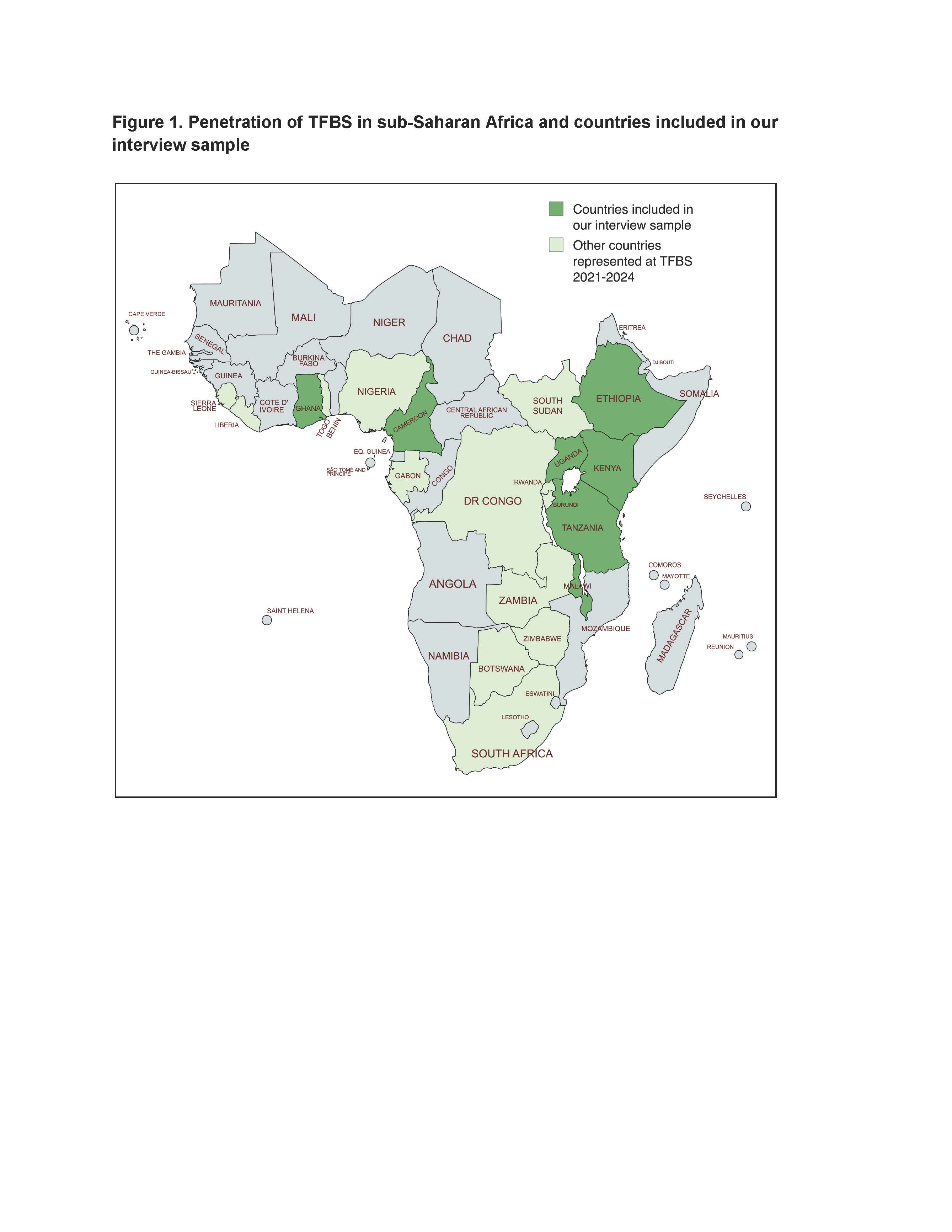
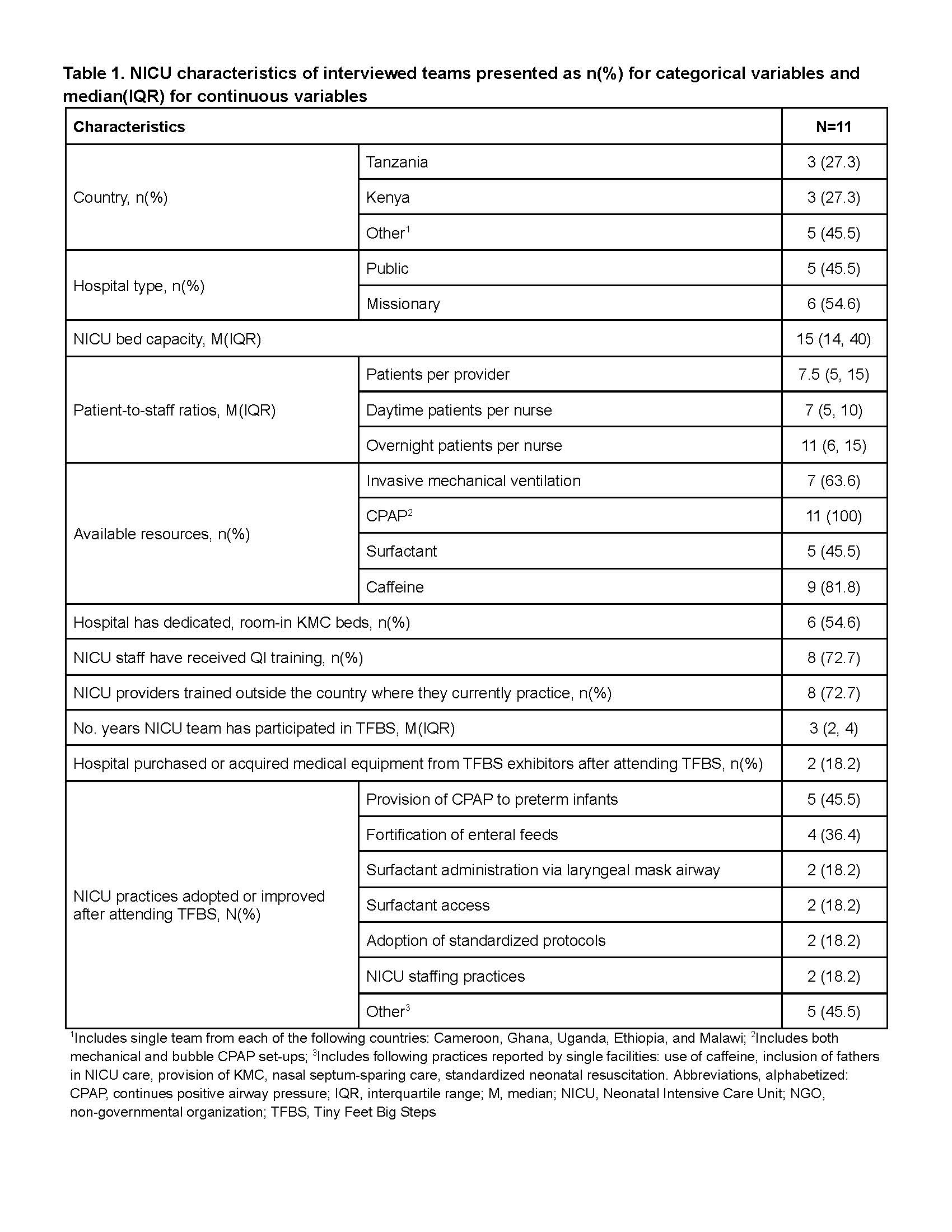
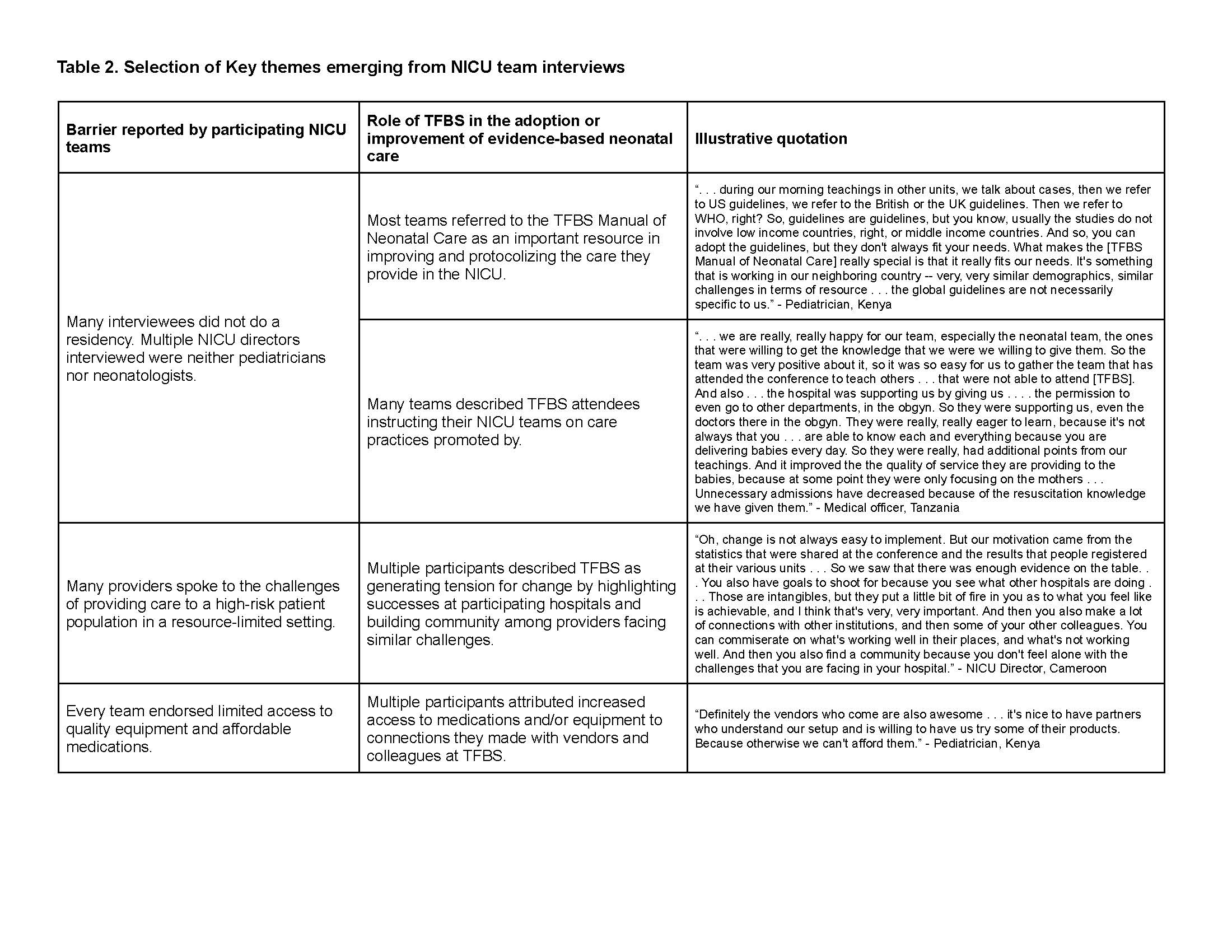
Background: Sub-Saharan Africa (SSA) has the highest neonatal mortality rate worldwide at 28 deaths per 1000 live births. A significant contributor is a shortage of neonatology-trained providers. Tiny Feet, Big Steps (TFBS) is an innovative, annual training program designed by faculty with extensive experience in SSA to bridge this gap. TFBS emphasizes co-training of doctors and nurses, hands-on simulations, and an accelerated didactic curriculum modeled on the core competencies of a neonatal fellowship. Since 2021, 639 unique providers from 158 hospitals in 21 SSA countries have attended. Objective: To evaluate the implementation outcomes of TFBS: penetration within SSA health systems, adoption by providers and institutions, and appropriateness in addressing context-specific neonatal care needs. Design/Methods: We conducted semi-structured interviews with multidisciplinary NICU teams in SSA who attended TFBS. Interviews focused on 1) the role TFBS played in the adoption or improvement of evidence-based neonatal care practices and 2) objective successes resulting from the adoption of practices promoted by TFBS. All interviews were conducted in English by two interviewers. Themes were extracted inductively and mapped to Consolidated Framework for Implementation Research 2.0 constructs using NVivo by two coders who attained >80% agreement. Results: From Dec 2024-May 2025, we interviewed 11 hospital teams from 7 countries in SSA (Figure 1). Table 1 contains participating NICU characteristics. Almost half (45.5%) of teams were based at public hospitals. Median NICU capacity was 15 beds (IQR 14, 40). All teams reported that their NICU either adopted or improved an evidence-based practice as a direct result of attending TFBS. The care practices most frequently highlighted were CPAP for preterm infants (45.5%) and fortification of enteral feeds (36.4%). Table 2 illustrates a selection of key themes that emerged during our interviews.
Conclusion(s): Participation in TFBS resulted in new efforts to improve the quality of neonatal care by every NICU team we interviewed. Further quantitative evaluation is needed to measure the impact of TFBS on neonatal mortality at participating hospitals. Quality improvement training and structured longitudinal mentorship could further support hospitals in successfully implementing care practices taught at TFBS. This interprofessional, context-responsive training model holds potential for adaptation across other pediatric subspecialties to address workforce gaps and improve care delivery in resource-limited settings.
Figure 1. Penetration of TFBS in sub-Saharan Africa and countries included in our interview sample
Table 1. NICU characteristics of interviewed teams presented as n(%) for categorical variables and median(IQR) for continuous variables
Table 2. Selection of Key themes emerging from NICU team interviews