








Neonatal Fetal Nutrition & Metabolism
Session: Neonatal Fetal Nutrition & Metabolism 1

Olivia C. Brandon, BS (she/her/hers)
Medical Student
University of Washington School of Medicine
Seattle, Washington, United States
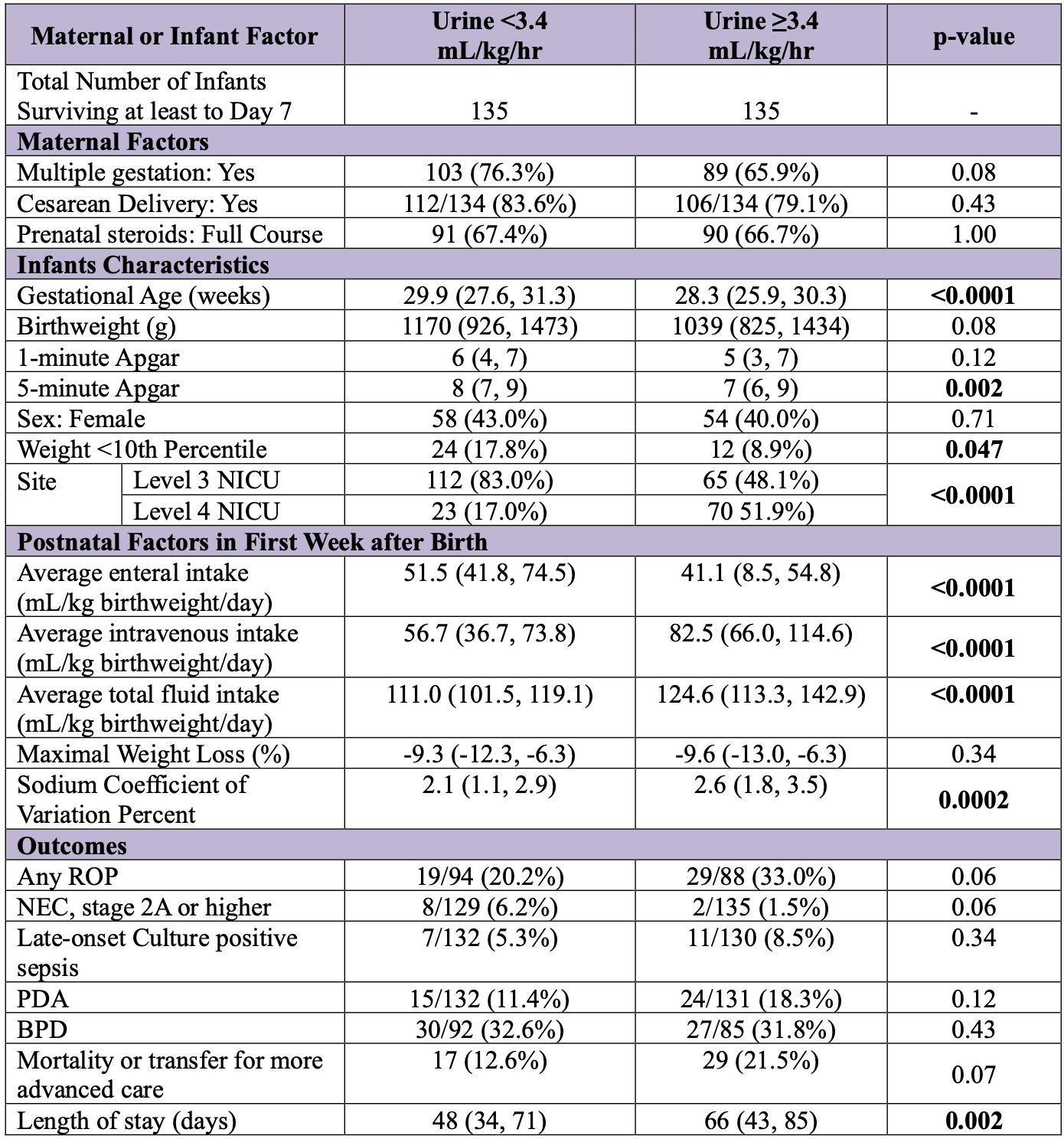 All data presented as n/N (%), median ± IQR. Mann Whitney U-test or Fisher's Exact Test for continuous and categorical variables, respectively. Only infants surviving at least 3 days included. Only babies surviving to 36 weeks postmenstrual age included in ROP and BPD analyses. ROP was defined as at least grade 1 or higher. Sepsis included culture positive sepsis after the first 3 days. Patent ductus arteriosus requiring intervention was defined as medical, surgical, or device closure. Bronchopulmonary dysplasia was classified as Jensen grade 1 or higher. Only babies discharged home included in length of stay analysis. Significant p-values bolded.
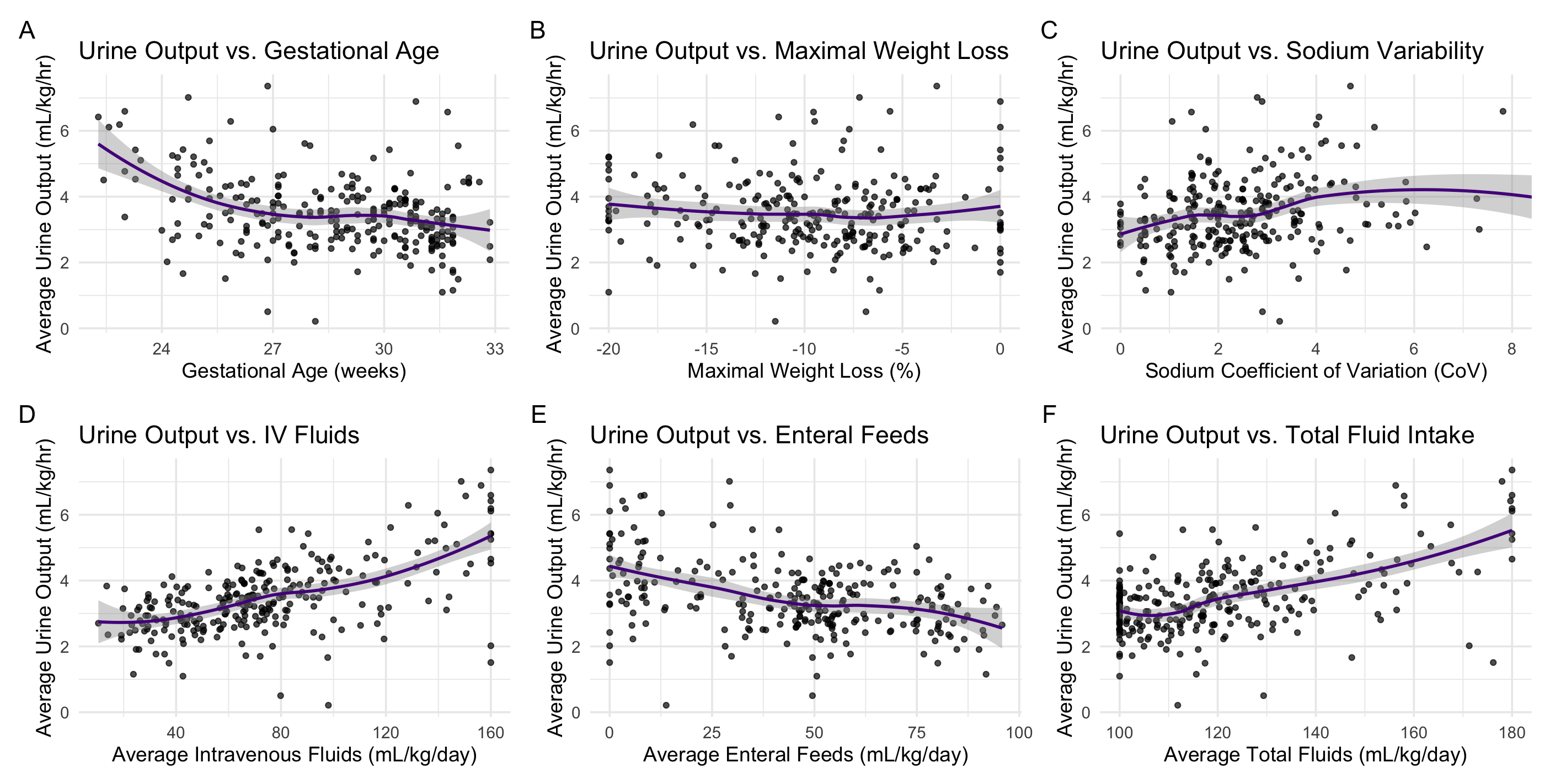 The purple line represents the local mean determined using locally estimated scatterplot smoothing (loess), and the shading represents the 95% confidence interval of the mean. The sodium coefficient of variation is the ratio of standard deviation to the mean multiplied by 100.
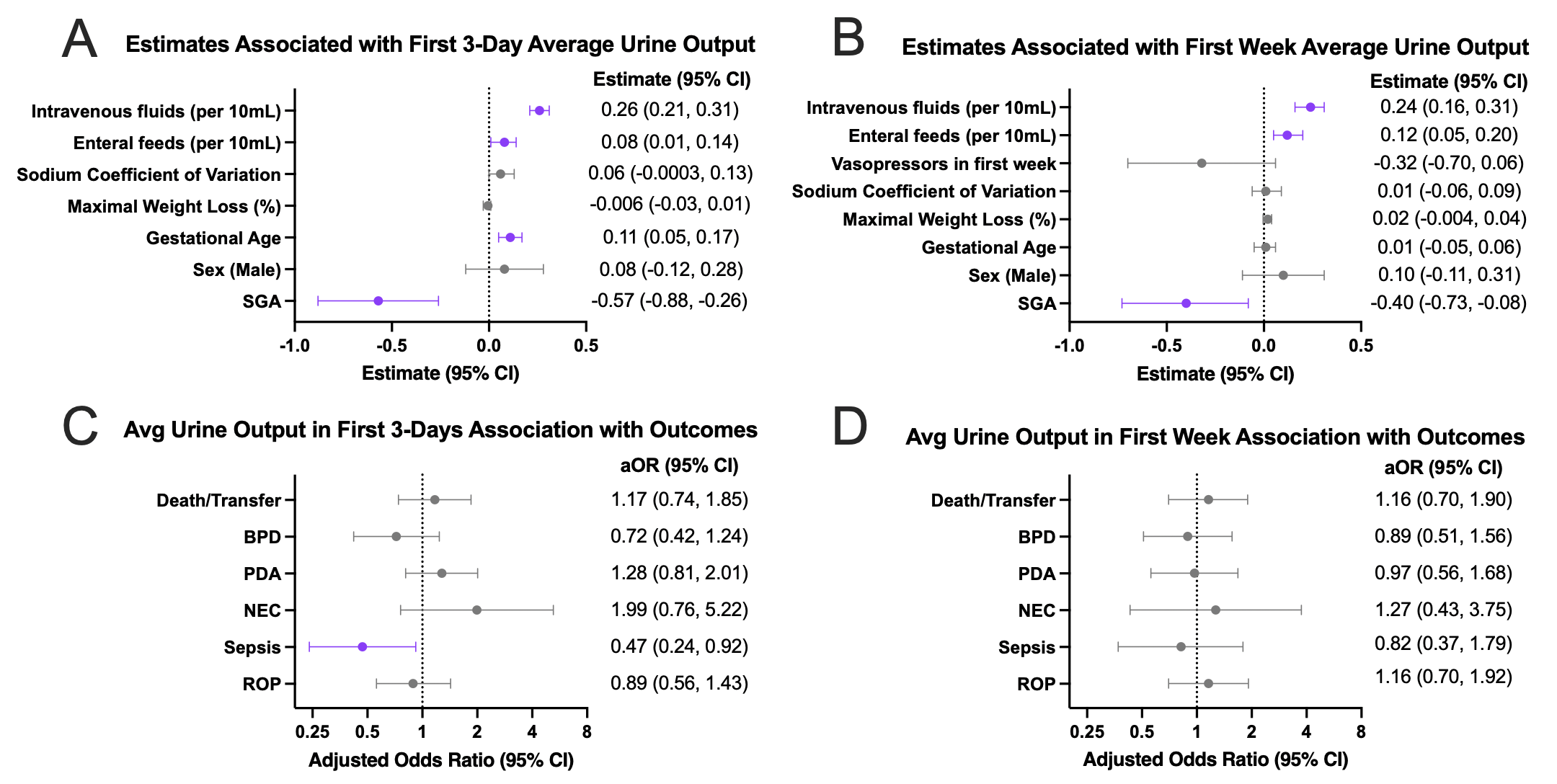 The estimate shows the expected change in average urine output for a one-unit increase in each factor. Estimates from linear regression models were used to examine associations between average urine output (mL/kg/hr) in the first 3 days or first week after birth and clinical factors including SGA, sex, gestational age, maximal weight loss (continuously), sodium coefficient of variation percentage (ratio of standard deviation to the mean multiplied by 100), vasopressor use (only in 7-day analysis), average enteral fluid intake, and average intravenous fluid intake in the first 3 or 7 days.