166 - Harnessing College Health Surveys to Assess Student Cardiometabolic Risk
Friday, April 24, 2026
5:30pm - 8:00pm ET
Publication Number: 1156.166
Mai Baalbaki, University of California, San Francisco, School of Medicine, Berkeley, CA, United States; Nicole M. Ozuna Resendiz, University of California, San Francisco, School of Medicine, San pablo, CA, United States; Abigail Arons, University of California, Davis, School of Medicine, San Francisco, CA, United States
Clinical Researcher University of California, San Francisco, School of Medicine Berkeley, California, United States
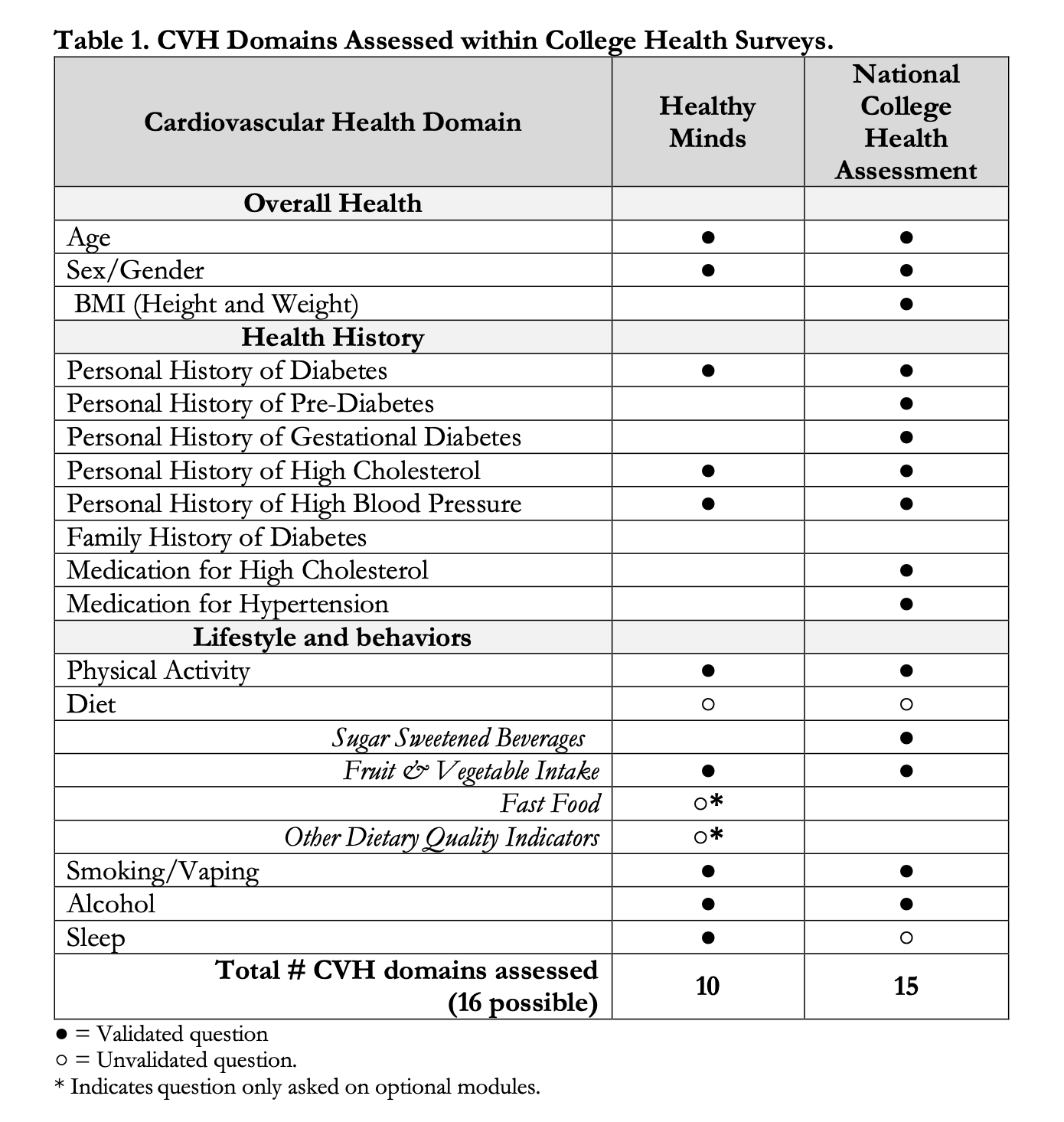
Background: College health surveys reach 200,000+ students annually, playing an essential role for colleges to assess students' health needs and plan services and policies. In 2025, the American Heart Association issued a call to action to increase cardiovascular health (CVH) promotion efforts targeting 18-25 year-olds. While CVH has not historically been a primary focus of college health, colleges represent a potential avenue to reach a large number of youth not otherwise engaged in healthcare. Objective: To assess the extent to which widely used college health surveys capture data necessary for rigorous assessment of student CVH and identify remaining gaps. Design/Methods: We conducted a comprehensive literature review for cardiovascular disease and diabetes risk assessment tools validated in US-based 18-25-year-old populations. For each tool, we compiled all question domains assessed. We next reviewed the two most widespread college health surveys (Healthy Minds Study [HMS] and National College Health Assessment [NCHA]) for items matching the identified CVH domains. Finally, we reviewed question text and determined whether CVH items were validated (matched questions on a validated tool or validated per literature review). Results: We identified 13 cardiovascular disease and diabetes risk assessment tools validated in 18-25-year-olds. The tools demonstrated overlap across 16 domains, falling in 3 categories: overall health, health history, and lifestyle/behavior. Nine required direct clinical measures (e.g., labs, blood pressure). Both college health surveys included items matching these domains, with NCHA covering more than HMS (15 vs. 10 domains) (Table 1). Missing domains included BMI on HMS, family history, and validated dietary quality questions across both surveys. NCHA's items enabled completion of 4 risk assessment tools (3 required substituting self-report for clinical measurement, 1 did not), while HMS did not permit completion of any (Table 2).
Conclusion(s): Amid growing calls for CVH promotion among 18-25-year-olds, current college health surveys provide institutions with a fairly comprehensive view of students' CVH. Incorporating limited additional metrics, family history, and dietary quality in both surveys and BMI in HMS could solidify colleges' ability to apply validated risk-assessment tools to more rigorously understand student CVH. Developing more tools that rely on self-report alone would further enhance colleges' CVH assessment capacity. This critical information can be used to help plan services and policies to promote CVH among college populations.
CVH Domains Assessed within College Health Surveys.
Items from Validated Cardiometabolic Risk Assessment Tools Included in Major College Health Surveys.









.png)
