Session: Neo-Perinatal Health Care Delivery: Practices and Procedures 1
716 - Understanding Perspectives of Safety-Net NICU Neonatologists Disclosing Genomic Sequencing Results: A Mixed Methods Approach
Friday, April 24, 2026
5:30pm - 8:00pm ET
Publication Number: 1693.716
Sonia Hills, Boston Children's Hospital, Boston, MA, United States; Meghan Werner, Boston Children's Hospital, Woburn, MA, United States; Jessica L. Douglas, Boston Children's Hospital, Boston, MA, United States; Alissa D'Gama, Boston Children's Hospital, Dedham, MA, United States; Monica Wojcik, Boston Children's Hospital, Boston, MA, United States; Vanessa j. Young, Boston Children's Hospital, Boston, MA, United States; Pankaj Agrawal, Holtz Children's Hospital Jackson Memorial Hospital, Miami, FL, United States; Timothy Yu, Harvard Medical School, Boston, MA, United States; Margaret Parker, UMass Chan School of Medicine, Worcester, MA, United States
Research Assistant Boston Children's Hospital Boston, Massachusetts, United States
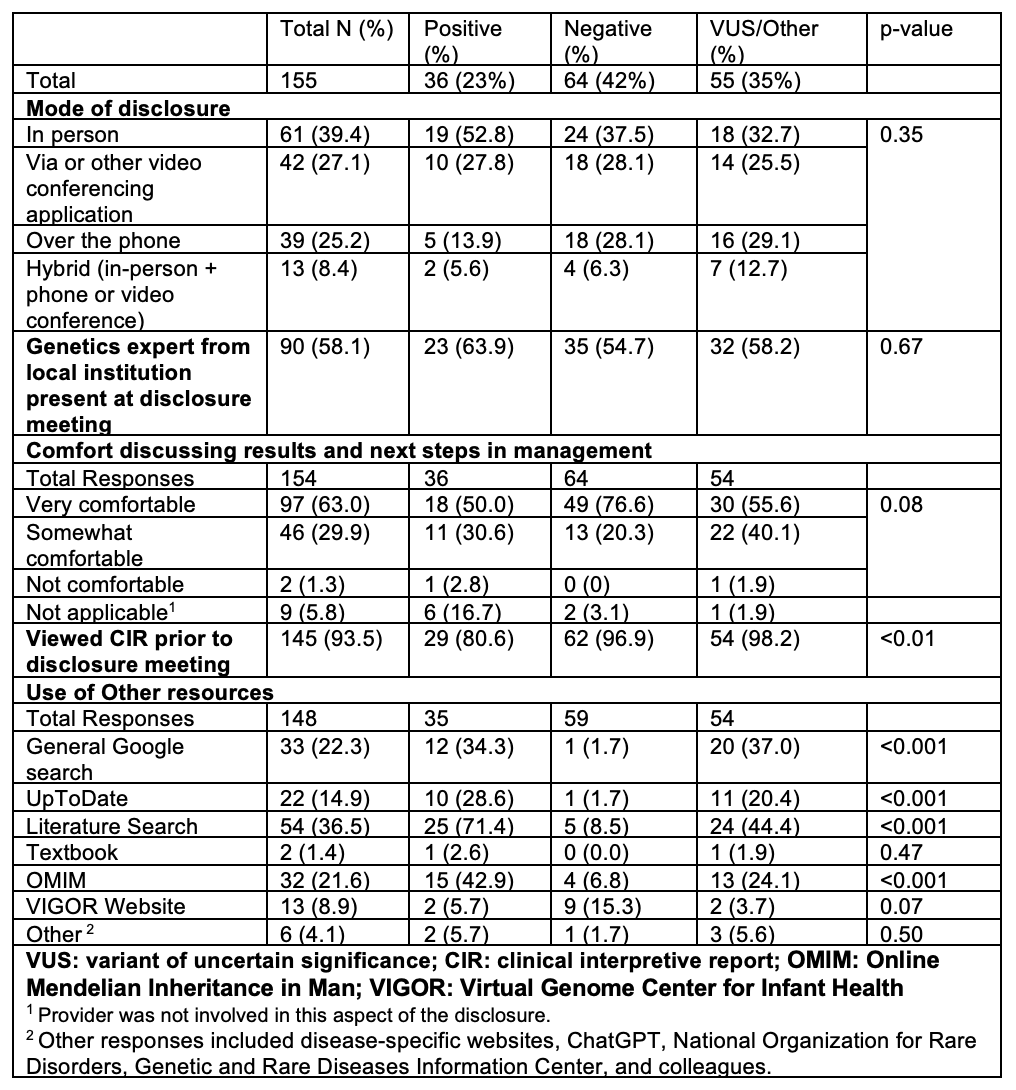
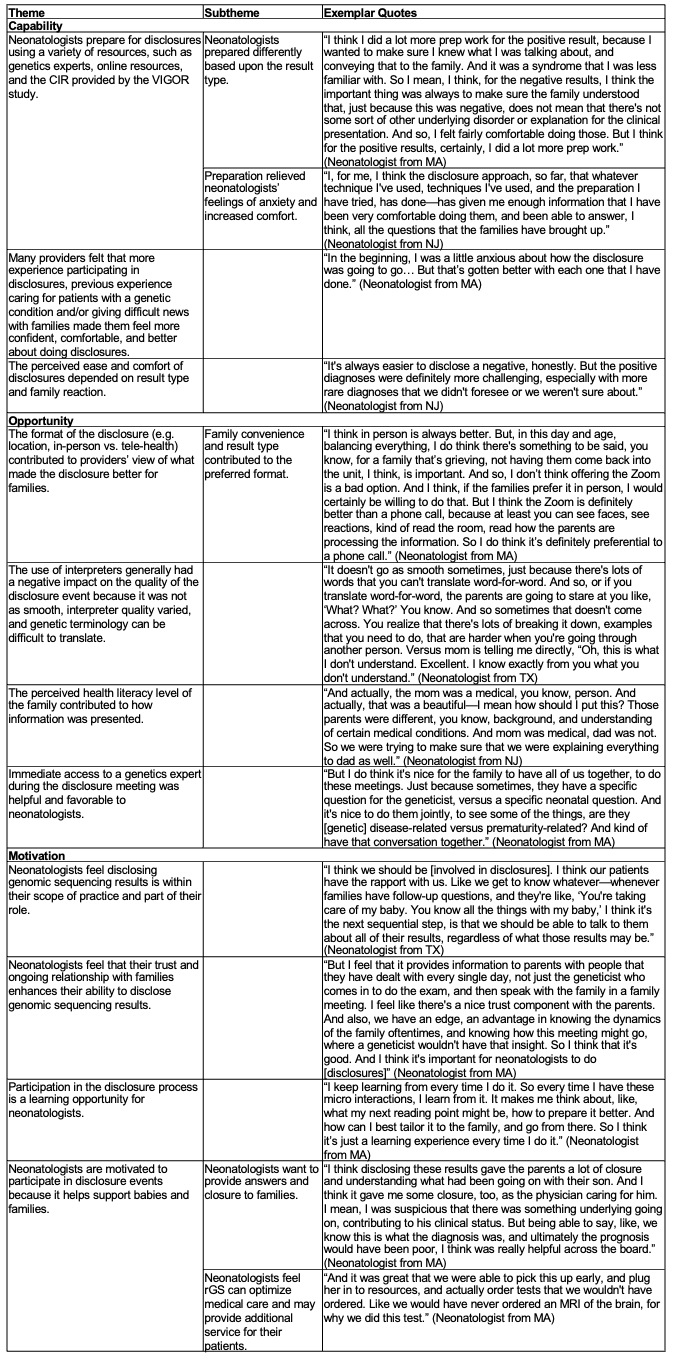
Background: Safety-net neonatal intensive care units (NICUs) that disproportionately serve marginalized populations often lack the robust genetics expertise and resources required to facilitate rapid genomic sequencing (rGS), leading to inequitable outcomes. Neonatologists in this setting have limited training in genomic medicine and insufficient time to learn about result interpretation. The Virtual Genome Center (VIGOR) is an innovative virtual delivery model for rGS in safety-net NICUs where local neonatologists receive genomic education and real-time support for disclosing rGS results. Objective: To examine neonatologists' perceived (1) barriers and facilitators to disclosing rGS results; (2) role in disclosing rGS results; and (3) overall satisfaction with VIGOR-supplied and outside resources. Design/Methods: Neonatologists from 10 NICUs participating in the VIGOR study were surveyed after each rGS disclosure and a subset was interviewed after 2 or more disclosures. Quantitative results were compared by result type (positive, negative, variants of uncertain significance [VUS]/other). Qualitative results were iteratively coded for themes using the "Capability, Opportunity, and Motivation are capable of changing Behavior" (COM-B) framework. Results: 52 neonatologists completed 155 post-disclosure surveys and 20 were interviewed. Disclosure characteristics and survey results are summarized in Table 1. Themes from interviews are described in Table 2. 93% (143/154) of neonatologists felt comfortable disclosing rGS results regardless of result type and comfort was impacted by the family's reaction. Disclosures were most frequently in person (61/155, 39%), and the modality (e.g. in person, Zoom), presence of a genetics expert, and language concordance contributed to neonatologists' perception of the meeting. Neonatologists utilized multiple resources to prepare for disclosures, such as medical literature, local genetics experts when available, and a customized report created by the central VIGOR team that provided information on management considerations, research opportunities, and resources. They preferred to have a genetics expert present during the disclosure if possible, but highlighted the unique value of their own existing trust and relationship with families motivating them to participate in these meetings.
Conclusion(s): Neonatologists value participating in rGS disclosures in the NICU setting and feel they have the capability to prepare and execute this, but a virtual joint effort with genetics experts may be the ideal model to successfully expand access.
Table 1: Disclosure Characteristics and Survey Responses