Session: Mental Health 2: Provider and Family Perspectives
142 - Implementation of an Internet-Based Adolescent Depression Prevention Intervention: Participant and Clinical Staff Perspectives
Friday, April 24, 2026
5:30pm - 8:00pm ET
Publication Number: 1132.142
Calvin Rusiewski, University of Illinois College of Medicine, Chicago, IL, United States; Lestin T. Kandakudy, University of Illinois College of Medicine, Woodridge, IL, United States; Shion Kabasele, University of Illinois Chicago, Chicago, IL, United States; Joseph DeMercede, Children's Hospital of the University of Illinois, AURORA, IL, United States; Kenneth A. Rasinski, University of Illinois at Chicago, Chicago, IL, United States; Katherine Buchholz, Wellesley Centers for Women, Wellesley, MA, United States; Helene Gussin, University of Illinois Chicago, Chicago, IL, United States; Patrick Pössel, University of Louisville, Louisville, KY, United States; Cheryl Lefaiver, Advocate Children's Hospital - Oak Lawn, Oak Lawn, IL, United States; Tracy Gladstone, Brown University, Providence, RI, United States; Benjamin VanVoorhees, University of Illinois, Chicago, IL, United States
Program Director University of Illinois College of Medicine Chicago, Illinois, United States
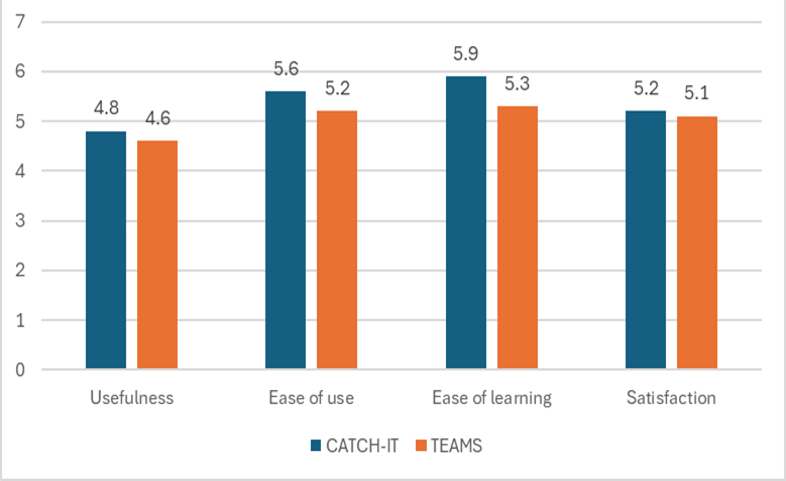
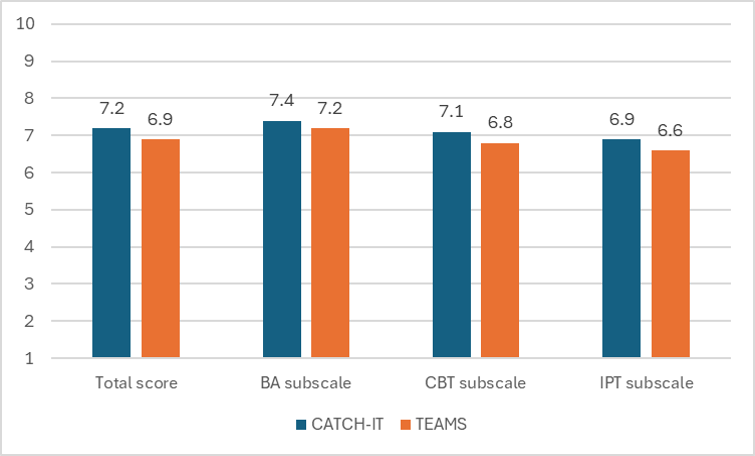
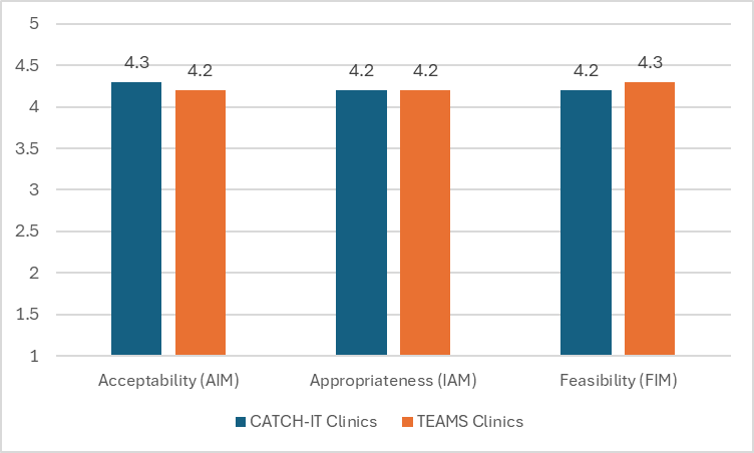
Background: Adolescent depression is a common condition, with significant potential morbidity, and rising incidence. While group-based therapeutic approaches have been successful in managing depressive symptoms, they can be costly and challenging to implement. CATCH-IT (Competent Adulthood Transition with Cognitive Behavioral Humanistic and Interpersonal Training), a scalable, self-guided online depression prevention intervention was developed to address this gap. PATH 2 Purpose (P2P) compares CATCH-IT to the current "gold standard" TEAMS (Teens Achieving Mastery Over Stress). Objective: Assess the acceptability of CATCH-IT versus TEAMS from both adolescent participants and staff members from participating clinical sites. Design/Methods: PATH 2 Purpose enrolled 536 adolescents with sub-therapeutic depressive symptoms from six healthcare systems and over 50 individual healthcare sites in Illinois and Kentucky. Participants were randomized via cluster randomization into either CATCH-IT or TEAMS, and followed for 18 months. Clinical staff perceptions of the interventions were assessed after the conclusion of recruitment via: Acceptability of Intervention Measure (AIM), the Intervention Appropriateness Measure (IAM), and Feasibility of Intervention Measure (FIM). Teen perceptions of the interventions were assessed using USE Scores and Sociocultural Relevance Scales. The USE instrument assessed perceived usefulness, satisfaction, and was administered at 2 and 18 months. The Socio-Cultural Relevance Scores assessed perceived helpfulness and satisfaction with the intervention, and were administered at 6 and 18 months. Both teen measures were administered via self-reported survey. Results: Providers tended to perceive both interventions favorably, and there was no statistically significant difference in the perception of CATCH-IT (N=35) versus TEAMS (N=25). On the USE instrument, teens (CATCH-IT: N=251; TEAMS: N=119) rated CATCH-IT as easier to use than TEAMS, with scores of 5.6 and 5.2 respectively, P < 0.05, and easier to learn, with scores of 5.9 and 5.3 respectively, P < 0.05. On the Sociocultural Relevance Scores, no statistically significant differences were noted.
Conclusion(s): Both CATCH-IT and TEAMS were viewed favorably overall by both clinical staff members as well as participants, and were viewed more favorably compared with the previous CATCH-IT trial. Further analysis incorporating open ended questions is in progress, and will provide greater details about teen perceptions of the interventions, to help inform future improvements.
USE Scores for Teen Participants at 2 months, CATCH-IT N = 251, TEAMS N = 119
Socio-Cultural Relevance Scores for Teen Participants at 6 months, CATCH-IT N = 223, TEAMS N = 117
Clinical Staff Implementation Scores by Intervention, CATCH-IT N = 34, TEAMS N = 24