532 - Family-Centered Care Practices and Outcomes for Inter-Facility Transfers of Children to the Intensive Care Unit
Friday, April 24, 2026
5:30pm - 8:00pm ET
Publication Number: 1511.532
Christina L.. Cifra, Boston Children's Hospital, Harvard Medical School, Boston, MA, United States; Irene Pantekidis, Boston Children's Hospital, Boston, MA, United States; Claire Stucky, Des Moines University, Des Moines, IA, United States; Sharon Calaman, New York University Grossman School of Medicine, New York, NY, United States; Eleanor Gradidge, University of Nebraska College of Medicine, Omaha, NE, United States; Laura Santos, New York University Grossman School of Medicine, New York, NY, United States; Katherine Batten, New York University Grossman School of Medicine, New York, NY, United States; Harriett M. Swasey, Boston Children's Hospital, PEABODY, MA, United States; Elizabeth Kruvand, SSM Health Cardinal Glennon Children’s Hospital, Saint Louis, MO, United States; Katherine P.. Litterer, Boston Children's Hospital, Boston, MA, United States; Alyna T.. Chien, Boston Children's Hospital, Boston, MA, United States; Alisa Khan, Boston Children's Hospital and Harvard Medical School, Boston, MA, United States; Erik Westlund, Johns Hopkins Bloomberg School of Public Health, Baltimore, MD, United States; Danielle D.. DeCourcey, Boston Children's Hospital, Boston, MA, United States
Clinical Research Coordinator Boston Children's Hospital Boston, Massachusetts, United States
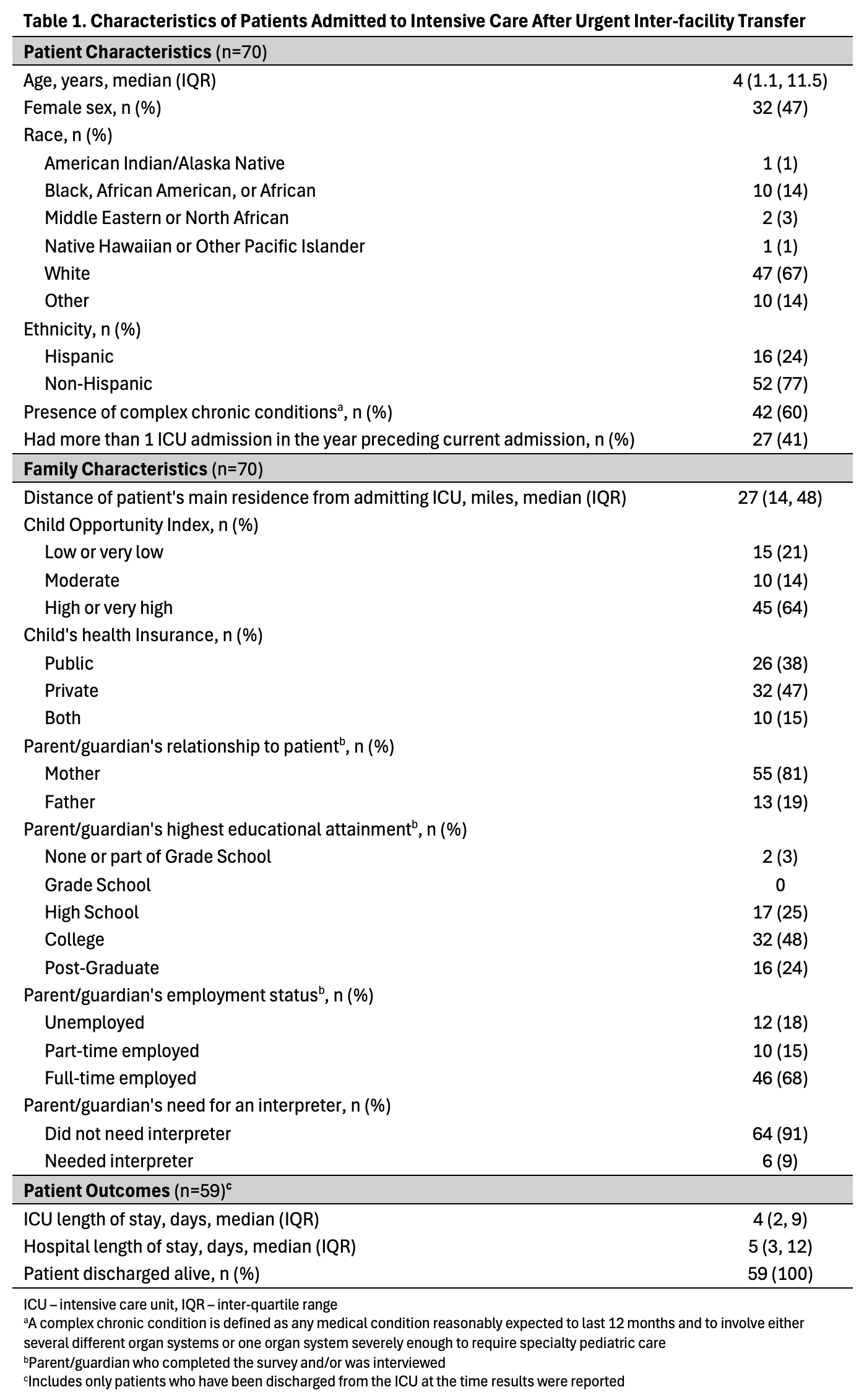
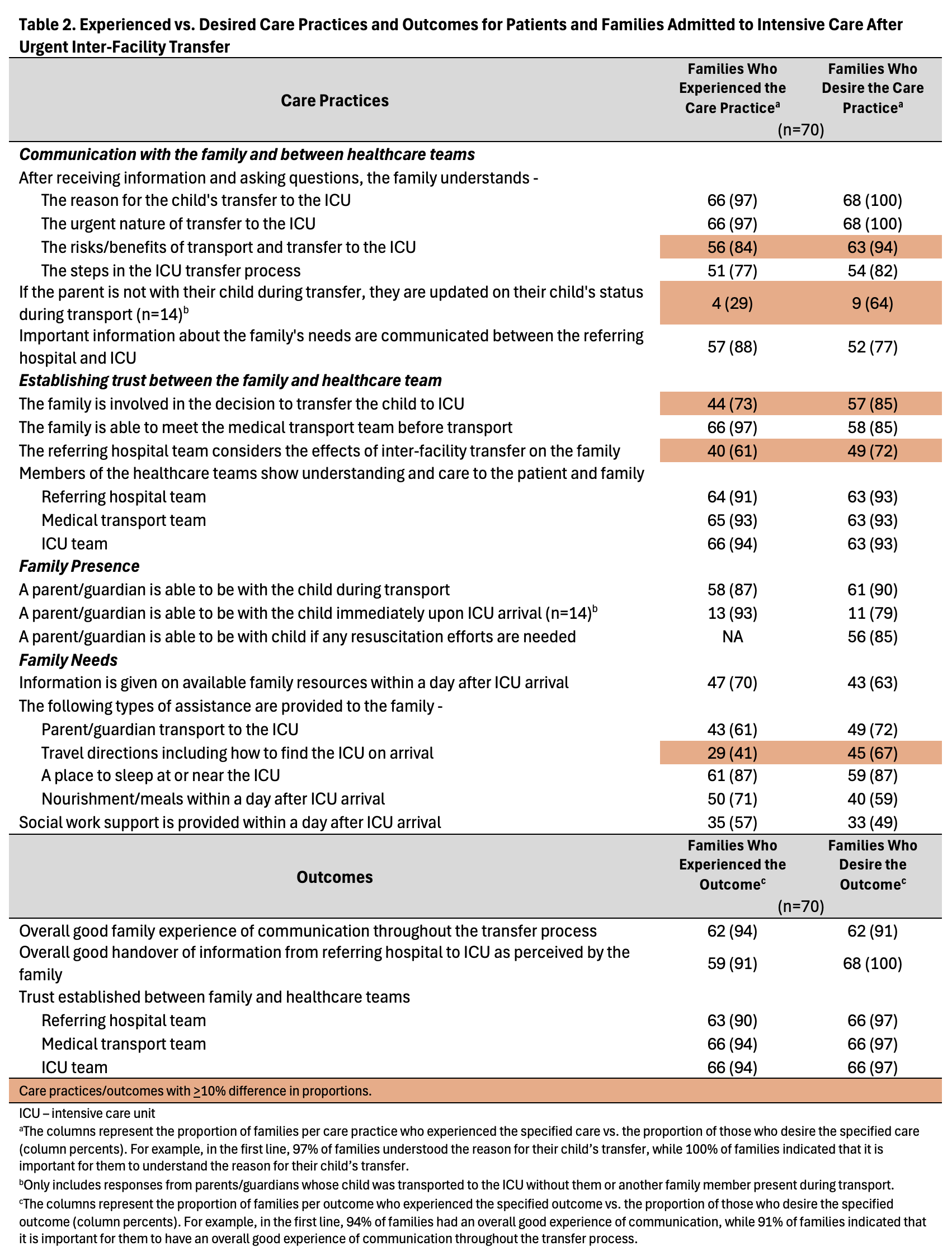
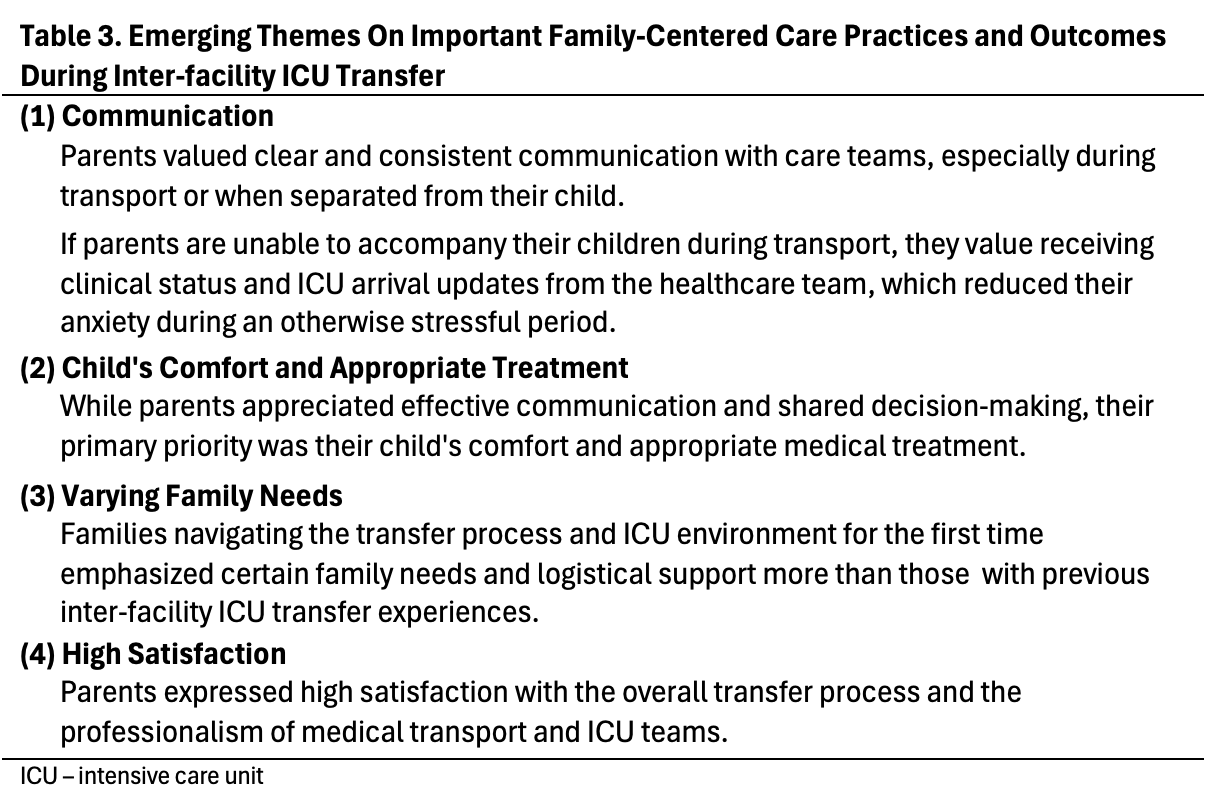
Background: Over 60,000 children are transferred each year from US emergency departments (EDs) to intensive care units (ICUs) at another institution (i.e., inter-facility transfer). The urgent transfer of a critically ill child to a different institution, especially one that may be far from home, is a highly stressful time for families. However, what families need and find important during inter-facility transfer to the ICU is understudied. Objective: To identify gaps in experienced vs. desired care and outcomes relevant to inter-facility transfer, as indicated by families of children who underwent recent transfer from an external referring ED to an ICU at another institution. Design/Methods: This multicenter mixed methods study includes families whose children were admitted after urgent inter-facility transfer from an external ED to one of 5 ICUs at 2 academic medical centers. Data collection is ongoing and includes structured chart review, in-person verbal surveys (all participants), and semi-structured interviews completed by at least one parent/guardian (randomly selected 20% of participants). The survey and interview guide were iteratively revised based on patient partner and clinician stakeholder feedback. Quantitative data were summarized descriptively, and interview transcripts were coded and analyzed using content analysis with emerging themes determined by interviewer consensus. Results: Seventy patients/families have been included to date. Median patient age was 4 (IQR 1.1, 11.5) years, 67% were White, 14% Black, and 24% Hispanic. Most (60%) had complex chronic conditions. Patients lived a median of 27 (IQR 14, 48) miles from the admitting ICU, with 21% having a low/very low child opportunity index (Table 1). We observed gaps in families' experienced vs. desired care relating to communication (discussion of transfer risks/benefits, clinical status updates during transport, shared-decision making) and logistical support (travel directions) (Table 2). Emerging themes included the value of clear and consistent communication, prioritizing child comfort and treatment, with family needs varying based on prior experience with ICU admission. Despite these gaps, families reported overall high satisfaction with inter-facility transfer processes (Table 3).
Conclusion(s): Gaps in family-centered care are prevalent during urgent inter-facility transfer of children to intensive care, particularly in communication between families and care teams. Future work will evaluate variations in care/outcome preferences across families' racial/ethnic and socio-economic backgrounds to strengthen family-centered care during transfer.
Table 1. Characteristics of Patients Admitted to Intensive Care After Urgent Inter-facility Transfer
Table 2. Experienced vs. Desired Care Practices and Outcomes for Patients and Families Admitted to Intensive Care After Urgent Inter-Facility Transfer
Table 3. Emerging Themes on Important Family-Centered Care Practices and Outcomes During Inter-facility ICU Transfer