681 - Understanding Delayed Meconium Clearance and Feeding Intolerance in Small-for-Gestational-Age and Intrauterine Growth-Restricted Infants: A Systematic Review
Friday, April 24, 2026
5:30pm - 8:00pm ET
Publication Number: 1658.681
Leah Nasr, University of Kansas School of Medicine, Wichita, KS, United States; Cynthia Hayek, University of Kansas School of Medicine, Wichita, KS, United States
Pediatric PGYII resident University of Kansas School of Medicine Wichita, Kansas, United States
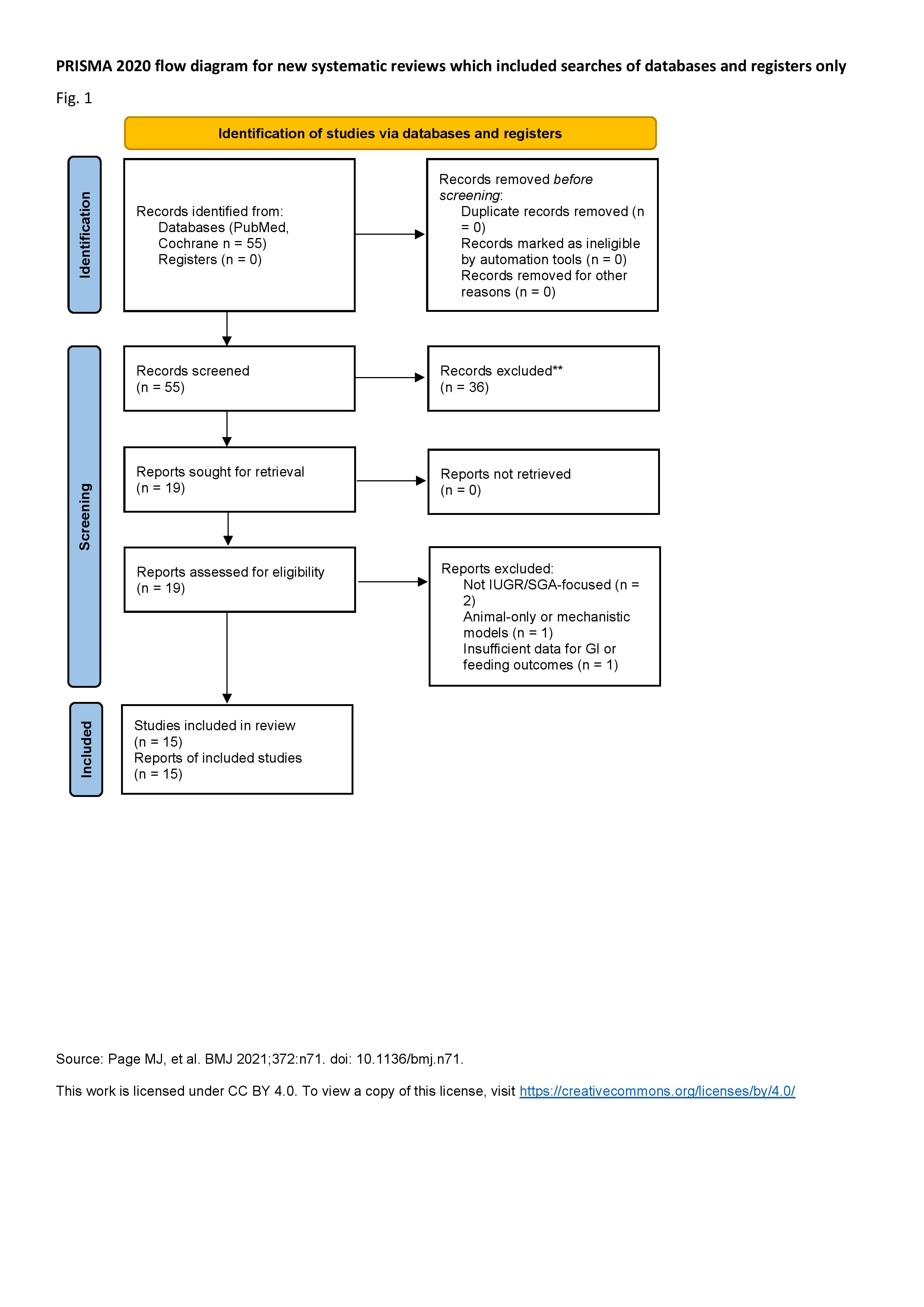
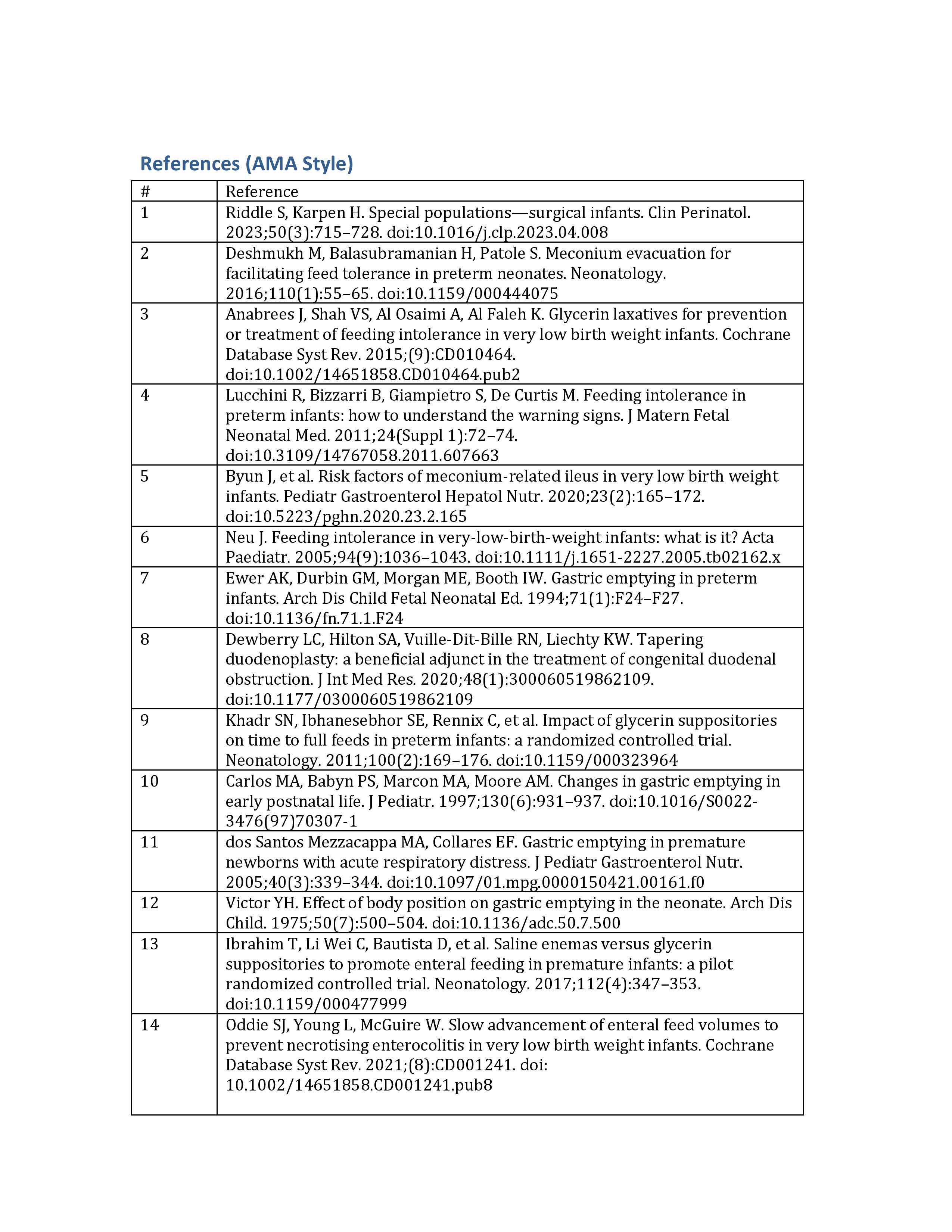
Background: Infants born small for gestational age (SGA) or with intrauterine growth restriction (IUGR) often experience gastrointestinal (GI) dysmotility, delayed meconium clearance, and feeding intolerance. These complications prolong hospitalization and increase the risk of gastrointestinal morbidities related to feeding instability. Objective: To synthesize current evidence on mechanisms and management of delayed meconium clearance in IUGR/SGA neonates. Design/Methods: A systematic search was performed in PubMed and the Cochrane Library (inception to September 2025) using terms related to IUGR, SGA, meconium passage, and feeding intolerance. Inclusion criteria were human studies (cohort, case-control, RCTs, reviews) evaluating GI motility, meconium passage, NEC, or obstruction in IUGR/SGA infants. Exclusion criteria included isolated Hirschsprung disease, cystic fibrosis, and animal models unless mechanistically relevant. PRISMA 2020 guidelines were followed. Of 55 records identified, all were screened after duplicate removal; 19 full-text articles were assessed for eligibility, and 15 met inclusion criteria (see Fig. 1). Quality was assessed using AMSTAR-2. Results: Most studies were of moderate methodological quality by AMSTAR-2, with limitations in sample size and randomization clarity. IUGR/SGA infants demonstrate reduced intestinal perfusion, delayed enteric nervous system maturation, and impaired bile acid and motilin responses contributing to slow GI transit. Deshmukh et al. (2016) reported that meconium evacuation improved feed tolerance and reduced time to full feeds. Zheng et al. (2024) found that breast milk enemas accelerated meconium passage and improved feeding advancement without increasing adverse outcomes. Trials of glycerin suppositories or enemas (Khadr et al., 2011; Ibrahim et al., 2017; Cochrane 2015) showed modest benefits but no NEC reduction. Gastric emptying studies (Ewer et al., 1994; Neu, 2005) revealed prolonged half-times and delayed transit in growth-restricted and preterm populations.
Conclusion(s): SGA/IUGR infants have intrinsic GI immaturity and perfusion deficits leading to delayed meconium clearance and feeding intolerance. Early meconium evacuation may facilitate transition to enteral feeding, but routine prophylaxis is not yet supported. Further fully powered, multicenter randomized controlled trials targeting gut motility and perfusion in IUGR neonates are warranted. IRB Status: This study was a systematic review of published data and did not involve direct human subjects research; therefore, IRB approval was not required.