Session: Developmental and Behavioral Pediatrics 1: Autism
87 - Feasibility and Effectiveness of Embedding an Autism Care Navigator in the Primary Care Setting
Friday, April 24, 2026
5:30pm - 8:00pm ET
Publication Number: 1079.87
Corinna J. Rea, Boston Children's Hospital, Medfield, MA, United States; Eli Sprecher, Harvard Medical School, Boston, MA, United States; Kayla Lesch, Boston Children's Hospital, Mineola, NY, United States; Stephanie Graves, Boston Childrens Hosptial, Boston, MA, United States; Ana Rivas-Chavez, Boston Children's Hospital, Boston, MA, United States; Kasey M. Papineau, Boston Children's Hospital, Cumberland, RI, United States; Joanne E. Cox, Boston Children's Hospital, Boston, MA, United States
Assistant Professor Boston Children's Hospital Boston, Massachusetts, United States
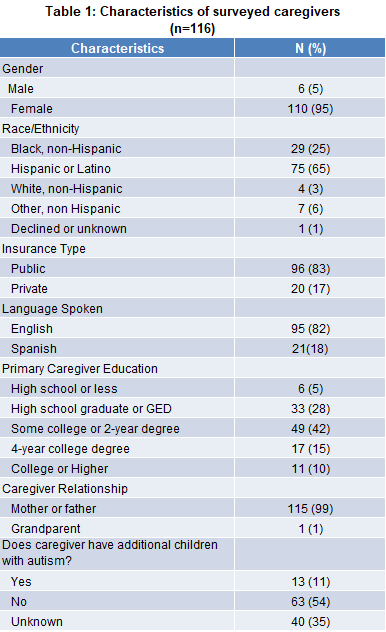
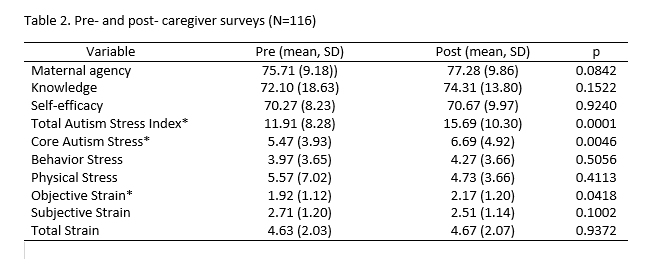
Background: An estimated 1 in 31 children in the United States has a diagnosis of autism spectrum disorder (ASD). It is critical for children with ASD to receive prompt and intensive services to achieve the best outcomes. However, accessing and coordinating services and other supports can be challenging. Objective: To evaluate the feasibility and effectiveness of embedding an Autism Care Navigator (ACN) in the primary care setting. Design/Methods: Beginning in 9/21 an ACN was embedded into two large, hospital-affiliated primary care clinics. The ACN helped families connect with community services such as Applied Behavior Analysis (ABA) and Early Intervention after a new diagnosis of autism. She also provided education regarding support groups and social services and assisted with one-time needs such as finding a single therapy or activity. A subset of English and Spanish-speaking families completed surveys prior to meeting with the ACN and again 6 months later to measure their knowledge, stress/strain, self-efficacy/agency and service levels between 9/21 and 7/25. The 6-month survey also asked for feedback about families' experience with the ACN. Paired t-tests were used to compare pre- and post-intervention data, and descriptive statistics to summarize ACN feedback and service connectivity. Results: 647 children were referred to the ACN between 9/21-9/25. 116 families completed both the pre- and post-surveys. 65% of respondents self-identified as Hispanic and 25% as Black, non-Hispanic; 82% spoke English as their first language. Total stress (p=0.0001), stress related to core autism symptoms (p=0.0046), and objective strain (p=0.0418) increased between the baseline and post-intervention period. Maternal agency and knowledge scores improved slightly but did not reach statistical significance. At baseline 9% of children received ABA, increasing to 46% by 6 months. 46% of children 3 years or older had an IEP at baseline vs. 70% at 6 months. Feedback about the ACN was generally positive, with 96% of caregivers reporting it was helpful to have an embedded navigator and 89% saying they would recommend working with the navigator to others.
Conclusion(s): Caregivers found the ACN support to be helpful, but most measures of stress/strain, agency and knowledge either stayed the same or worsened during the 6-month intervention period. Findings suggest navigation support is well-received and helps families access services but does not completely offset the stress of a new autism diagnosis for caregivers. Future studies should consider randomizing the navigator intervention to better measure its relative impact on families.










.png)
