








Global Neonatal & Children's Health
Session: Global Neonatal & Children’s Health 3

Alejandra C. Quesada-Stoner (She/They)
Post Bac Research Fellow
St Jude Childrens Research Hospital
Berkeley, California, United States
.png) This map illustrates the geographic distribution of hospitals invited to join the Global PARITY study across resource-limited settings. Sites are categorized by participation status: participating (light blue) and non-participating (dark blue). The figure highlights both the global reach of the initiative and the regional disparities in research engagement, emphasizing the structural and contextual challenges that shape participation in multinational pediatric studies.
This map illustrates the geographic distribution of hospitals invited to join the Global PARITY study across resource-limited settings. Sites are categorized by participation status: participating (light blue) and non-participating (dark blue). The figure highlights both the global reach of the initiative and the regional disparities in research engagement, emphasizing the structural and contextual challenges that shape participation in multinational pediatric studies.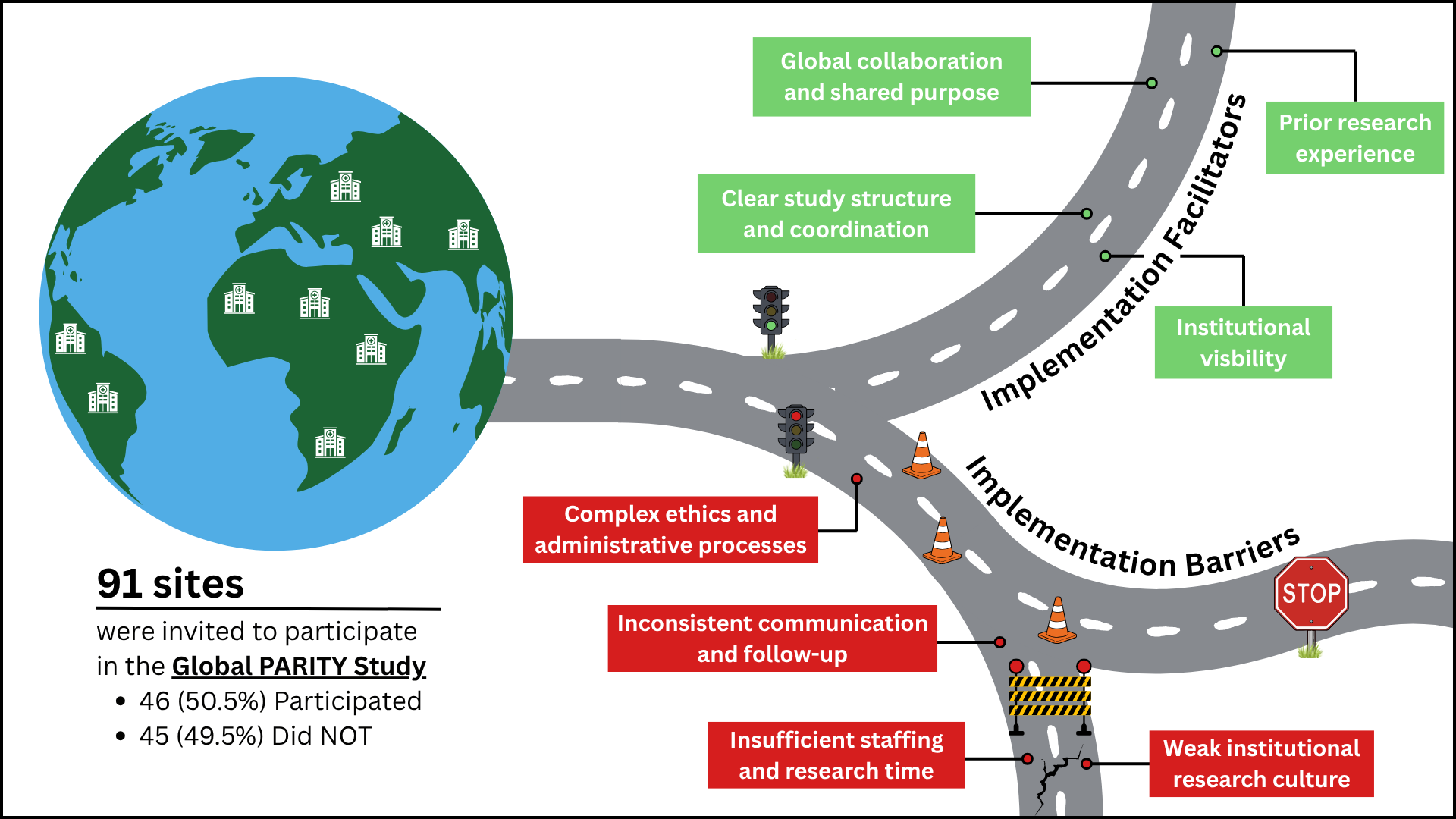 This figure summarizes key determinants influencing site participation in the Global PARITY study across 91 hospitals invited worldwide. Among these, 46 sites (50.5%) participated, and 45 (49.5%) did not. Facilitators included interest in large-scale international collaboration, clear study coordination, prior research experience, and the opportunity to increase institutional visibility through global representation. Barriers included complex ethics and administrative processes, limited staffing and research time, weak institutional research culture, and inconsistent communication. Collectively, these findings highlight the multifaceted contextual factors that shape engagement in multinational pediatric research within resource-limited settings.
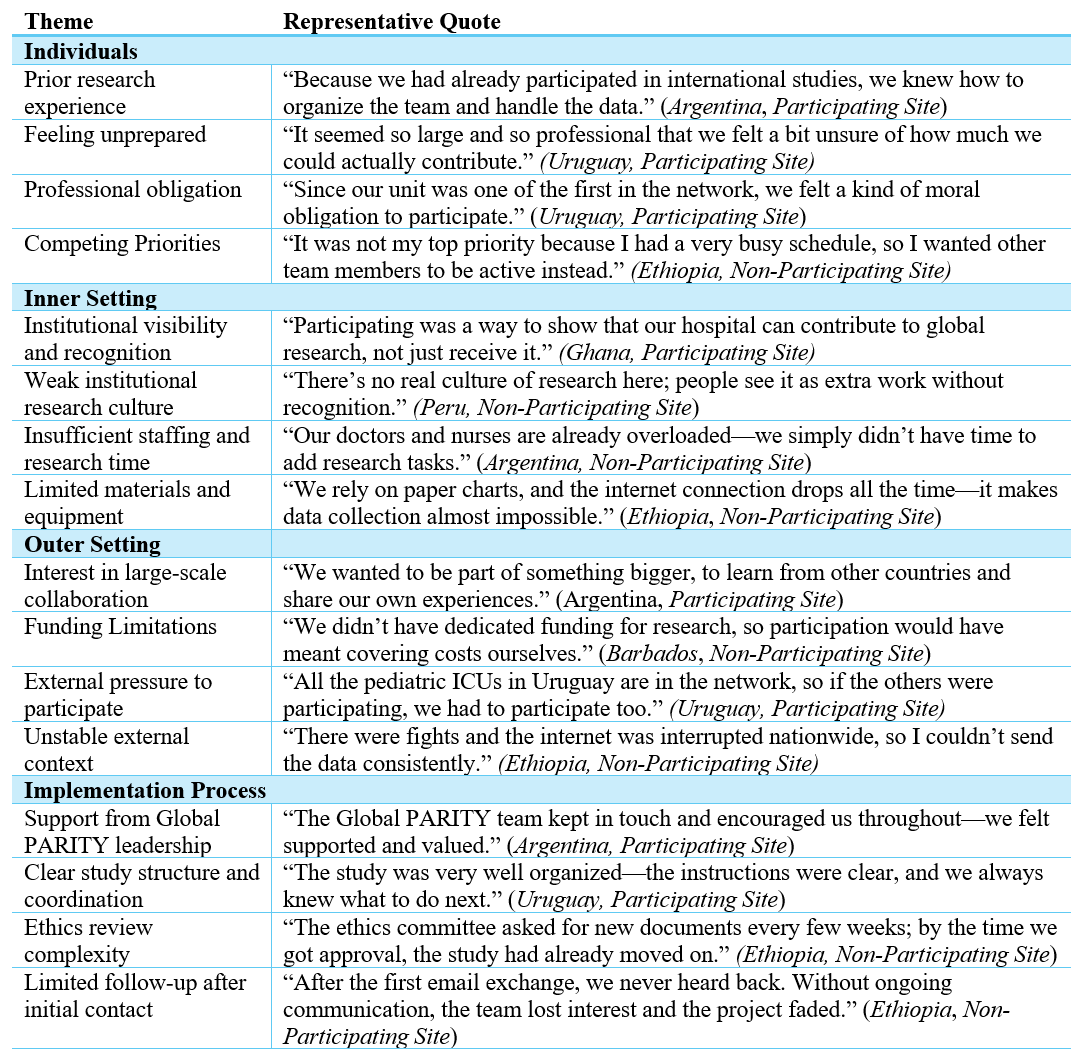 This table presents key barriers and facilitators influencing site participation in the Global PARITY study, accompanied by direct quotes from principal investigators. Themes are organized according to the Consolidated Framework for Implementation Research (CFIR), highlighting how structural, organizational, individual, and process-level factors affected engagement in a multinational pediatric research effort across resource-limited settings.