Session: Medical Education 1: Diversity, Equity, and Inclusion
262 - Evaluating an Anti-Racism, Anti-Bias Curriculum for All Patient-Facing Staff in the Neonatal Intensive Care Unit (NICU): A Mixed-Methods Study.
Friday, April 24, 2026
5:30pm - 8:00pm ET
Publication Number: 1248.262
Yarden S. Fraiman, Beth Israel Deaconess Medical Center/Harvard Medical School, Boston, MA, United States; Hafza A. Inshaar, Boston Children's Hospital, Boston, MA, United States; Baillee Cooper, Boston Children's Hospital/Boston Medical Center, Boston, MA, United States; Christine Cheston, BMC Dept of Pediatrics, Boston, MA, United States; Connie Clauson, Beth Israel Deaconess Medical Center, Boston, MA, United States; Kim Ruiz-Arellanos, Beth Israel Deaconess Medical Center, Boston, MA, United States
Post Doctoral Research Fellow Beth Israel Deaconess Medical Center Boston, Massachusetts, United States
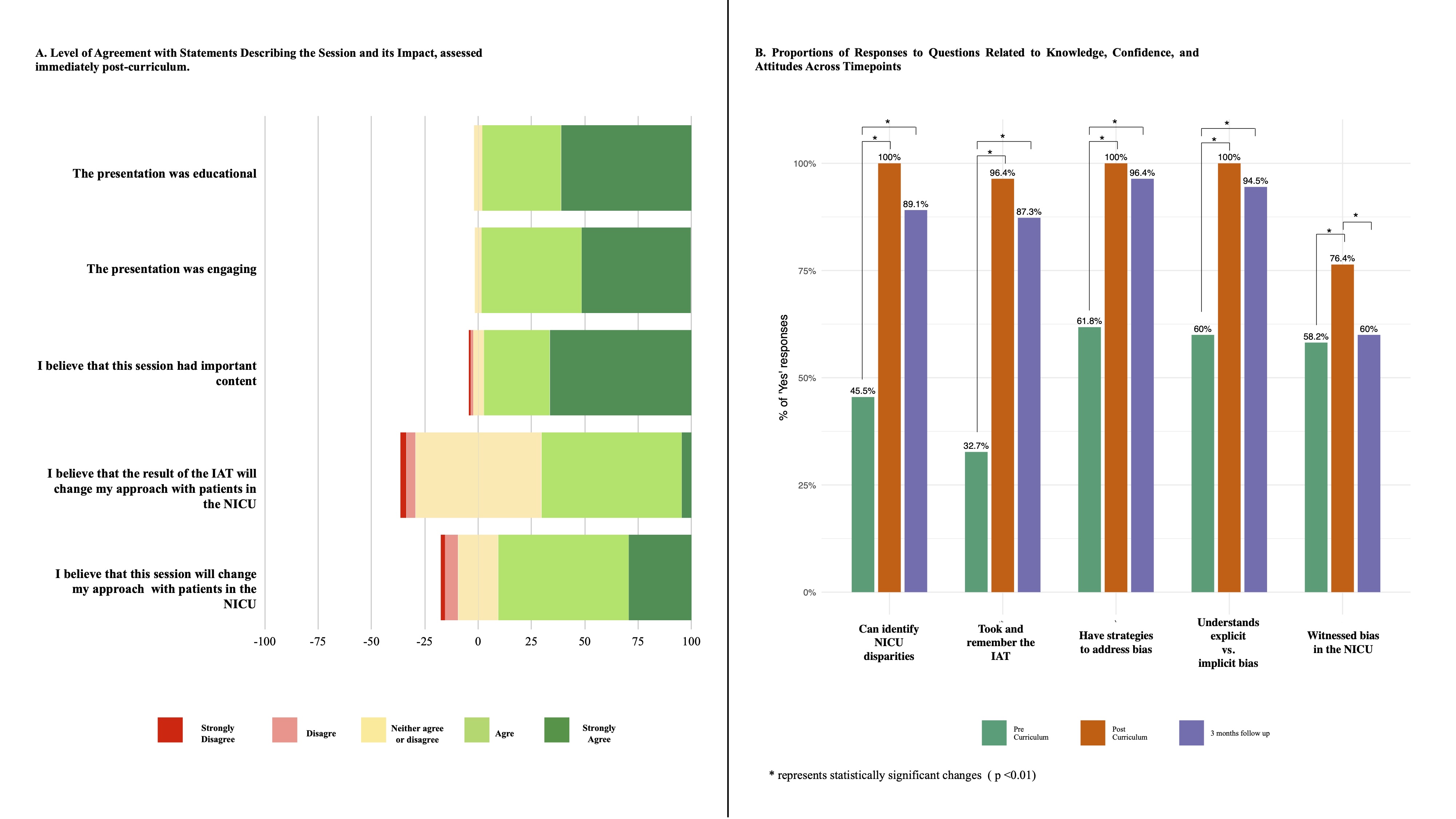
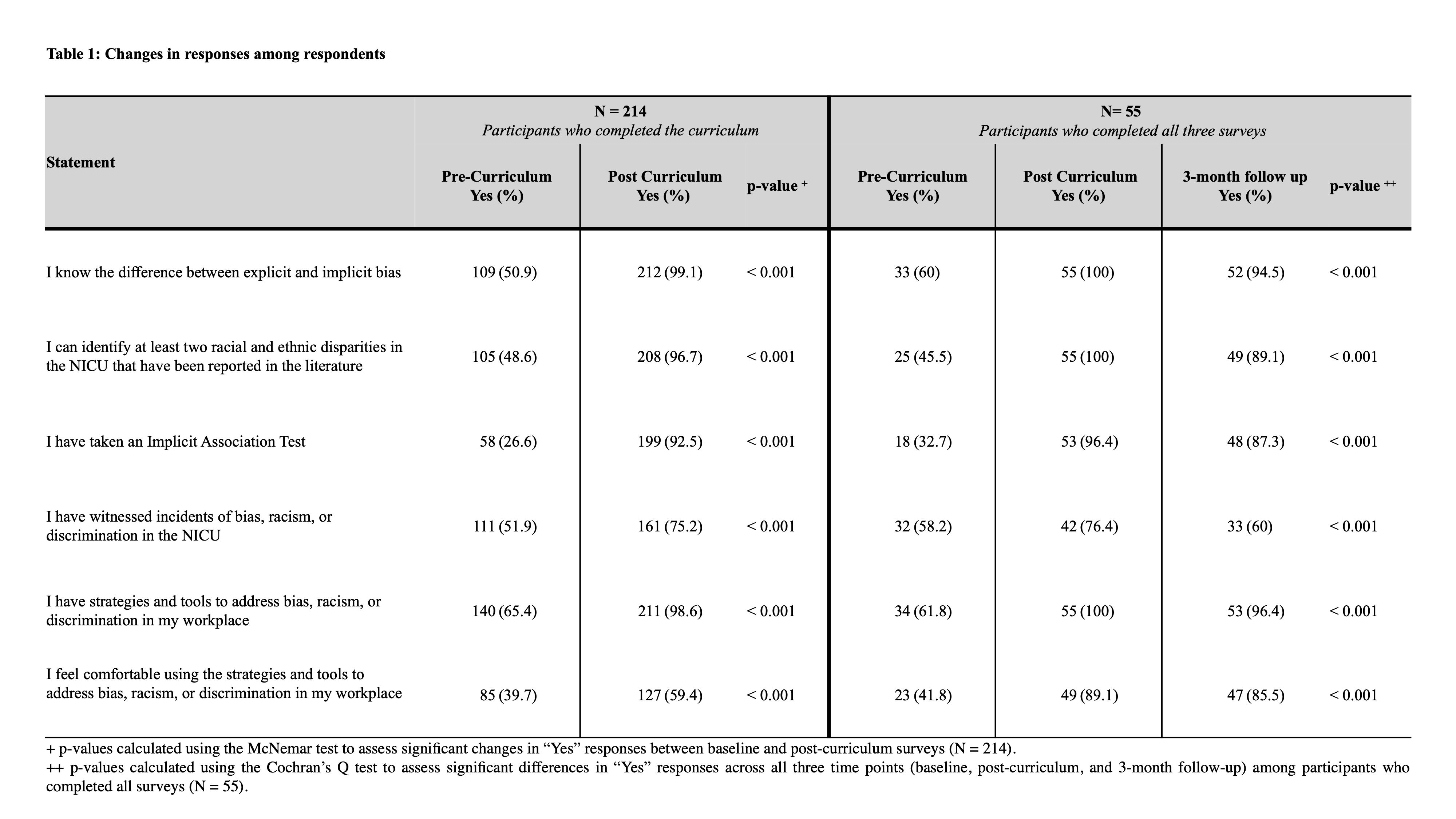
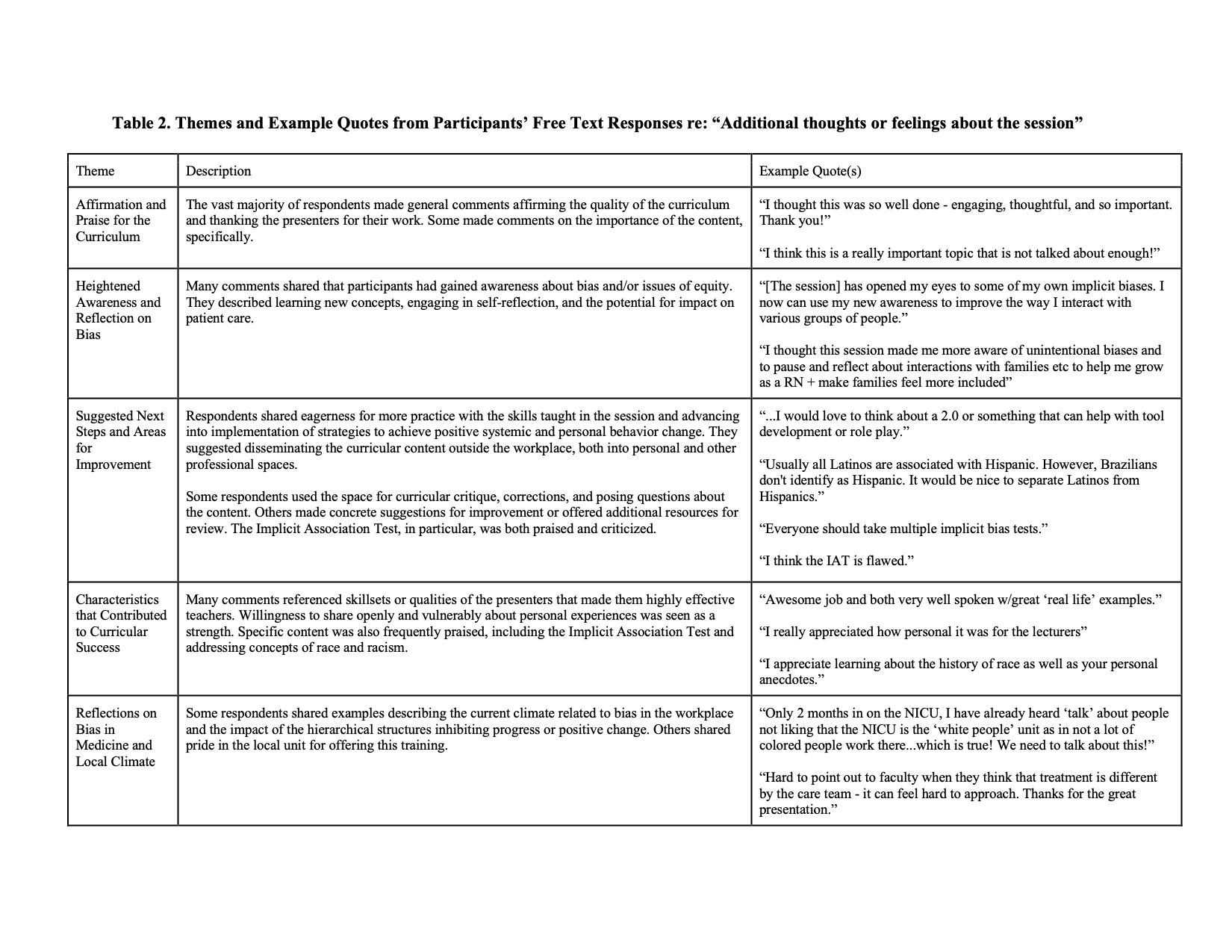
Background: Racial and ethnic inequities exist across neonatal outcomes due to structural, institutional, interpersonal, and internalized racism in healthcare. Educational interventions are one strategy to mitigate these effects, yet there are no published, NICU-specific, evidence-based curricula. Objective: To assess the short- and long-term impact of a novel anti-racism, anti-bias curriculum on knowledge, attitudes, and confidence among NICU staff and to identify key themes from qualitative reflections. Design/Methods: We developed and implemented Improving Care Through Equity, a one-hour interactive class for all patient-facing NICU staff at a large academic Level III NICU. The curriculum included content on the history of race and racism, neonatal inequities, and upstander training and used didactic teaching, facilitated discussion, and personal vignettes. Participants completed the Implicit Association Test (IAT). Participation was required through integration into unit orientation and NRP recertification. Participants completed baseline, post-curriculum, and three-month surveys assessing knowledge, confidence, and attitudes regarding bias, racism, and discrimination. Data were analyzed using Cochran's Q and McNemar's tests with Bonferroni correction (α=0.0167). Open-ended responses were thematically analyzed using grounded theory with independent coding and consensus via discussion. Results: A total of 229 staff completed the curriculum and survey at baseline, 214 completed the survey post-curriculum and 55 at all three time points. Most participants found the class acceptable and relevant, as assessed immediately post-curriculum (Fig.1A). Knowledge of implicit vs explicit bias increased from 60% at baseline to 100% post-curriculum and 94.5% at follow-up (p < 0.05). Similar statistically significant sustained gains were observed for completing the IAT (32.7%, 96.4%, 87.3%), awareness of disparities (45.5%, 100%, 89.1%), and confidence addressing bias or discrimination (61.8%, 100%, 96.4%) (Fig. 1B, Table 1) (p < 0.05 for all comparisons). Qualitative analysis revealed five themes: praise for the curriculum, heightened awareness of bias, calls for continued training, appreciation for authentic facilitation, and reflections on workplace climate (Table 2).
Conclusion(s): An interactive anti-racism, anti-bias curriculum was feasible, well-received, and significantly improved NICU practitioners' knowledge and confidence in addressing bias and racism and awareness of disparities, with sustained effects at three months. Findings support the integration of targeted training into neonatal education to promote equitable care.
Figure 1. Composite. A. Level of Agreement with Statements Describing the Session and its Impact, assessed immediately post-curriculum. B. Proportions of Responses to Questions Related to Knowledge, Confidence, and Attitudes Across Timepoints
Table 1. Changes in Proportions of Affirmative Responses to Questions Related to Knowledge, Confidence, and Attitudes Across Timepoints
Table 2. Themes and Example Quotes from Participants' Free Text Responses re: "Additional thoughts or feelings about the session"