522 - Increased Psychosocial and Health risks among Children with Special Healthcare Needs
Friday, April 24, 2026
5:30pm - 8:00pm ET
Publication Number: 1502.522
Tulasi Kesaraju, Michigan State University College of Human Medicine, Okemos, MI, United States; Ranga Prasanth Thiruvenkataramani, Michigan State University College of Human Medicine, Lansing, MI, United States; Suraj Karanje, Michigan State University, Lansing, MI, United States; Emily Disbrow, Michigan State University College of Human Medicine, East Lansing, MI, United States; Said Omar, Michigan State University College of Human Medicine, Lansing, MI, United States
Pediatrics Resident (PGY-2) Michigan State University College of Human Medicine Okemos, Michigan, United States
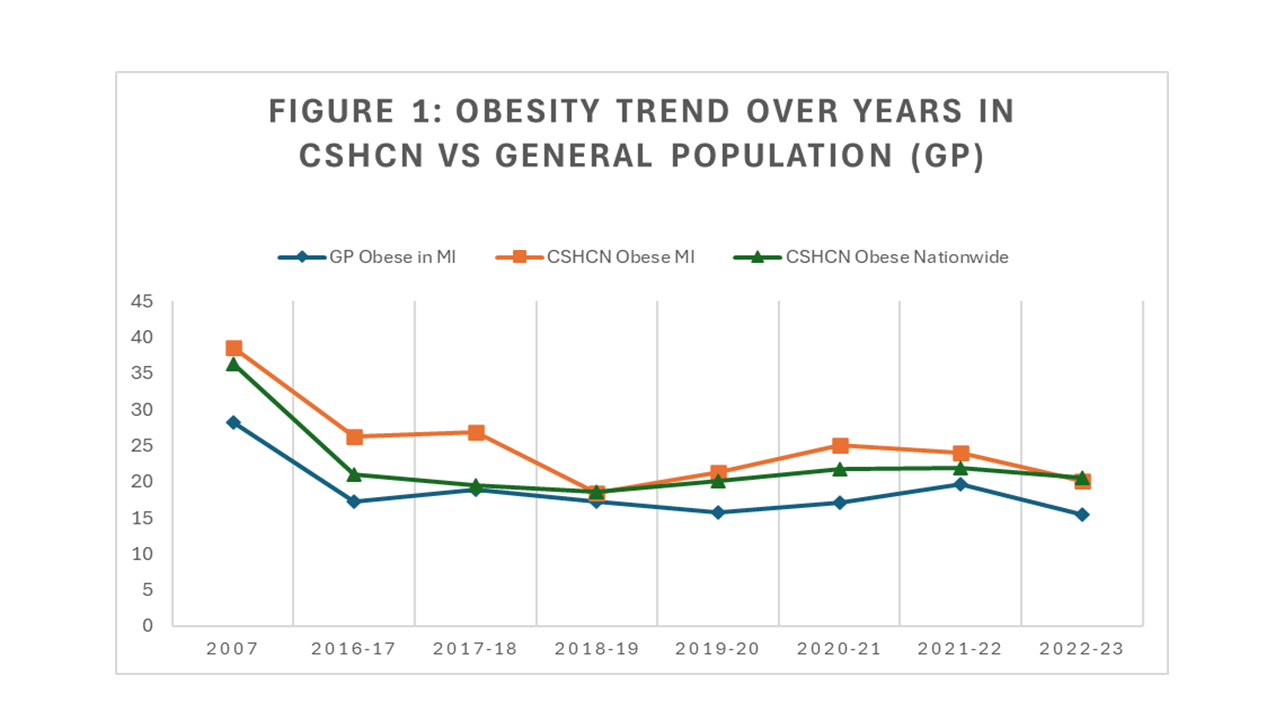
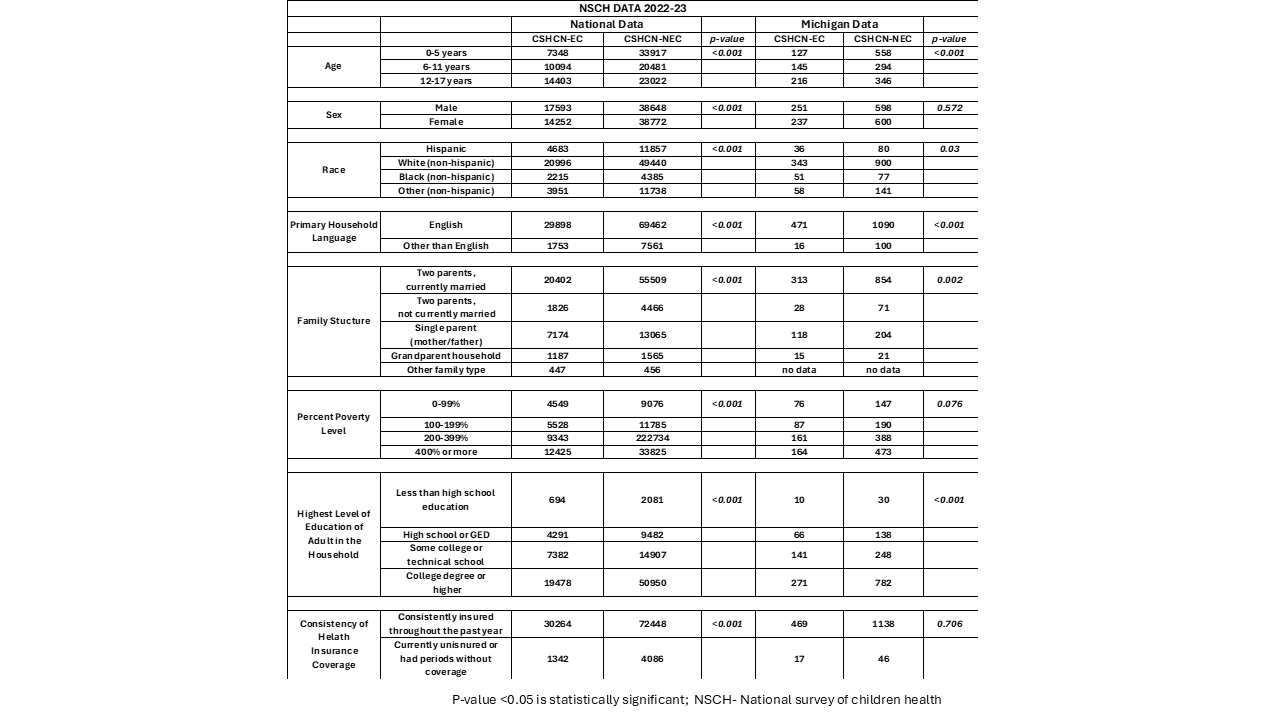
Background: Children with Special Health Care Needs (CSHCN) face a significantly increased burden of physical, emotional, and behavioral challenges compared with the general pediatric population. Though overall risks are well-documented, there is limited data differentiating outcomes between CSHCN meeting expanded criteria (CSHCN-EC) and not meeting expanded criteria (CSHCN-NEC). CSHCN-EC includes children with both functional difficulties and diagnosed conditions, whereas CSHCN-NEC includes either one. Closing this knowledge gap is essential for developing targeted public health interventions to improve social and health services for CSHCN nationally and at the state level. Objective: To determine if there are differences in the probability of being obese, decreased physical activity > 60 mins/day (PA), bullying exposure, and Adverse Childhood Experiences (ACEs) between CSHCN-EC and CSHCN-NEC. In addition, comparing the National (N) with Michigan (MI) data. Design/Methods: The study is IRB exempt. This cross-sectional cohort study utilized pooled 2022-2023 data from the National Survey of Children's Health (NSCH). Odds ratio was calculated between CSHCN-EC and CSHCN-NEC for obesity, physical activity (PA), bullying exposure, and Adverse Childhood Experiences (ACEs). Statistical analysis was performed to calculate chi-square, Odds Ratio (OR), Confidence Interval (CI), and p-value using the Sigma plot. Results: The demographic data for N and MI are in table-1. The CSHCN-EC had a significantly higher OR of reporting ≥2 ACEs of 3.49x N (C.I: 3.38-3.61) and 3.78x MI (C.I: 2.89-4.96). Furthermore, CSHCN-EC had increased odds of being obese [1.51x N (CI: 1.45-1.58); 1.74x MI (CI: 1.23-2.47)], decreased PA [1.48x N (CI: 1.39-1.58); 2.25x MI (CI: 1.33-3.8)] and exposed to bullying more often both N and MI see table-2. Fig-1 shows obesity trends in N and MI.
Conclusion(s): These findings consistently highlight that CSHCN-EC experienced substantially increased burden in multiple health and social determinants. Importantly, these differences were consistent across N and MI data. This subgroup has heightened exposure to ACEs, placing them at a distinct and elevated risk of psychosocial vulnerability. These findings support the existence of significant variation within the CSHCN cohort. This research emphasizes the necessity of reviewing public health policies and resource allocation to develop support strategies that specifically address the needs of CSHCN-EC, therefore ensuring more effective and equal social and health service provision both at the National and Michigan level.
Table-1: Demographic Data
Table-2: CSHCN-EC Vs CSHCN-NEC
Figure-1: Obesity trend over years in CSHCN Vs general population










.png)