Session: Neo-Perinatal Health Care Delivery: Practices and Procedures 2
733 - A Delphi survey towards a national risk-based Standardized Consensus Clinical Practice on late (>7 days) postnatal systemic steroids among preterm neonates in Canada
Friday, April 24, 2026
5:30pm - 8:00pm ET
Publication Number: 1710.733
Amit Mukerji, McMaster University, Hamilton, ON, Canada; Brooke Read, London Health Sciences Centre, London, ON, Canada; Nandita Manoj, McMaster University Michael G. DeGroote School of Medicine, Hamilton, ON, Canada; Brenda H. Law, University of Alberta, Edmonton, AB, Canada; Julie McKanna, Alberta Health Services, Calgary, AB, Canada; Rebecca Sherlock, Surrey Memorial Hospital, Whistler, BC, Canada; Brigitte Lemyre, University of Ottawa Faculty of Medicine, Ottawa, ON, Canada; Mary Seshia, University of Manitoba, Winnipeg, MB, Canada; Deepak Louis, Max Rady College of Medicine, Rady Faculty of Health Sciences, University of Manitoba, Winnipeg, MB, Canada; Deima Al Ammary, Queen's University Faculty of Health Sciences, Kingston, ON, Canada; Phoukim Savanh, Jewish General Hospital, Montreal, PQ, Canada; Jagmeet Bhogal, University of Alberta Faculty of Medicine and Dentistry, Edmonton, AB, Canada; Guillaume Ethier, CHU Sainte-Justine, Montreal, PQ, Canada; Balpreet Singh, Dalhousie University Faculty of Medicine, Halifax, NS, Canada; Sandesh Shivananda, University of British Columbia Faculty of Medicine, Vancouver, BC, Canada; Uthaya Kumaran Kanagaraj, University of British Columbia Faculty of Medicine, Vancouver, BC, Canada; Tapas Kulkarni, University of British Columbia Faculty of Medicine, Vancouver, BC, Canada; Christine Drolet, Chu de Quebec, Laval University, Quebec, PQ, Canada; Samira S. Samiee-Zafarghandy, McMaster University Michael G. DeGroote School of Medicine, Hamilton, ON, Canada; Thuy Mai Luu, Centre Hospitalier Universitaire Sainte-Justine, Montreal, PQ, Canada; Jehier Afifi, Dalhousie University Faculty of Medicine, Halifax, NS, Canada; Michael Dunn, University of Toronto Temerty Faculty of Medicine, Toronto, ON, Canada; Bradley A.. Yoder, University of Utah, Salt Lake City, UT, United States; Guilherme Santanna, McGill University Health Center, MONTREAL, PQ, Canada; Marc Beltempo, McGill University Faculty of Medicine and Health Sciences, Montreal, PQ, Canada; Joseph Ting, University of Alberta, Edmonton, AB, Canada; Prakesh S Shah, Mount Sinai Hospital, Toronto, ON, Canada; Ayman Abou Mehrem, University of Calgary, Calgary, AB, Canada; Renjini Lalitha, University of Western Ontario, London, ON, Canada
Associate Professor McMaster University Hamilton, Ontario, Canada
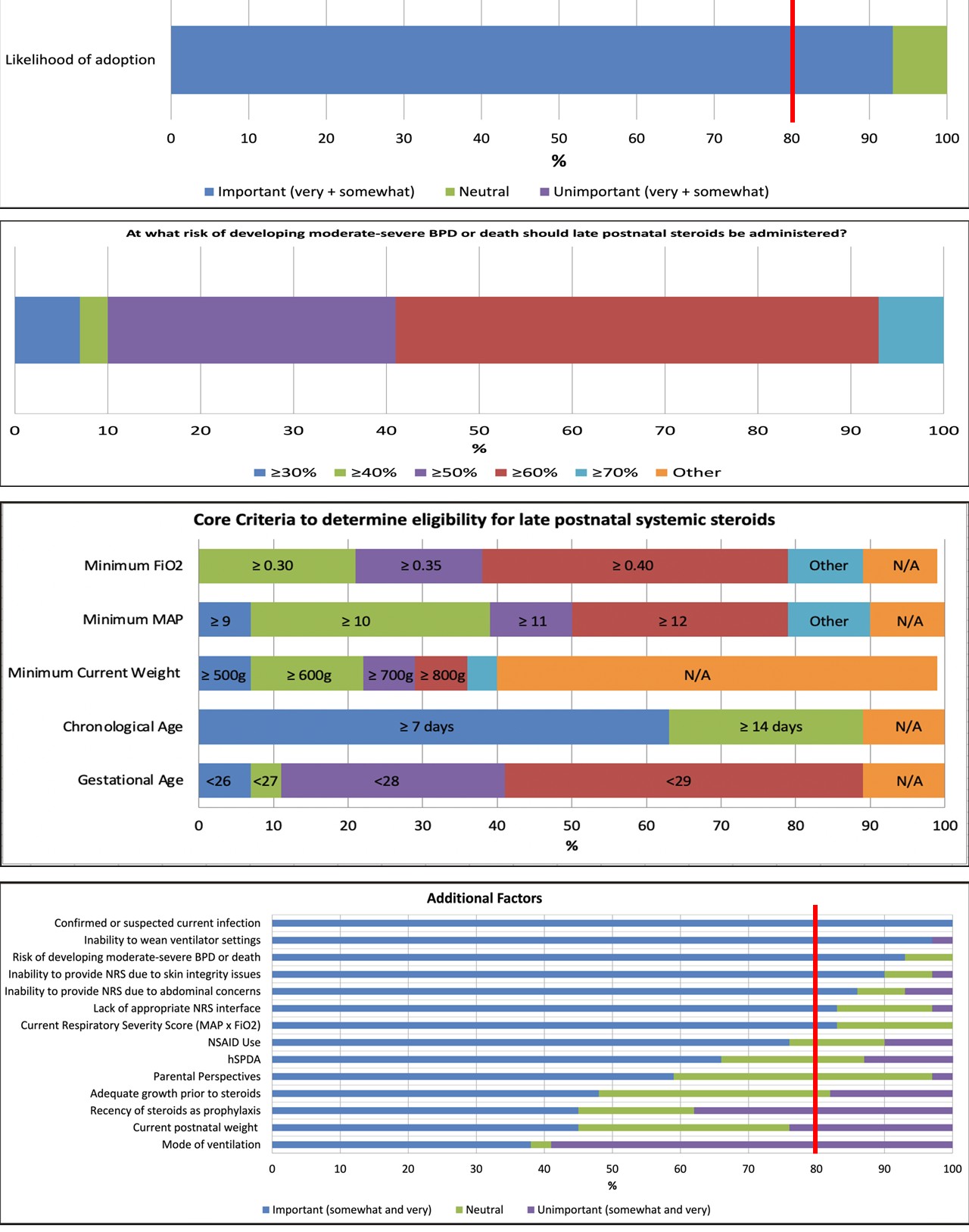
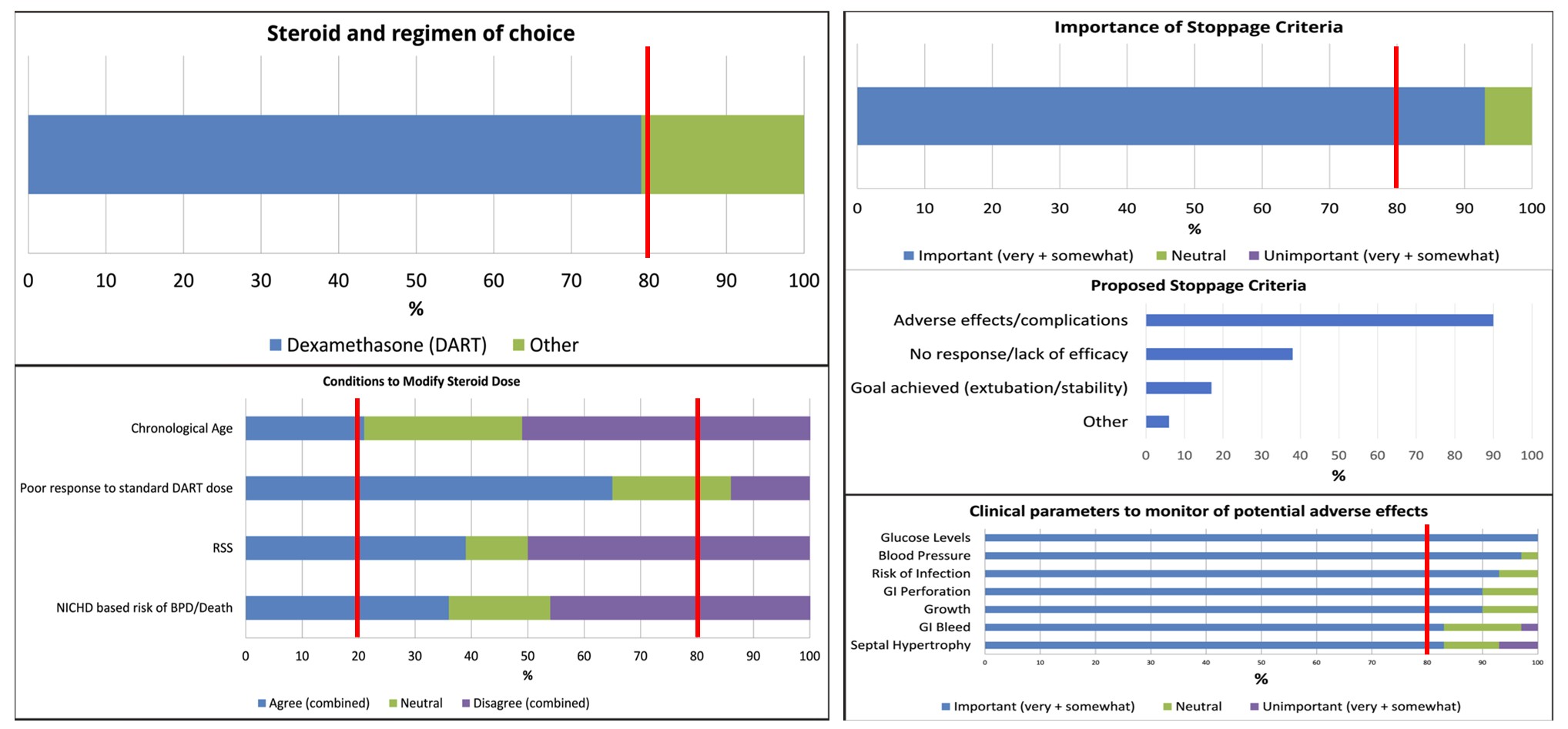
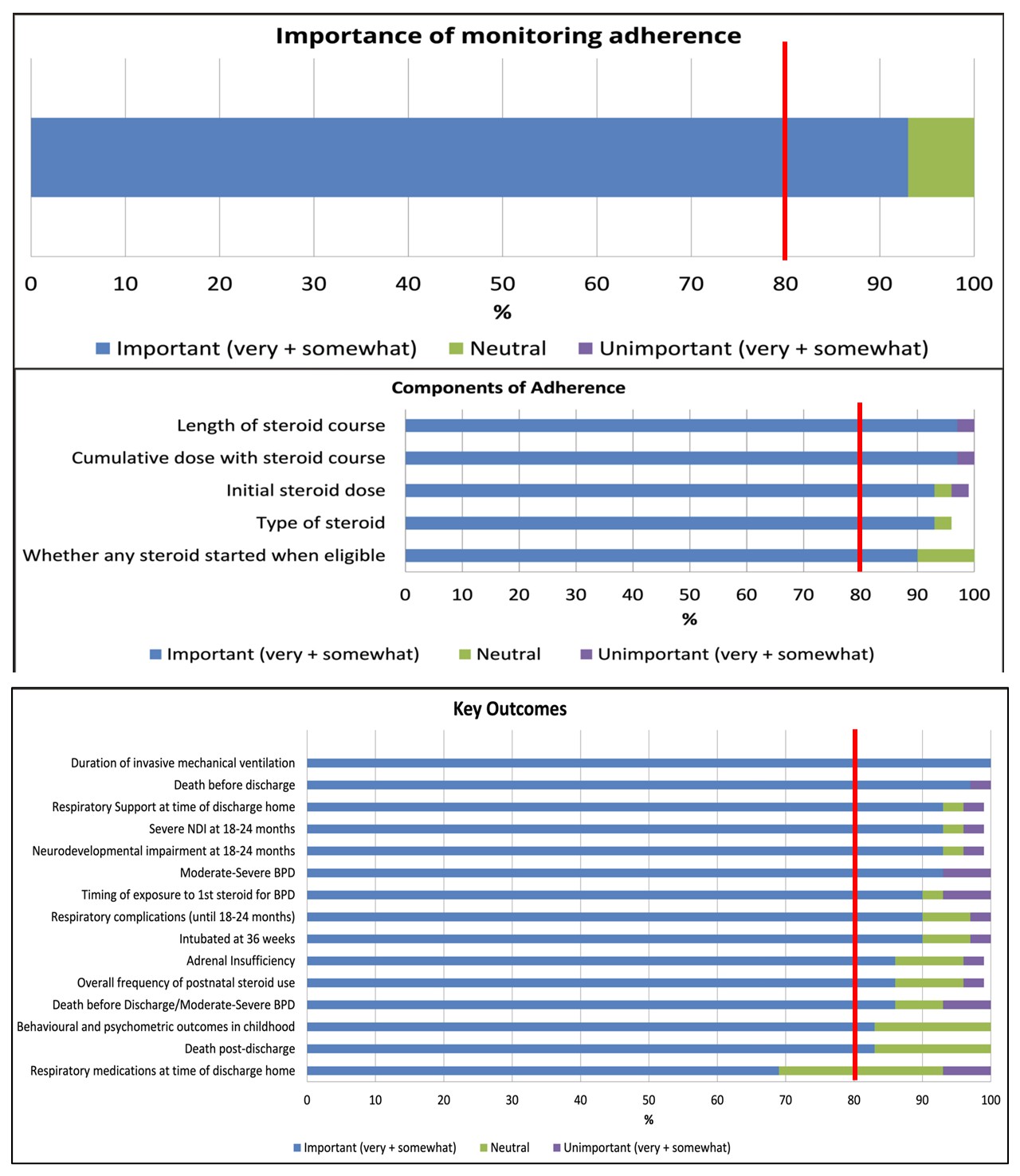
Background: Postnatal steroids are widely used in NICUs to reduce ventilator-associated lung injury, aid extubation, and decrease bronchopulmonary dysplasia (BPD) risk. However, practices vary greatly across Canada due to lack of standardization. Recent studies suggest that using late (>7 days) steroids guided by risk estimators may better balance risks and benefits and improve outcomes. Objective: To build consensus on key elements towards a risk-based standardized clinical practice (SCP) for postnatal steroid use in Canadian NICUs. Design/Methods: A series of Delphi surveys were created on a secure online platform (REDCap) and sent to clinical experts and stakeholders across Canada who are members of the Lung Health Group of the Canadian Neonatal Network. The first round consisted of open-ended questions, while rounds 2 and 3 used closed ended questions ranked on Likert scales and provided aggregated and individual responses to each participant. Questions had the following 6 themes: (1) Need and Importance of a SCP; (2) Patient selection; (3) Choice of steroid and regimen; (4) Adverse effects and stoppage criteria; (5) Adherence monitoring; and (6) Clinical outcomes. Results of round 3 were used to determine areas meeting and lacking consensus. A threshold >80% on a modified 3-point Likert scale was considered a priori to have met consensus. Results: The survey was sent to 30 individual participants across Canada, of whom 28 (22 physicians, 4 respiratory therapists, 2 nurse practitioners) completed all 3 rounds of the survey series. The overwhelming majority of respondents agreed that a SCP on postnatal steroids is important. Most respondents indicated a risk of Death or Moderate-Severe BPD of >50-60% as indications for postnatal steroids, while additional patient-factors were mixed with regards to consensus (Figure 1). Most preferred dexamethasone as the agent of choice using the DART regimen, with large variability in opinions on modifications to this (Figure 2). Emergence of adverse effects was the most common indication to stop steroids, followed by lack of efficacy. The vast majority highlighted the importance of monitoring adherence to a SCP and provided variables to be monitored (Figure 3). Finally, clinical outcomes of importance to clinicians were ascertained with consensus being reached for most.
Conclusion(s): This Delphi survey was a critical initial step towards developing a national, risk-based SCP on postnatal steroids for preterm neonates. The survey identified areas of consensus can be readily incorporated into the SCP, while areas without consensus may not be amenable and/or need further research.
Figure 1: Need & Importance of SCP on postnatal steroids and Patient selection.
Figure 2: Choice of Steroids, Modifications, Adverse Effects and Stoppage criteria
Figure 3: Adherence Monitoring and Clinical Outcomes