157 - Spiked Buzz: A Follow-Up Analysis of Online Attitudes Toward Caffeinated Alcoholic Beverages
Friday, April 24, 2026
5:30pm - 8:00pm ET
Publication Number: 1147.157
Eric Wang, Northwell Health, New Hyde Park, NY, United States; Grace Cason, Donald and Barbara Zucker School of Medicine at Hofstra/Northwell, Uniondale, NY, United States; Joseph Mekhail, Northwell Health, New York, NY, United States; Neel Sharma, Northwell Health, New York, NY, United States; Ruth Milanaik, Northwell Health, Great Neck, NY, United States
Undergraduate Researcher Northwell Health Providence, Rhode Island, United States
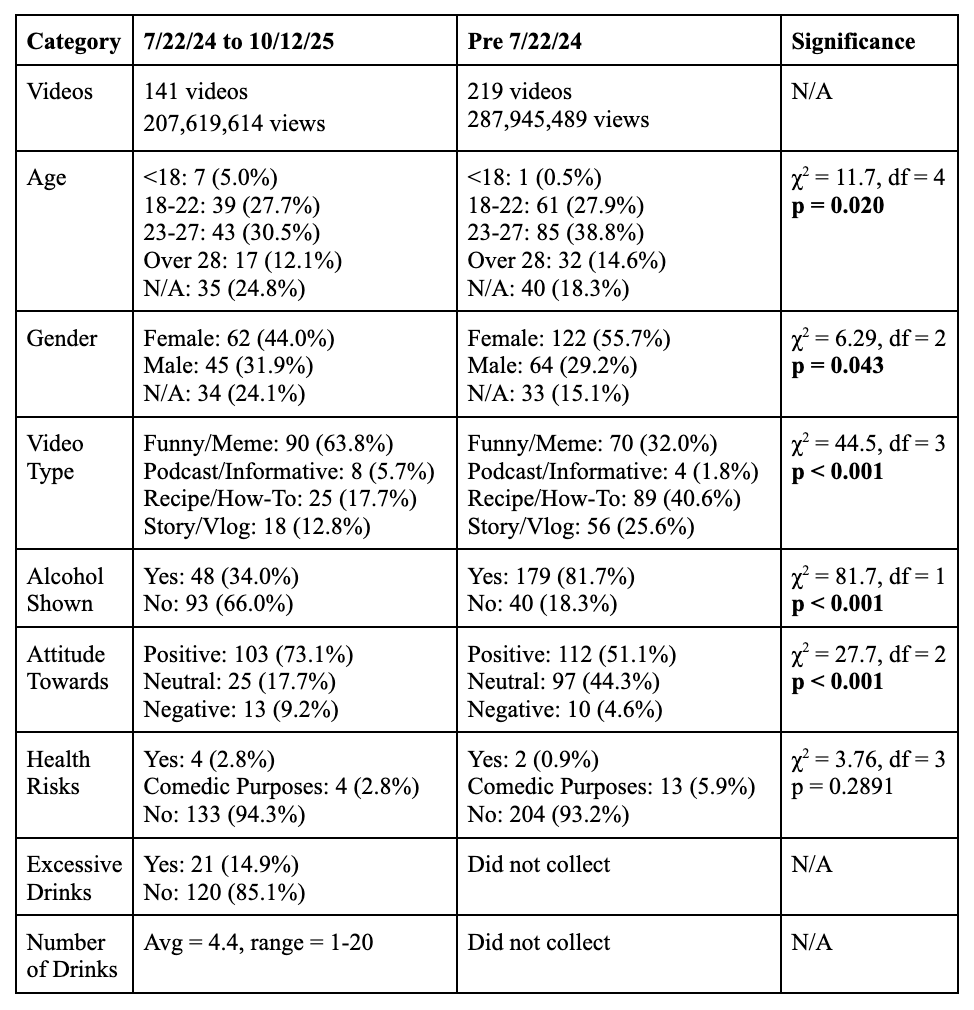
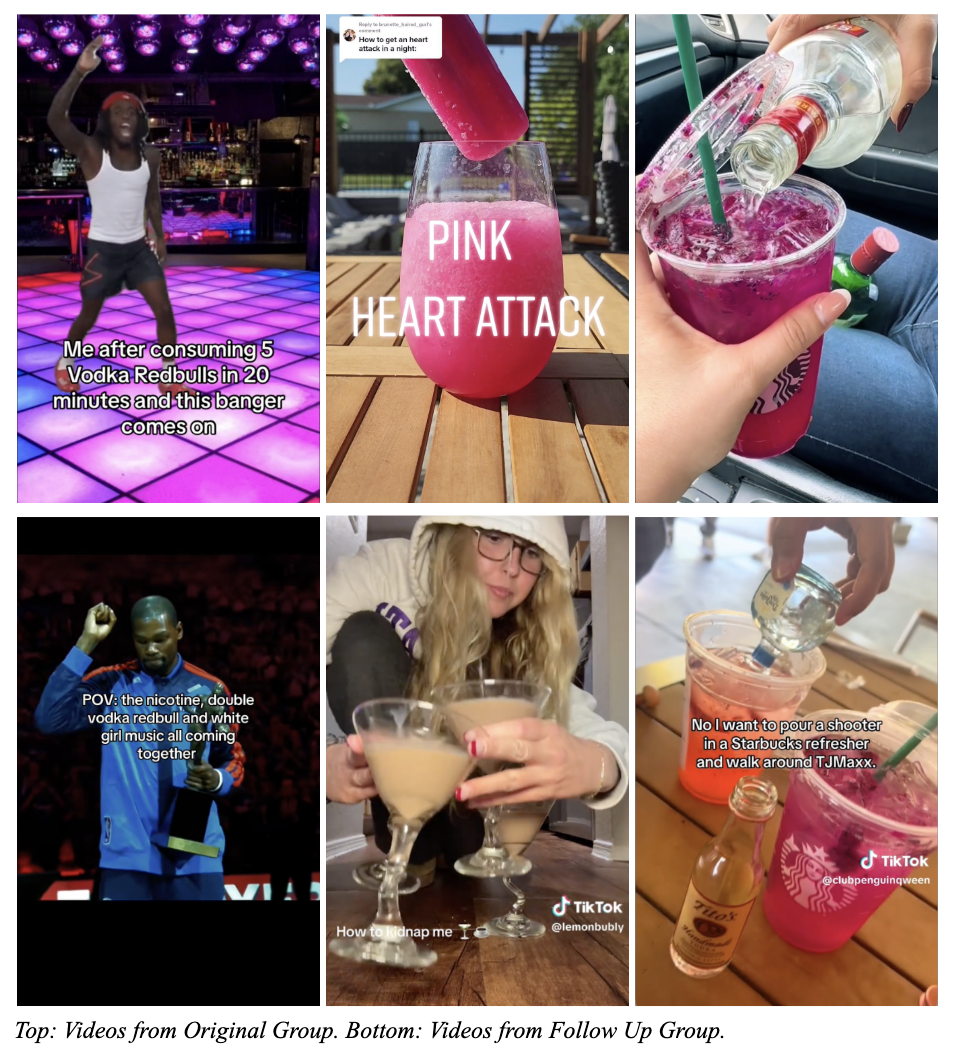
Background: In 2010, the FDA banned pre-mixed caffeinated alcoholic beverages (CAB) over safety concerns and youth-directed marketing. CAB pose significant health risks as caffeine masks alcohol's sedative effects, leading individuals to underestimate their intoxication level, increasing alcohol poisoning risk, and heightening binge drinking. Despite these risks, 20% of college students report mixing alcohol with energy drinks. Objective: To assess changes in portrayal, risk communication, and creator demographics in TikTok content featuring CAB. Design/Methods: A previous study analyzed 219 TikTok videos posted before 7/21/24 and found widespread normalization of CAB use with minimal mention of health risks (Figure 1). This follow-up study examined whether CAB-related TikTok content and attitudes changed over time. 141 videos posted between 7/21/24 and 10/12/25 were collected using the same hashtag scrapes and keyword searches (Figure 2). Coders recorded creator demographics, video content type, attitudes toward CAB, health risk mentions, and alcohol presence. Two new variables were coded: mention of excessive drinking (4 or more drinks) and number of drinks shown. Results: Video content type shifted away from Recipe/How-To (40.6% to 17.7%) and toward Funny/Meme formats (32.0% to 63.8%) (p <.001). Attitudes became more polarized, with a significant decline in neutral content (44.3% to 17.7%) and an increase in positive portrayals (51.1% to 73.0%) (p <.001). Creators remained predominantly female, though the female majority was smaller in the new sample (p=.043). The age distribution skewed younger, with significantly more minors and college-aged creators (p=.020) (Figure 3). 14.9% (n=21) of videos depicted excessive consumption, with a mean of 4.4 drinks shown across all videos. Mentions of health risks remained negligible and did not differ between time periods.
Conclusion(s): This study reveals concerning trends in CAB content. While fewer videos explicitly show CAB, the decline in neutral content and the increased dominance of positive attitudes suggest that CAB are increasingly becoming a social norm. Promotion of CAB has shifted to a more humor-based context. The mean number of drinks shown aligns with binge-drinking thresholds, reinforcing high-risk behaviors. This evolution towards subtler, meme-based promotion that still ignores health risks presents a continuing danger to young audiences. TikTok's algorithm amplifies this exposure, creating echo chambers that normalize dangerous consumption. There remains a need for public health education and for clinicians to address the specific dangers of CAB with patients.
Figure 1. Changes in CAB Content Over Time
Figure 2. Examples of CAB TikTok Content
Figure 3. Attitudes towards CAB by Age Range and Type









.png)
