








Developmental and Behavioral Pediatrics
Session: Developmental and Behavioral Pediatrics 3: ADHD/Behavior
Matthew Zimon, B.S. (he/him/his)
Clinical Research Coordinator
Boston Children's Hospital
Brighton, Massachusetts, United States
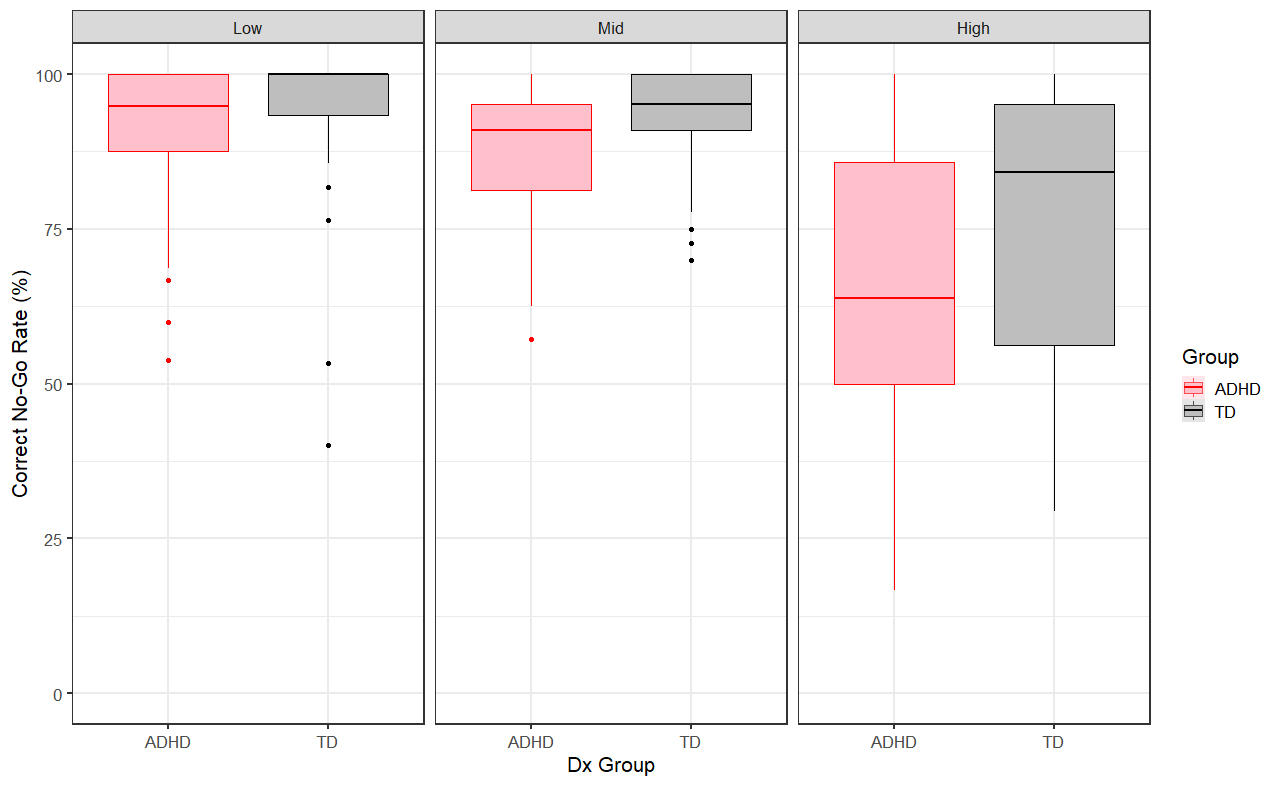 Figure 1. No-Go Accuracy and ADHD Dx group at low, mid (medium), and high prepotency levels for the school-aged cohort. Correct No-Go trial rate was significantly lower in the ADHD group only at high levels of prepotency. Both groups exhibited reduced No-Go accuracy at high compared to low prepotency levels.
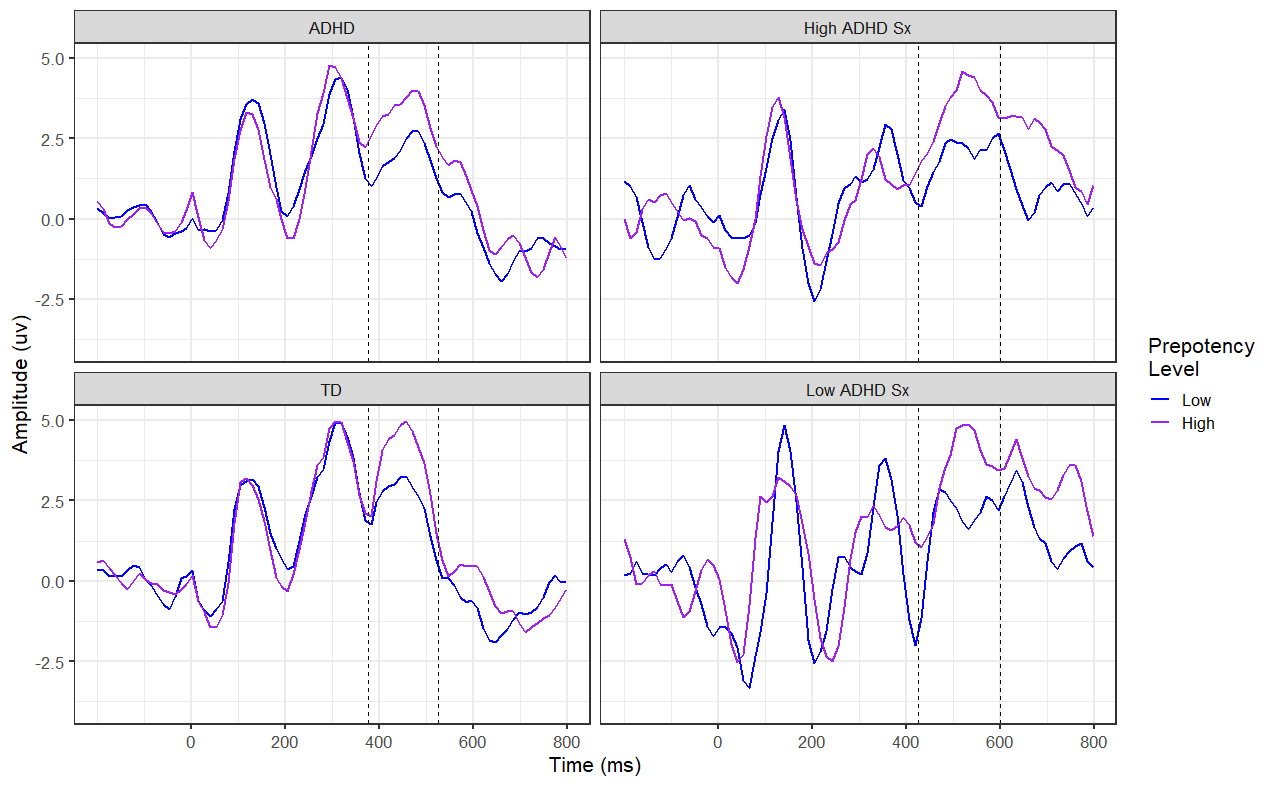 Figure 2. Stimulus-locked waveform at correct No-Go trials for school-aged (Left) and preschool-aged (Right) groups. Dashed lines indicate the timeframe of the late P3 event-related potential (ERP) component at 375-525ms and 425-600ms for the school-aged and preschool-aged cohorts respectively. No-go trials with high levels of prepotency evoked a greater late P3 amplitude than low levels of prepotency. The ADHD group showed reduced late P3 amplitude on average compared to the TD group, but this difference was not significant.