280 - Teaching Empathic Communication in a Musical Moment to the Interprofessional Care Team
Friday, April 24, 2026
5:30pm - 8:00pm ET
Publication Number: 1266.280
Kelley A. Groves, New York University Grossman School of Medicine, New York, NY, United States; Elizabeth Ingram, Hassenfeld Children's Hospital at NYU Langone, New Rochelle, NY, United States
Physician New York University Grossman School of Medicine New York, New York, United States
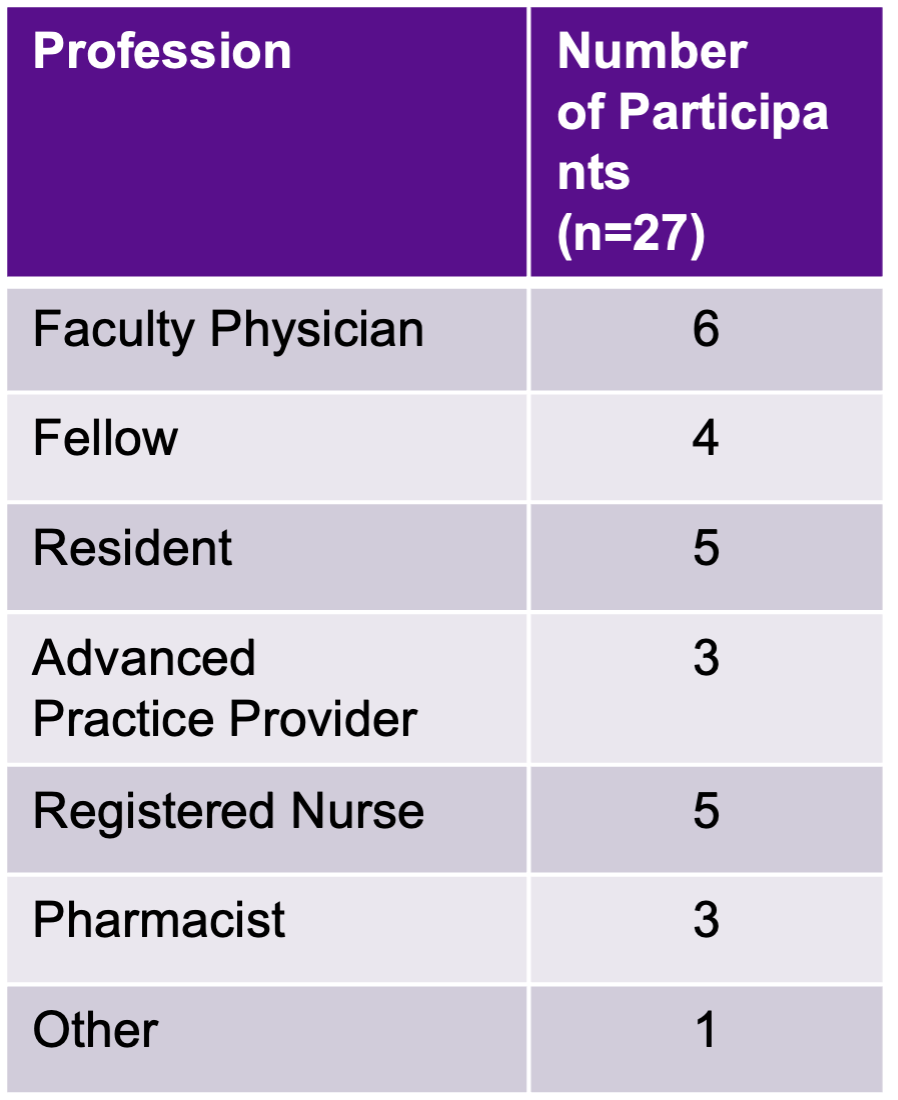
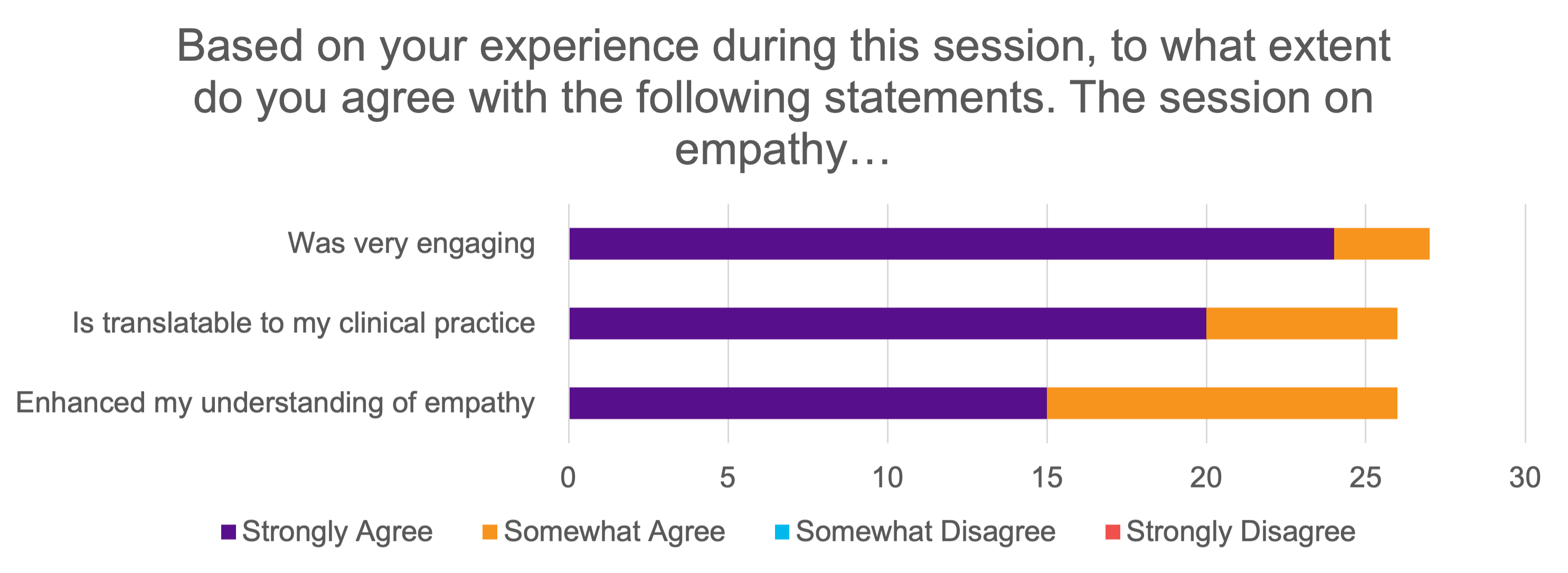
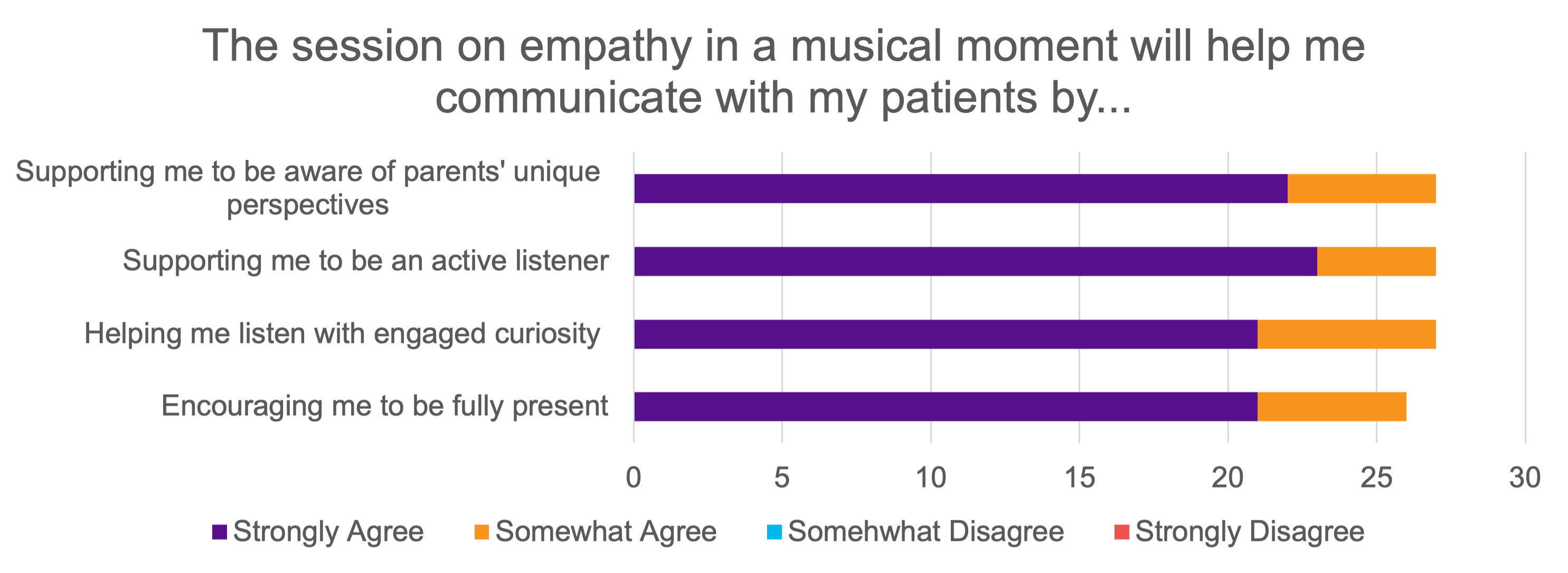
Background: Empathy is the practice of trying to understand another person's lived experience through communication and engaged curiosity. Empathy training enhances healthcare professionals' and patients' wellbeing and creates meaningful connections; yet there are limited empathy curricula for the interprofessional healthcare team. We developed an innovative interprofessional session teaching empathic communication through music. Objective: Education session objectives included defining empathy, discovering the power of empathic communication through music, and recognizing how diverse viewpoints and nonverbal communication impact understanding. Design/Methods: Healthcare workers (HCW) were invited to attend a 1-hour education session, including an overview of empathic communication, two live musical moments followed by facilitated discussion and reflection focused on clinical connections utilizing the Barrett-Lennerd Empathy Cycle. Learners completed electronic, anonymous post-session evaluations. Results: 27 participants (PharmD, MD/DOs, APPs, RNs, house staff) attended the sessions and completed evaluations. Participants found the session engaging, translatable to clinical practice and enhanced their understanding of empathy (100% strongly/somewhat agree). All participants strongly/ somewhat agreed the session helped team members connect through experiencing the importance of nonverbal communication and active listening of others' reflections. All participants strongly/somewhat agreed the session will help communication with patients through active listening, being fully present and aware of unique perspectives. In the week prior to the session, 85% of participants felt a decline in empathy with patients, team members or self. When asked if learning from the session could be applied to situations lacking empathy, participants wrote, "Understanding that different people could interpret the same information differently could guide how I present information to families", and "Continuing to be cognizant of the parents perspective and trying to listen and be aware of what we say and do from their perspective".
Conclusion(s): Empathic communication taught through music and reflection improved healthcare team connection through awareness of diverse perspectives, active listening, engaged curiosity and the impact of non-verbal communication. Next steps include expansion of the curriculum to a broader network of healthcare workers and 360 degree assessment of empathic communication during family centered rounds.