508 - Caregiver Emotional Well-Being Among Children With and Without Serious Neurologic Impairment: A Cross-Sectional Study
Friday, April 24, 2026
5:30pm - 8:00pm ET
Publication Number: 1488.508
Kimberly P. Rush, UPMC Childrens Hospital of Pittsburgh, Boulder, CO, United States; Justin Yu, UPMC Childrens Hospital of Pittsburgh, PITTSBURGH, PA, United States
Research Assistant UPMC Childrens Hospital of Pittsburgh Boston, Massachusetts, United States
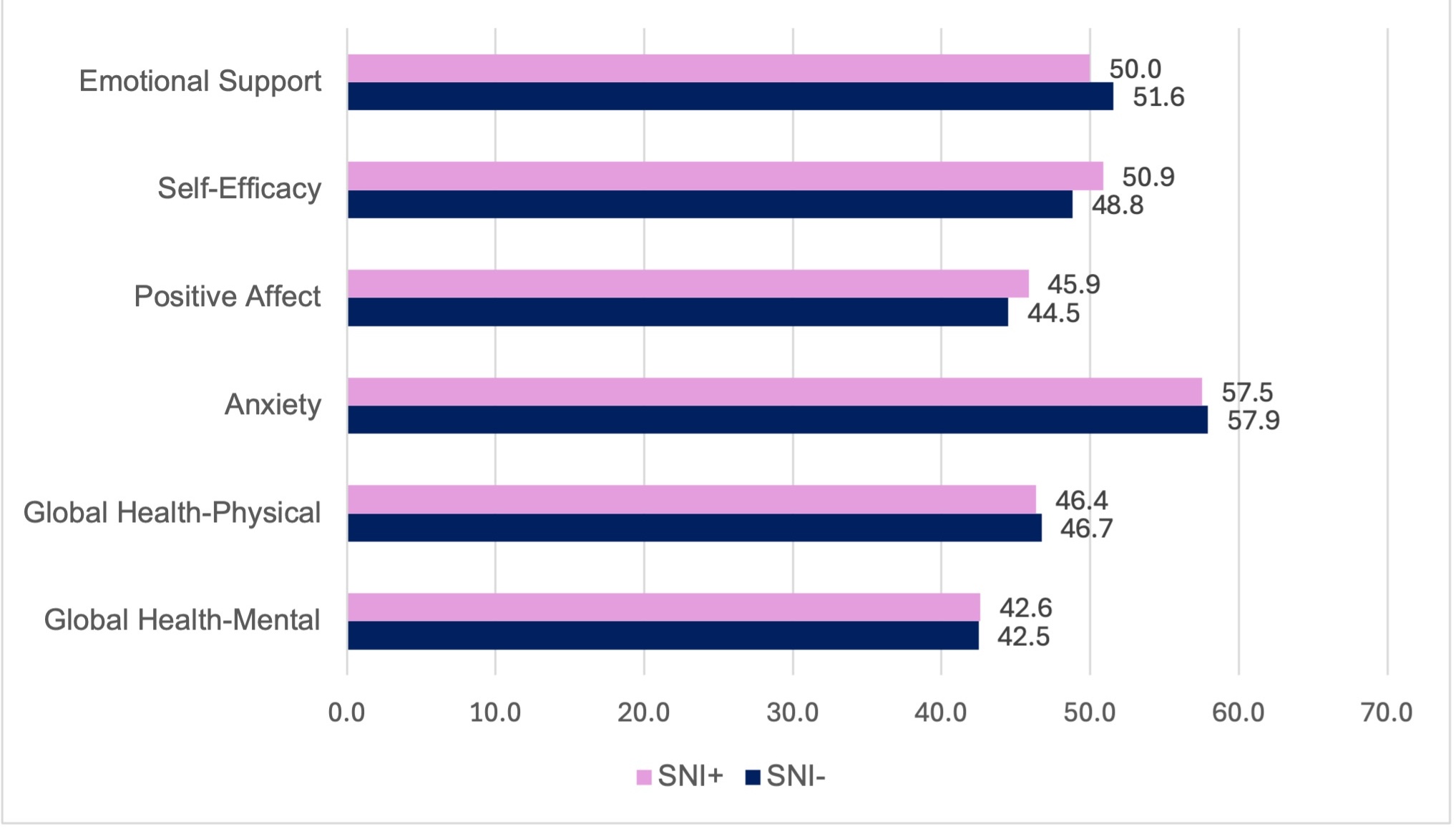
Background: Emerging evidence demonstrates that family caregivers of children with medical complexity (CMC) are at high risk for reduced emotional well-being (e.g., increased symptoms of anxiety). However, our understanding of the factors driving reduced well-being among CMC family caregivers remains unclear. Objective: To compare emotional well-being between family caregivers of children with and without serious neurologic impairment (SNI). Design/Methods: We conducted a cross-sectional survey of caregivers of CMC receiving care at an academic pediatric complex care clinic in western Pennsylvania. Participants completed an electronic questionnaire of Patient-Reported Outcome Measurement Information System (PROMIS) measures assessing Global Health, Anxiety, Positive Affect, Self-Efficacy, and Emotional Support. SNI status was determined by manual chart abstraction. We used χ² tests and two-sample t-tests for group comparisons and ANCOVA models adjusting for caregiver age, gender, marital status, home nursing, and child age, gender, and medical technology utilization. Results: A total of 134 caregivers were included in the analysis (SNI+ = 104, SNI− = 30). Caregivers were predominantly female (88%), mean age ~40 years; children averaged ~8 years. SNI+ families were more likely to receive home nursing (57% vs 37%, p = 0.047) and differed in marital status (p = 0.022). The most common organ systems affected were gastrointestinal (90%), neurologic (86%), and respiratory (65%). Nearly all children utilized medical technology (99%), with higher rates among SNI+ (100% vs 93%, p = 0.008). Across all PROMIS domains, mean T-scores did not differ by SNI status (all p > 0.28). In regression models adjusted for child and caregiver characteristics, child SNI status was not significantly associated with any measures of caregiver well-being. Interestingly, medical technology utilization was independently associated with lower emotional support (β = −21.6, p < 0.001), lower anxiety (β = −11.2, p = 0.001), and higher positive affect (β = +11.3, p = 0.010).
Conclusion(s): Caregiver well-being did not differ by SNI status. Instead, technology utilization emerged as the primary driver of emotional well-being variation, suggesting that caregiver support interventions should focus on the intensity of caregiving demands rather than neurologic diagnosis alone.
Table 1: Participant Characteristics
Figure 1: Average Caregiver PROMIS Well-Being Scores by Child SNI Status










.png)