Session: Environmental Health Trainee Ongoing Projects
TOP 76 - Per- and polyfluoroalkyl substances (PFAS) levels in meconium and cord blood – A Pilot Study
Saturday, April 25, 2026
3:30pm - 5:45pm ET
Publication Number: 2829.TOP 76
Shivangi Ganeshan, Georgetown University School of Medicine, WASHINGTON, DC, United States; Gamze Ozsoy, Kennedy Krieger Institute, Elkridge, MD, United States; Siva Subramanian, Medstar Georgetown University Medical Center, Washington, DC, United States; Charles P. Shelor, University of Texas at Arlington, Arlington, TX, United States; ANDREA B. KIRK, State of Vermont, Montpelier, VT, United States; Suhasini Kaushal, MedStar Georgetown University Hospital, Washington DC, DC, United States
Pediatric Resident Physician Georgetown University School of Medicine WASHINGTON, District of Columbia, United States
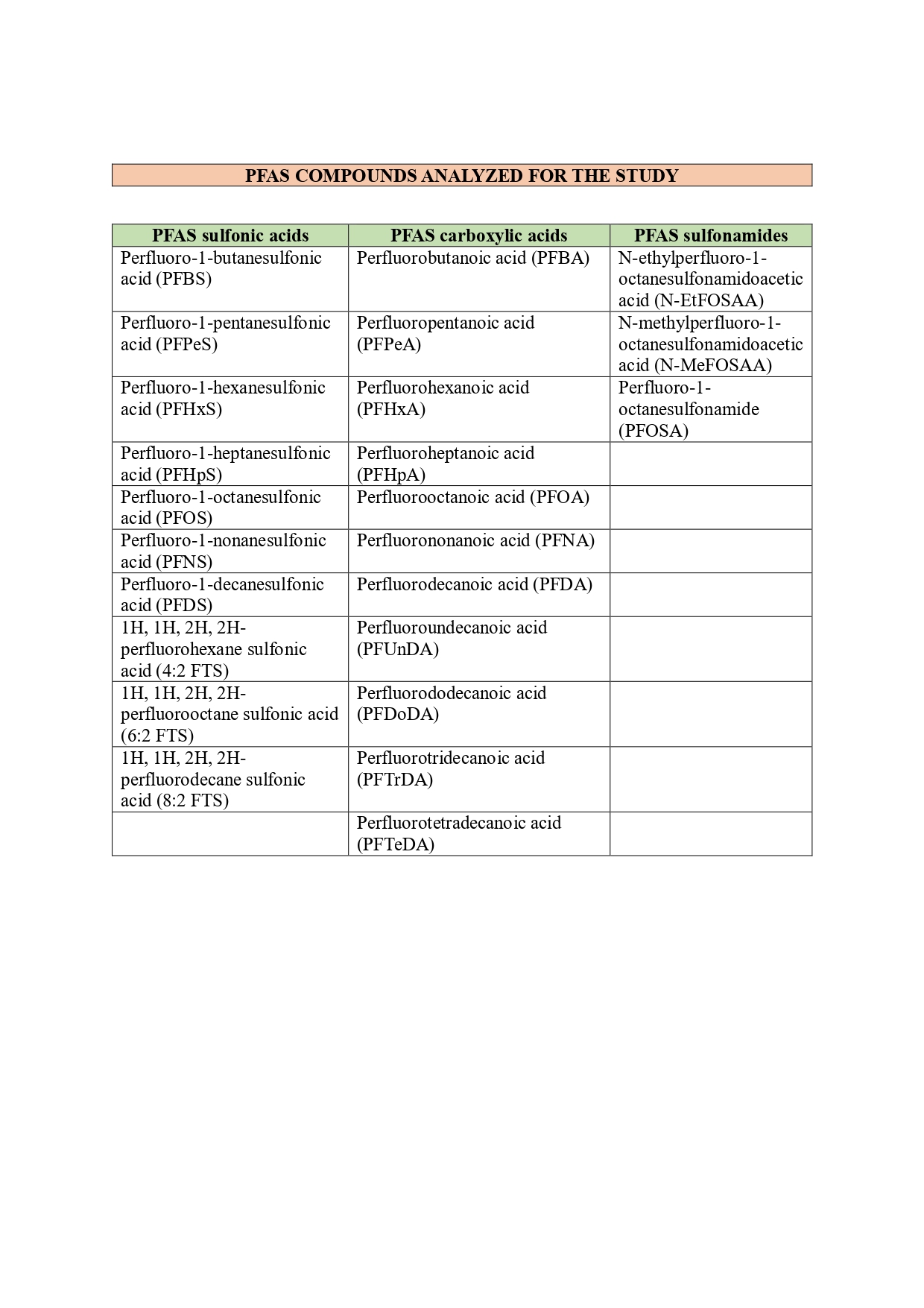
Background: Per- and polyfluoroalkyl substances (PFAS) are synthetic chemicals that are commonly known as "forever chemicals'' because they are persistent and slow to degrade. These large group of chemicals have a varying structure with presence of at least one fully fluorinated carbon (C-F) bond, which is not naturally occurring and one of the strongest chemical bonds known. These chemicals are present in many daily-use commercial products, including non-stick cookware, carpets, textiles, mattresses, food packaging, stain removers, and firefighting foams. PFAS target important nuclear receptors (Peroxisome Proliferator Activating Receptors or PPARs) within the placenta, leaving the developing infant vulnerable to the effects of altered placental function. Exposure has been associated with low birth weight in newborns, altered infant cardiometabolic profiles, lower antibody levels in infancy, and increased risk of infections in childhood due to altered immune dysregulation. Animal studies also support concerns for neurodevelopmental risks posed by PFAS. Assessing fetal exposures and estimating PFAS body burdens accurately are important since this period is extremely sensitive to disruption of key physiological processes that set the stage for the health of the future infant, child, and adult. Objective: This pilot prospective study aims to demonstrate exposure by detecting the presence and determining the levels of PFAS compounds in newborn meconium and cord blood, and to explore the relationship between these levels and gestational age, gender, and birth weight. Design/Methods: Prospective analysis of PFAS compounds in meconium and cord blood obtained from 100 infants of varying gestational ages (23-42 weeks) admitted to the NICU or newborn nursery in a single center. Stool samples are being collected in a container with a sampling spoon that is prescreened to be negative for PFAS. A targeted analysis and quantification of at least 24 PFAS compounds (see table) will be performed using liquid chromatography-mass spectrometry with multiplexed single-ion monitoring. Descriptive statistics will be used to evaluate the mean, median, standard deviation, and minimum/maximum value of each PFAS chemical to obtain initial estimates of levels in newborn meconium. Depending on the distribution of PFAS levels, Pearson or Spearman correlation coefficients will be used to characterize associations with gestational age, birth weight, and continuous health status variables.