TOP 17 - Knowledge and Attitudes Regarding Breastfeeding Counseling for Individuals with Substance Use Disorder
Saturday, April 25, 2026
3:30pm - 5:45pm ET
Publication Number: 2769.TOP 17
Merissa Maccani, Cincinnati Children's Hospital Medical Center, Cincinnati, OH, United States; Jennifer McAllister, Cincinnati Children's Hospital Medical Center, Cincinnati, OH, United States; Laura P.. Ward, Cincinnati Children's Hospital Medical C, Cincinnati, OH, United States; Qing Duan, Cincinnati Children's Hospital Medical Center, Cincinnati, OH, United States
Resident Physician Cincinnati Children's Hospital Medical Center Cincinnati, Ohio, United States
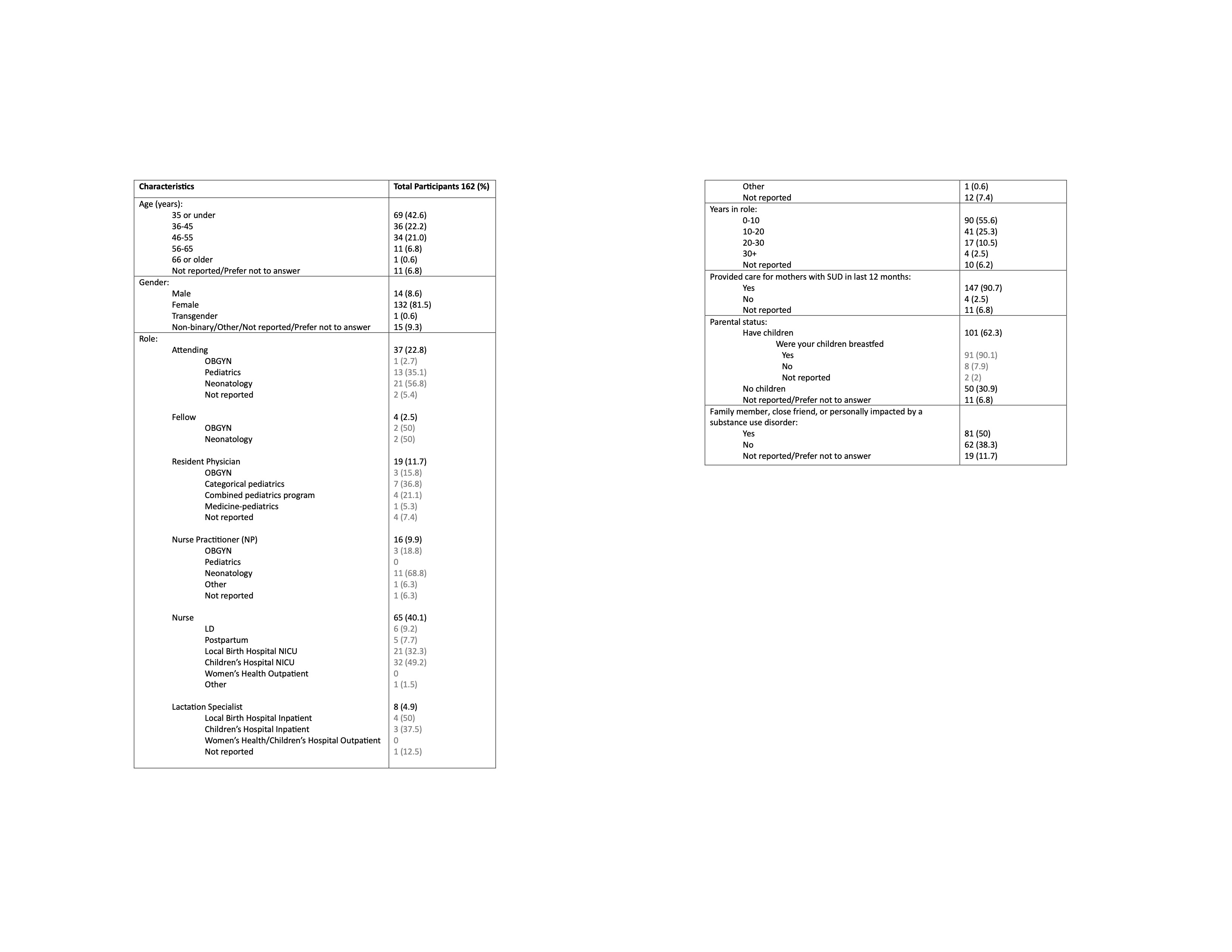
Background: Individuals with substance use disorder (SUD) face many obstacles during pregnancy and following the birth of their children. Infants with prenatal opioid exposure are at risk for Neonatal Opioid Withdrawal Syndrome (NOWS), which can have long-term neurodevelopmental impacts. However, breastfeeding provides many health benefits to newborns and has been shown to specifically decrease symptoms of NOWS. The American Academy of Pediatrics and the Academy of Breastfeeding Medicine recommend breastfeeding for people taking medications for opioid use disorder (MOUD) given the known benefits of breastfeeding and the minimal risk with these medications. Despite this, research has shown that individuals taking MOUD face barriers with breastfeeding and have higher rates of breastfeeding discontinuation. Additionally, individuals with SUD face stigma within the healthcare system, leading to care avoidance. Objective: This study aimed to explore provider knowledge of breastfeeding recommendations for patients with SUD, provider terminology used regarding SUD, provider comfort in counseling patients with SUD on breastfeeding, and resources providers use for information on breastfeeding for patients using MOUD. Design/Methods: This study was a cross-sectional survey of healthcare providers serving pregnant people and their newborns. Eligible participants included neonatal and obstetric physicians (attendings, fellows, residents), nurse practitioners, nurses, and lactation specialists at a local birth hospital and regional children's hospital. Potential participants received a recruitment email with a link to a survey within REDCap (Research Electronic Data Capture). Survey items were derived or adapted from previous studies exploring similar aims and included multiple-choice, Likert scales, and free text responses. Questions assessed participant characteristics including healthcare role, breastfeeding experience, and personal experience with SUD; knowledge of breastfeeding recommendations for patients with SUD; terminology used regarding SUD; comfort in counseling patients with SUD on breastfeeding; and resources utilized for information on breastfeeding for patients taking MOUD. Data collection took place from July - October 2025. Data analysis began in November 2025. Results will be summarized as medians and interquartile ranges for continuous variables and counts and percentages for categorical variables. Group comparisons will be performed using the Wilcoxon rank-sum or Kruskal-Wallis tests for continuous variables and Pearson's Chi-squared or Fisher's Exact tests for categorical variables.









.jpeg.jpg "Merissa Maccani, MD (she/her/hers) photo")
.png)
