709 - Charting the Ascent: A Qualitative Study of Current and Former Pediatric Medical Student Liaisons’ Perceptions of the Role
Saturday, April 25, 2026
3:30pm - 5:45pm ET
Publication Number: 2692.709
Corinna Brown Ton, Creighton University School of Medicine, Omaha, NE, United States; Oloruntosin Adeyanju, Nemours Children's Hospital/ Sidney Kimmel Medical College, Wilmington, DE, United States; Jason Burrows, University of Nebraska College of Medicine, Omaha, NE, United States; Jocelyn Deleon, Western Michigan University Homer Stryker M.D. School of Medicine, Kalamazoo, MI, United States; Melanie Rudnick, Frank H. Netter MD School of Medicine at Quinnipiac University, Rocky Hill, CT, United States; Navjyot K. Vidwan, Norton Children’s Hospital/ University of Louisville, Louisville, KY, United States; Jana L. Wardian, UNMC/Associate Professor for Hospital Medicine, Omaha, NE, NE, United States; Cassi Smola, University of Alabama School of Medicine, Birmingham, AL, United States; Nathaniel Goodrich, University of Nebraska College of Medicine, Omaha, NE, United States; Aleisha Nabower, University of Nebraska College of Medicine, Omaha, NE, United States
Medical Student Creighton University School of Medicine Omaha, Nebraska, United States
Background: Numerous studies have shown the benefits of near-peer teaching and mentorship in undergraduate medical education for both mentors and mentees. One novel approach of implementing this is the role of fourth year Pediatric Medical Student Liaison (PMSL), formerly known as Pediatric Student Chief. Despite the growing prevalence of this role, there is limited information on the experience from the PMSL perspective. Objective: This study aimed to explore the motivations for becoming a PMSL, define the qualities and characteristics of an effective PMSL, and identify the perceived benefits of the role. Design/Methods: Current and former PMSLs were recruited by their faculty members who were engaged with COMSEP. We conducted four one-hour virtual semi-structured focus groups (FG). Discussions were transcribed utilizing AI with verification from the authors. Two coders independently categorized the data using an open coding strategy. Results: FG participants were comprised of 9 current and 9 former PMSLs from 8 medical schools.
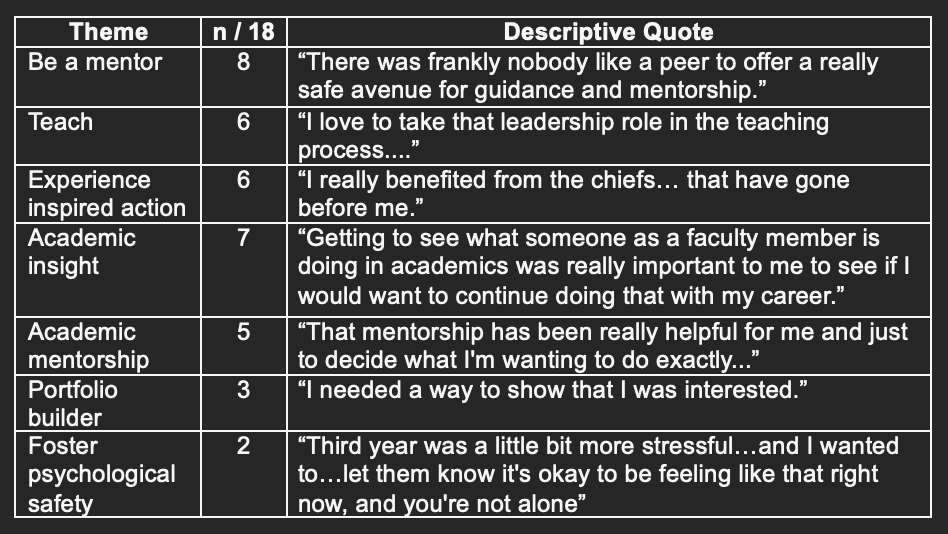
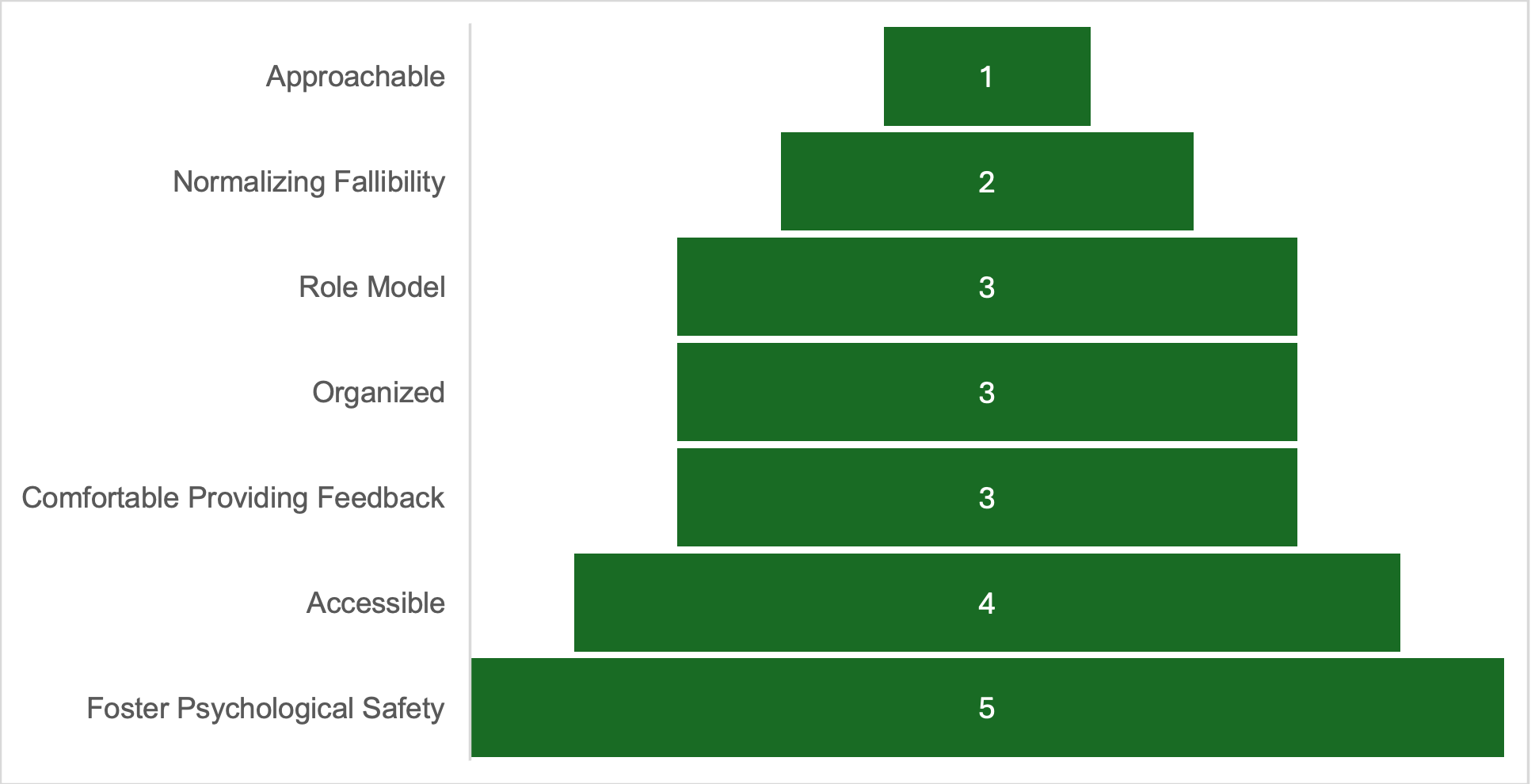
Students were motivated to be a PMSL by a desire to mentor peers, teach, and translate personal experience into action (Table 1). The most identified trait of a successful PMSL was the ability to foster psychological safety both by being approachable and normalizing fallibility. Other important traits were being accessible, comfortable providing feedback, organized, and a role model (Figure 1).
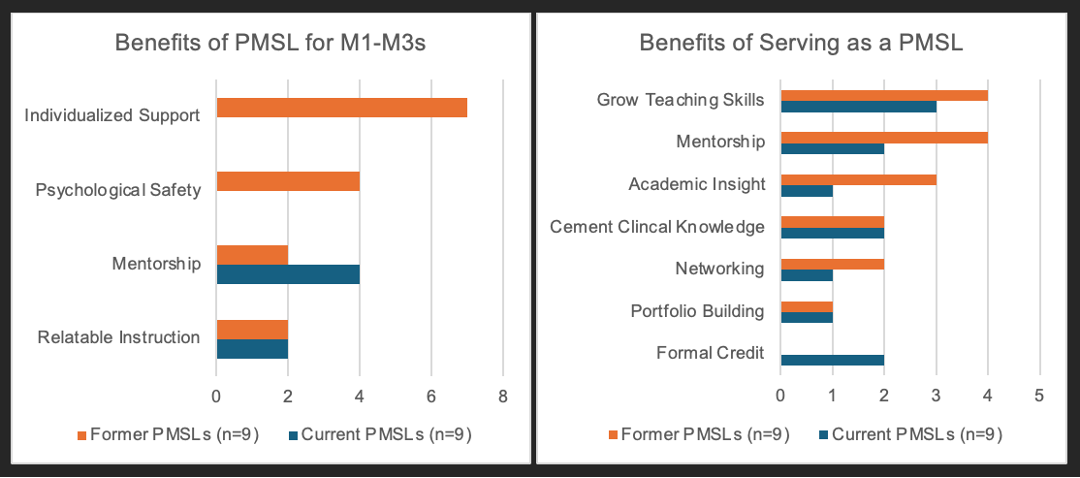
Current PMSLs benefited from the mentorship and relatable instruction provided by prior PMSLs. While in the role, current PMSLs noted that it provided them opportunities to improve teaching skills and cement clinical knowledge. They also valued receiving formal credit, portfolio building and networking. Former PMSLs described a shift in their perceived benefits over time. As underclassmen, they benefited from the individualized support and sense of psychological safety provided by prior PMSLs. After completing the role, the most frequently cited benefits were related to improving teaching and mentorship skills and gaining academic insight (Figure 2). Overall, former PMSLs viewed the role's impact on their careers as a portfolio builder, an experience that fueled academic passion, and a catalyst for self-reflection.
Conclusion(s): The PMSL role offers opportunities for personal and professional growth, a major motivator for students to take on the responsibility. It also allows students a glimpse into academic medicine, which can foster their development into physician educators while positively shaping learning environments and enriching medical education.
Table 1: Motivators for Serving as a Pediatric Medical Student Liaison (PMSL) Based on Current and Former PMSL Focus Group Responses (n = 18)
Figure 1: Qualities of an Effective Pediatric Medical Student Liaison (PMSL) Based Former and Current PMSL Focus Group Responses (n = 18)
Figure 2: Perceived Benefits of the Pediatric Medical Student Liaison (PMSL) Role Based on Current and Former PMSL Focus Group Responses