373 - Examining Structural and Social Drivers of HPV Vaccination Across Clinical Settings for Adolescents and Young Adults
Saturday, April 25, 2026
3:30pm - 5:45pm ET
Publication Number: 2362.373
Anita Narkhede, USF Health Morsani College of Medicine, Tampa, FL, United States; Alisa Vidwans, USF Health Morsani College of Medicine, Allentown, PA, United States; Lisa J.. Sanders, University of South Florida Morsani College of Medicine, Tampa, FL, United States; Emily Coughlin, University of South Florida, Tampa, FL, United States
Medical Student USF Health Morsani College of Medicine Tampa, Florida, United States
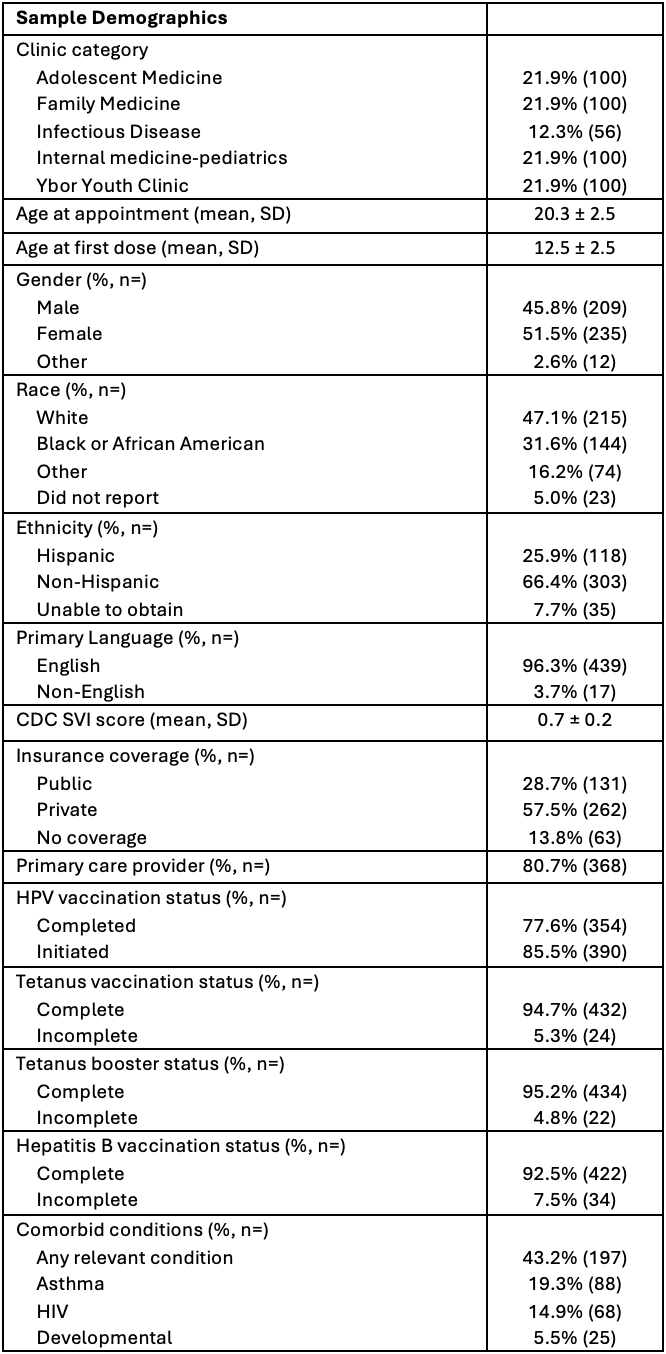
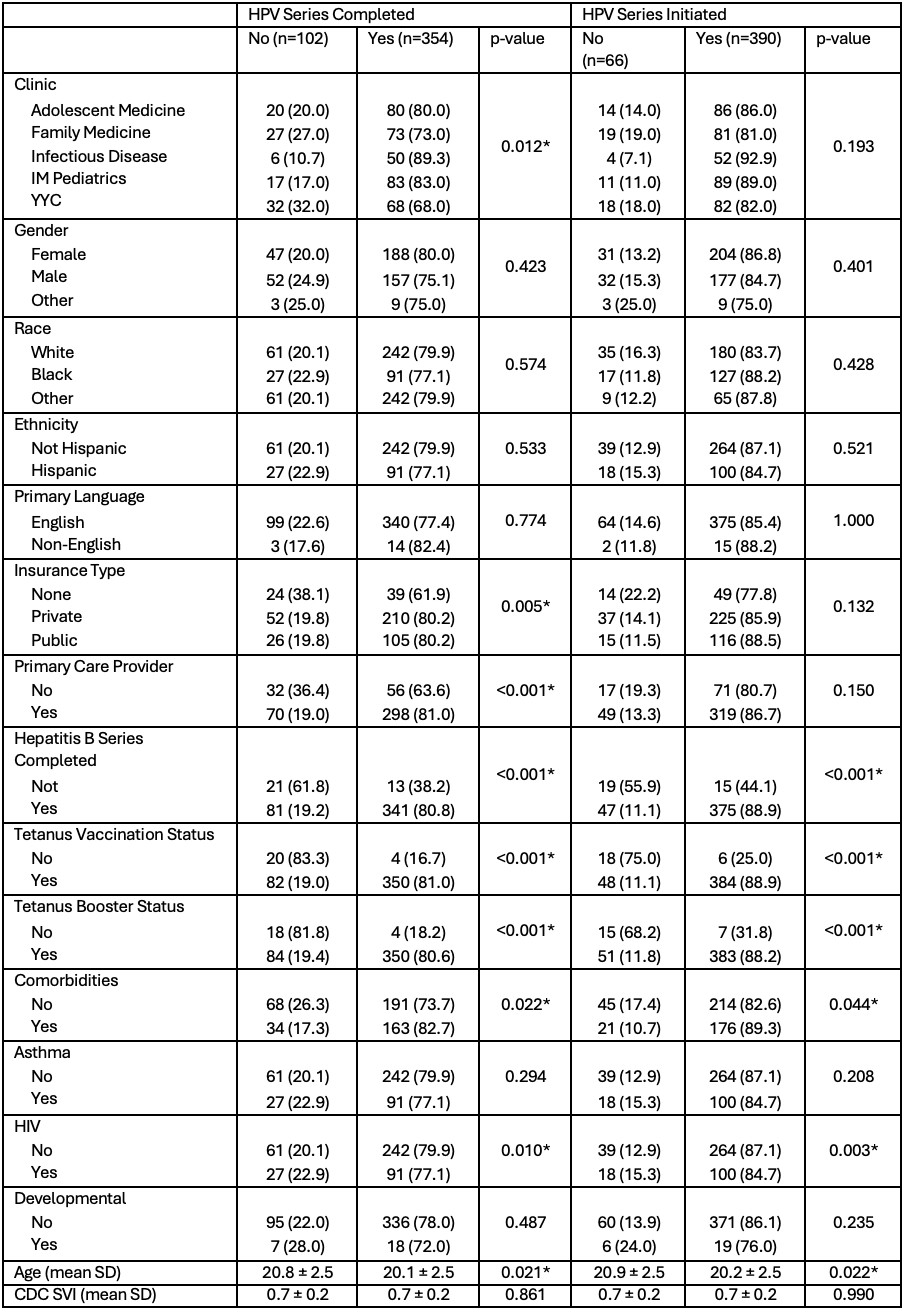
Background: Human papillomavirus (HPV) is the most common sexually transmitted infection in the United States and a leading cause of cervical, anal, and oropharyngeal cancers. Despite its effectiveness in cancer prevention, vaccination rates remain suboptimal. Objective: This study examines HPV vaccination initiation and completion among adolescents and young adults across clinic types, demographics, and social determinants of health (SDOH) to inform efforts to close coverage gaps and prevent HPV-related diseases. Design/Methods: We conducted a retrospective cross-sectional analysis using electronic health record data from adolescent medicine, pediatric infectious diseases, internal medicine-pediatrics, and family medicine clinics in the University of South Florida health system and Ybor Youth Clinic, a community sexual health clinic. The study included 456 patients aged 16-24 seen from January to March 2025 with documented immunization records. HPV vaccination initiation and completion were assessed across clinic types and demographic and SDOH variables, including age, gender, race, ethnicity, insurance status, primary language, primary care provider, routine vaccination status, and comorbid conditions. Results: Overall, 390 patients (85.5%) initiated and 354 (77.6%) completed the HPV vaccination series across 20 clinics. Initiation rates were similar across clinic types (p = 0.193), but completion differed significantly (p = 0.012). Younger patients demonstrated higher initiation and completion rates (p = 0.022, p = 0.021). Uninsured patients were less likely to complete the HPV vaccination series compared to those with public or private insurance (p = 0.005). Having a primary care provider was significantly associated with series completion (p < 0.001). Completion of other routine vaccines (hepatitis B, tetanus, and tetanus booster) correlated with HPV vaccination initiation and completion (all p < 0.001). Patients with comorbidities, particularly HIV, were also more likely to initiate and complete vaccination (p = 0.044, p = 0.022).
Conclusion(s): HPV vaccination rates in this cohort exceeded national averages, with strong initiation but lower completion. Structural factors, such as clinic type, insurance status, and primary care access, were more influential than demographic characteristics in predicting completion, suggesting system-level barriers contribute most to gaps in vaccine adherence. These findings highlight the need for targeted system-level interventions to support HPV vaccination series completion, particularly among uninsured and underserved populations, to reduce HPV-related cancer burden.
Table 1. Cohort demographics of patients across the five clinic categories
Table 2. Comparison of HPV vaccination initiation and completion across demographic, social, and clinical variables