326 - Asthma Exacerbation Trends: Suppression During COVID-19 State of Emergency Now Facing Rebound Beyond Pre-Pandemic Rates
Saturday, April 25, 2026
3:30pm - 5:45pm ET
Publication Number: 2315.326
Nicole Wozny, University of Nebraska Medical Center, Omaha, NE, United States; Mitzi L. Cardona, Children's Nebraska; Nebraska Asthma Coalition, Omaha, NE, United States; Russell Hopp, Children's Hospital, Omaha, NE, United States; Hana Niebur, University of Nebraska College of Medicine, Omaha, NE, United States; Junghyae Lee, University of Nebraska College of Medicine, Omaha, NE, United States
Resident University of Nebraska Medical Center Omaha, Nebraska, United States
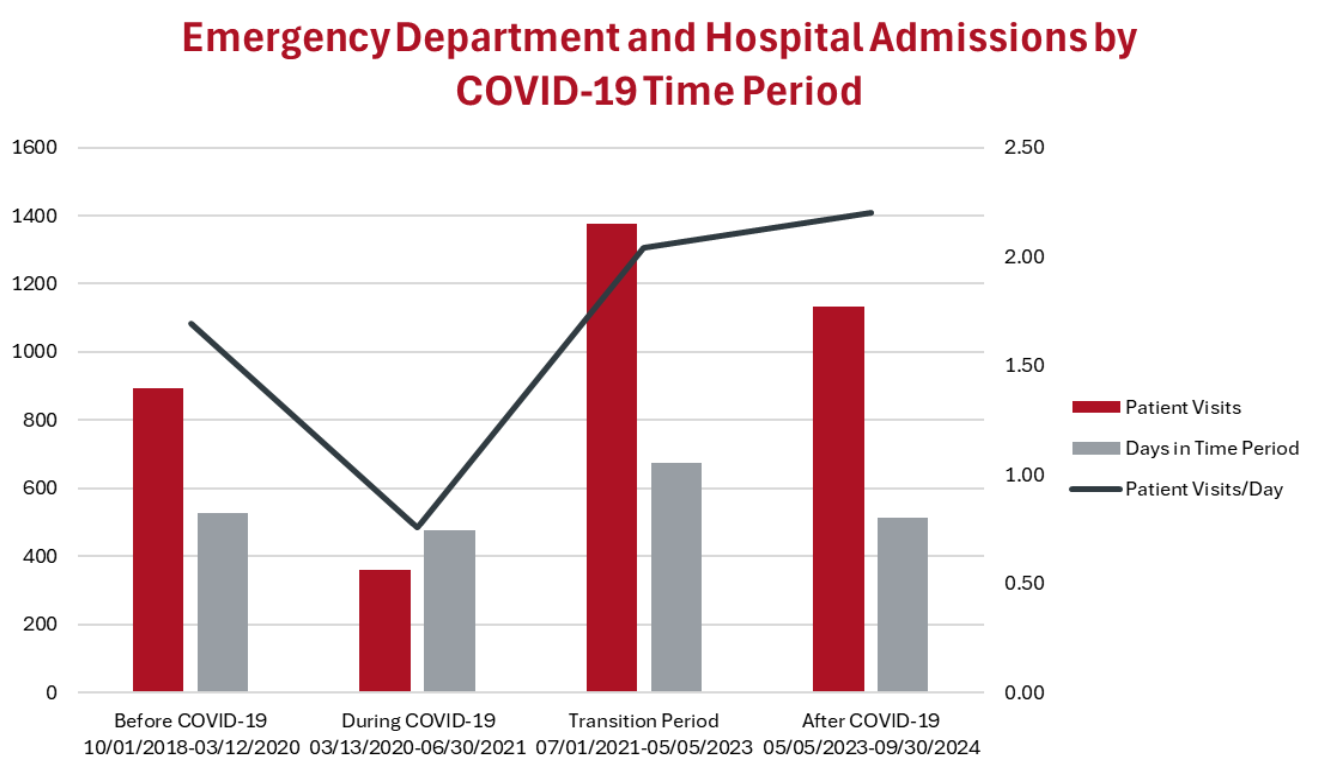
Background: Asthma affects over 25 million people in the United States, including an estimated 6.4 million children aged 0-18 years. It is the most common childhood chronic disease, and accounts for nearly 25% of hospital admissions and 800,000 emergency room visits annually. It has been established that hospital and emergency department asthma-related visits decreased dramatically during the COVID-19 pandemic. However, trends in emergency department visits and hospitalizations for asthma exacerbations following the COVID-19 pandemic are still emerging. Objective: This study examines asthma exacerbation trends in pediatric patients across four distinct periods of the COVID-19 pandemic: pre-pandemic, during the state of emergency when social distancing and mask mandates went into effect, during the transition period when Nebraska's governor declared the state of emergency over, and post-pandemic when the World Health Organization officially declared there was no longer a global health emergency. We evaluated how asthma exacerbations varied during each period. Design/Methods: A retrospective analysis was conducted using data from the Pediatric Asthma Registry of a Children's Hospital in a mid-sized metropolitan area in the Midwest, with a population of approximately 1 million. The study encompassed 3,763 visits from August 2018 to September 2024 with a primary or secondary asthma diagnosis, captured via ICD10 codes on emergency department visit, or hospital admission. Statistical tests include descriptive data, frequencies, and One-way ANOVA. Results: Asthma exacerbations significantly decreased from pre-pandemic during the COVID-19 state of emergency by 55% (p < 0.0001) but significantly increased from pre-pandemic rates during the transition by 21% (p < 0.0001) and post-pandemic by 30% (p < 0.0001) periods.
Conclusion(s): The increase in pediatric asthma visits after the COVID-19 state of emergency was lifted may be attributable to increased exposure to respiratory pathogens or allergens, reduced adherence to asthma therapy, decreased social distancing, or an increased wariness of healthcare systems post-pandemic. These results underscore the importance of consistent asthma education, proactive management strategies, and public health preparedness in mitigating exacerbations during and after widespread societal disruptions.
Emergency Department and Hospital Admissions by COVID-19 Time Period