197 - Health Department Personnel, School Staff, and Parent/Student Feedback on a Novel School-Based “Flu Vaccine Ambassador” Initiative
Saturday, April 25, 2026
3:30pm - 5:45pm ET
Publication Number: 2189.197
Robin Bender, University of Rochester School of Medicine and Dentistry, Rochester, NY, United States; John P. Cullen, University of Rochester School of Medicine and Dentistry, Rochester, NY, United States; Sharon G. Humiston, Immunize.org, Rochester, NY, United States; Jessica Fantanza, University of Rochester Medical Center, Rochester, NY, United States; Ann RB. Schrader, Golisano Children's Hospital at The University of Rochester Medical Center, Rochester, NY, United States; Holly Ann Russell, University of Rochester School of Medicine and Dentistry, Rochester, NY, United States; Peter Szilagyi, UCLA Pediatrics, Los Angeles, CA, United States; Cynthia M. Rand, Pediatrics, ROCHESTER, NY, United States
Sr Clinical Trials Project Manager University of Rochester School of Medicine and Dentistry Rochester, New York, United States
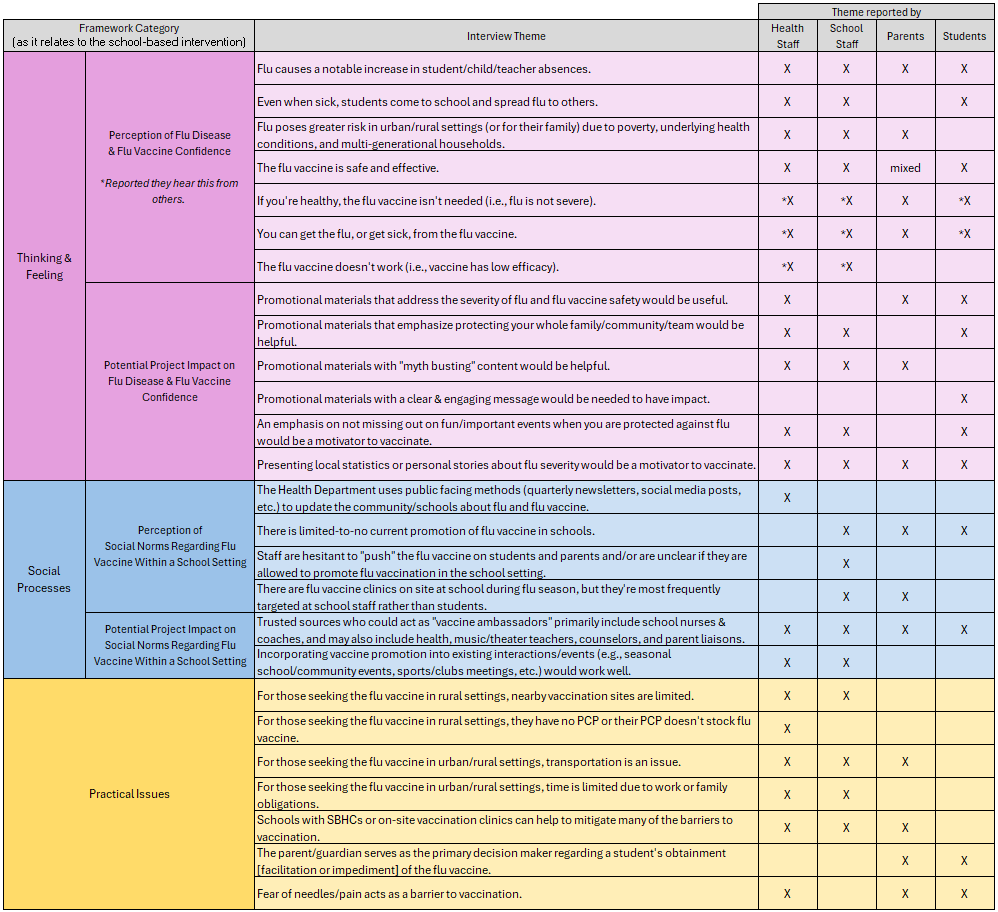
Background: Annually in the US, millions of children ages 5-17 develop seasonal influenza (flu) that requires medical care. Flu vaccination reduces the incidence of flu-related illnesses, but only 50% of 5-11 year-olds and 43% of 12-17 year-olds were vaccinated during the 2024-25 flu season. Flu vaccination recommendations from trusted school personnel may increase flu vaccination rates for this age group. Objective: For rural and urban school-aged students, (1) assess barriers to flu vaccination, (2) determine feasible methods of flu vaccination promotion within the school setting, and (3) evaluate which school personnel could act as flu vaccine ambassadors. Design/Methods: We performed ~30-minute interviews with individuals in the city of Rochester and 9 rural counties in Western NY, including staff from county-level health departments and schools, parents of school-aged children, and students. We also obtained feedback from a university-based Youth Advisory Board (YAB). Applying the "Behavioral & Social Drivers of Vaccination Framework," we asked about perceptions of flu disease and vaccination, current flu vaccine promotional efforts, efforts schools could implement, and vaccine access. Using rapid qualitative analysis, we systematically reviewed interview responses and examined resulting themes. Results: We interviewed 28 individuals across 8 counties and 10 school districts (Table 1) and spoke with an additional 15 YAB students in 9th-12th grade. Themes included: 1) flu illness significantly impacts student/staff absenteeism, 2) belief that nurses would play an important role in any school-based effort to increase rates 3) parents/students often doubt the flu vaccine's safety/effectiveness, and 4) there is currently a limited amount of flu vaccination promotion in the school setting. Many described opportunities for school nurses, coaches, health teachers, and others to act as vaccine ambassadors, and noted messaging promoting flu vaccination should focus on 'not missing out' (Table 2).
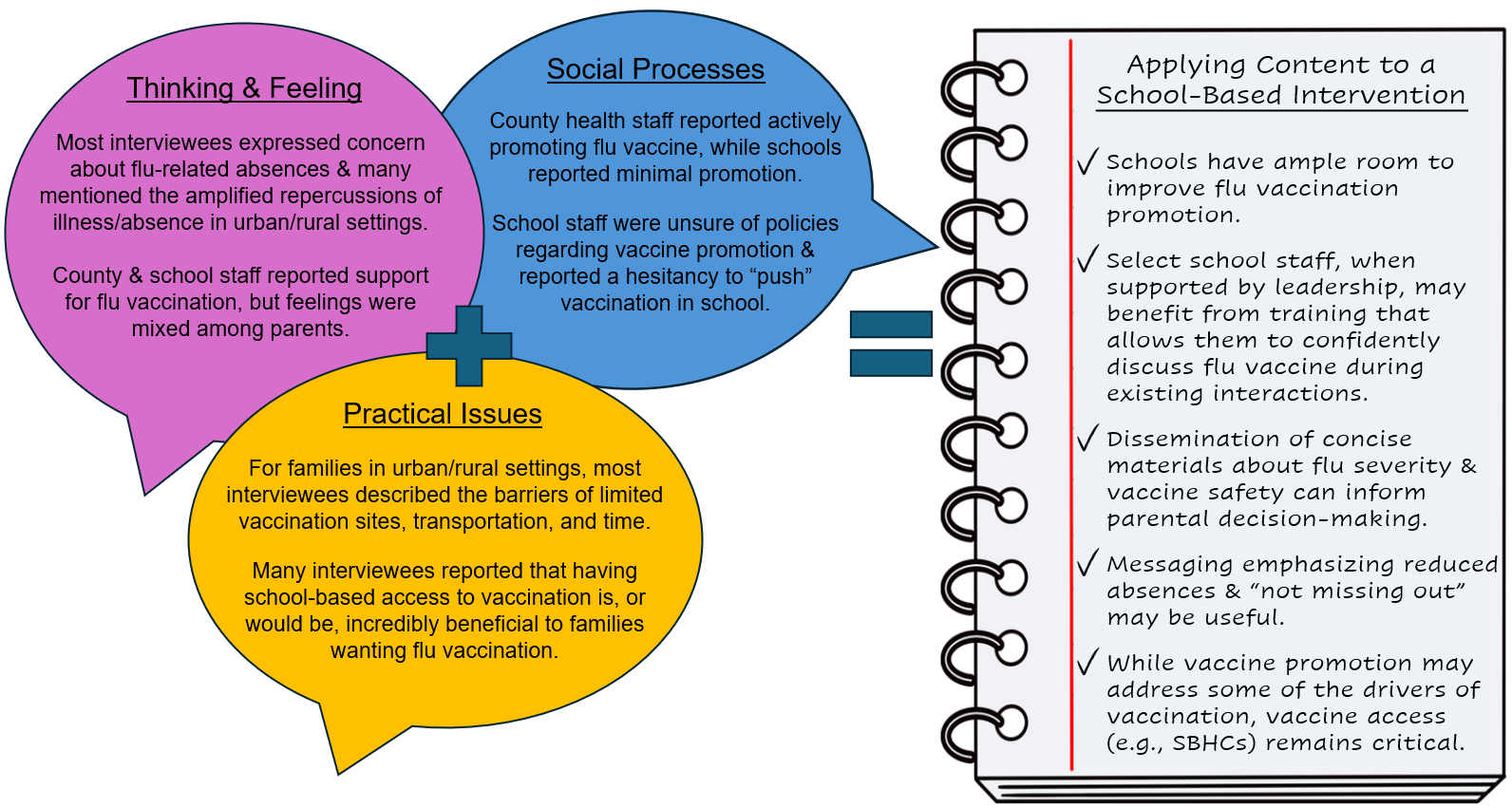
Conclusion(s): With the support of school superintendents and principals, school nurses and coaches may be able to promote flu vaccination. Strategies could include: distribution of engaging materials such as posters and email messages encouraging flu vaccination; focusing on 'not missing out' on preferred activities (e.g., sports, music events); and incorporating promotional efforts into pre-existing school routines such as medication drop-offs, pre-season sports meetings, holiday concerts, and monthly newsletters (Figure 1).









.jpg "Robin G. Bender, LMSW (she/her/hers) photo")
.png)