376 - Exploring the relationship between parental vaccine hesitancy and parent and child seasonal vaccine uptake: Sub-analysis of a pilot randomized control trial in Massachusetts
Saturday, April 25, 2026
3:30pm - 5:45pm ET
Publication Number: 2365.376
Grace W. Ryan, University of Massachusetts Chan Medical School, Worcester, MA, United States; Princilla Minkah, University of Massachusetts Medical School, Worcester, MA, United States; Francesca Troiani, UMass Chan Medical School, haverhill, MA, United States; Melissa Goulding, University of Massachusetts Medical School, Worcester, MA, United States; Stephenie Lemon, UMass Chan Medical School, Worcester, MA, United States
Assistant Professor University of Massachusetts Chan Medical School Worcester, Massachusetts, United States
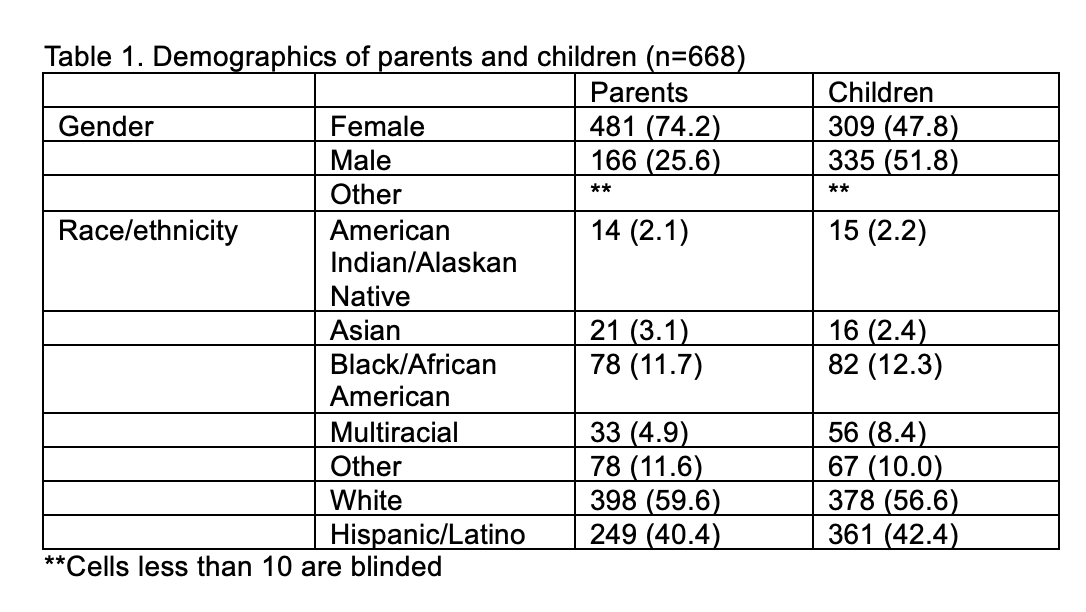
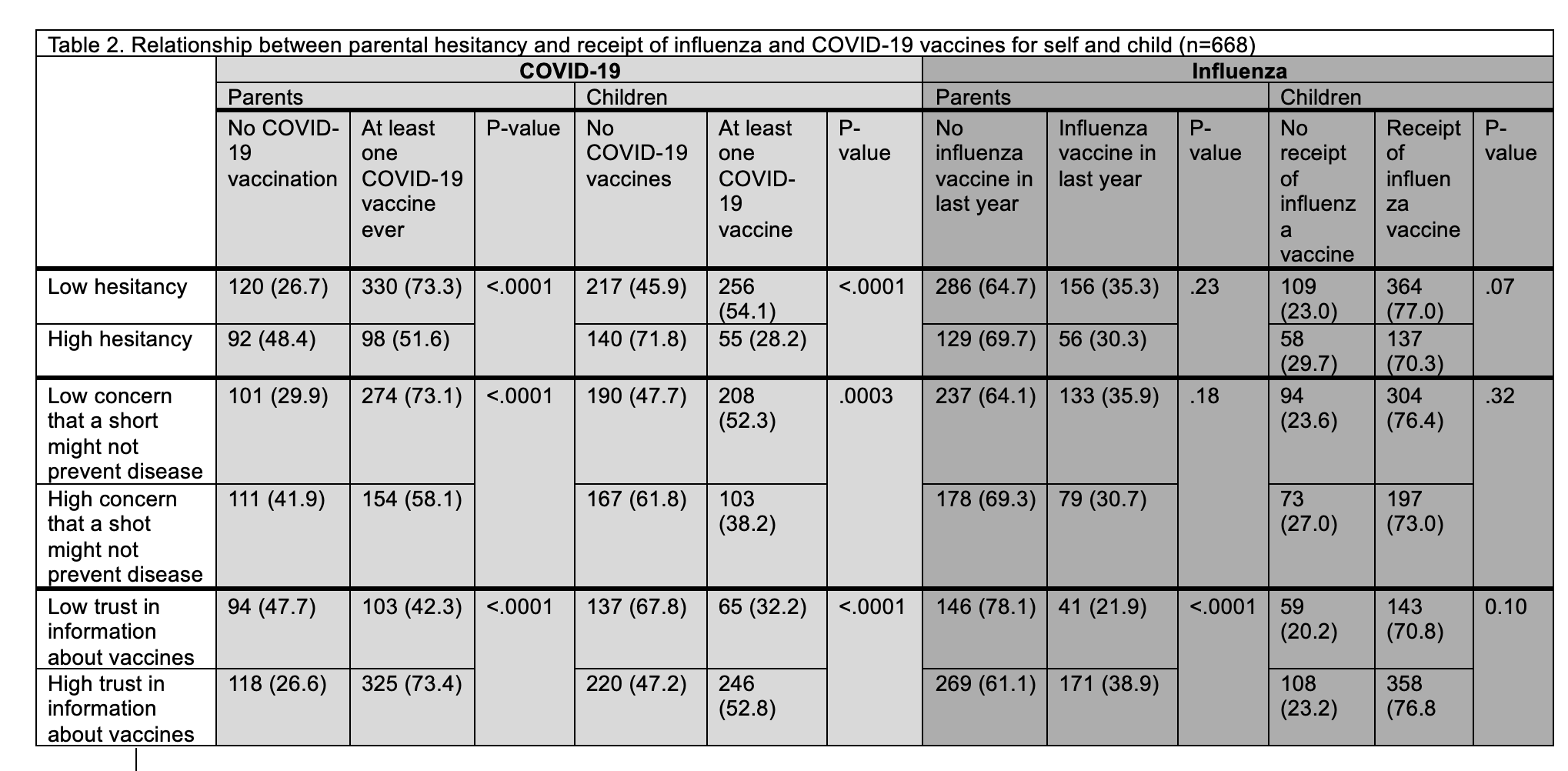
Background: Low vaccination rates contribute to excess and preventable morbidity and mortality in pediatric populations. Parental vaccination status is often a predictor of child vaccine status. However, there are few studies exploring concordance between relationships of vaccine status and vaccine perceptions for parents and children for seasonal vaccines. Objective: As part of a pilot cluster RCT to test a vaccine confidence intervention in pediatric settings, we collected information on both parental and child vaccination status for COVID-19 and influenza. Here, we conducted an exploratory sub-analysis of data for intervention and control groups to assess vaccine status and associated parental vaccine perceptions for parents and children. Design/Methods: We collected parent exit surveys as part of our trial that included demographics, vaccine perceptions (e.g., overall hesitancy, concerns about vaccines' effectiveness, and trust in information about vaccines), and vaccination status for COVID-19 and influenza for parents and children. We dichotomized vaccine perception variables to reflect negative vs. positive perceptions and we report frequencies, descriptive statistics chi-square results. Results: Of 668 parents, the majority identified as female (74.2%) and White (59.6%), with a large proportion identifying as Hispanic/Latino (40.4%). They reported similar racial/ethnic backgrounds for their children, and child gender was split almost evenly with 47.8% identifying as female and 51.8% as male. A significant association between perception variables and COVID-19 vaccination was observed for both parents and children. For example, parents with high hesitancy, high concern that a shot might not prevent disease, and low trust in information about vaccines had vaccinated themselves and their children at lower rates. However, this pattern did not hold true for influenza vaccination; in chi square tests, trust in information about vaccines was found to be associated only with parental receipt of influenza vaccination. No other perception variables were related to influenza vaccination for parents or children.
Conclusion(s): Identifying innovative strategies to address seasonal vaccine uptake is critical. Our results show that despite high levels of hesitancy, parents are willing to vaccinate themselves and their children for influenza, but negative vaccine perceptions could be driving lower COVID-19 vaccination rates. Because of these similarities, multilevel strategies to intervene on the parent to both increase their own and their children's vaccine uptake, should be explored.
Table 1. Demographics of parents and children (n=668)
Table 2. Relationship between parental hesitancy and receipt of influenza and COVID-19 vaccines for self and child (n=668)