330 - Caregiver Perspectives on School Asthma Management Post Exacerbation: A Qualitative Study
Saturday, April 25, 2026
3:30pm - 5:45pm ET
Publication Number: 2319.330
Adenike Animasaun, Children's National Health System, WASHINGTON, NY, United States; Shilpa J.. Patel, Children's National Hospital, Bethesda, MD, United States
Fellow Children's National Health System WASHINGTON, New York, United States
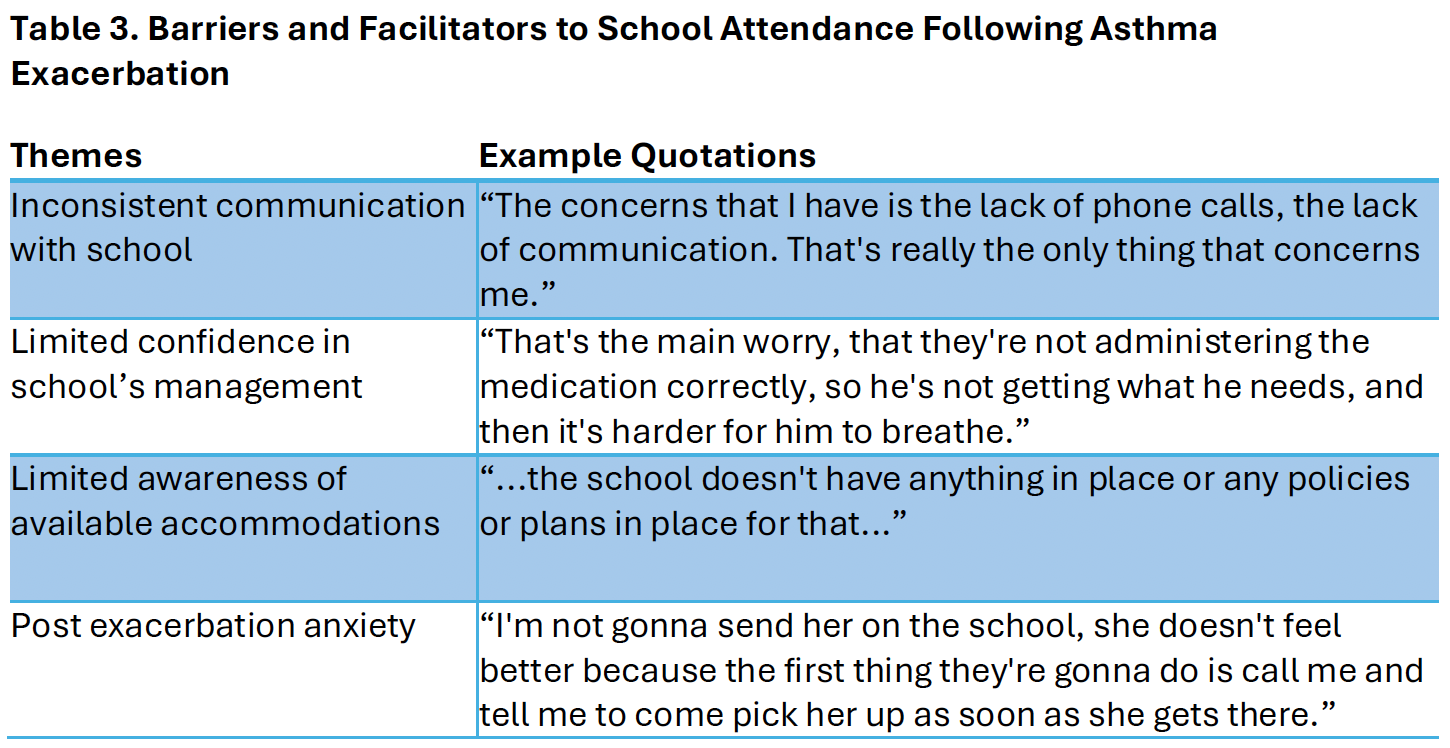
Background: Asthma is a leading cause of school absenteeism in the US, resulting in 14 million missed school days every year. Understanding caregiver perspectives on school asthma care may help to inform improvements in hospital discharge education and school-based asthma management practices Objective: To explore caregiver perspectives of acute asthma care in schools and identify facilitators and barriers to school attendance during mild exacerbations and following hospital-based treatment. Design/Methods: This qualitative study included a convenience sample of 22 caregivers of school-age children with high-risk asthma recruited from a community-based asthma program. Professional moderators conducted 30-60-minute semi-structured video interviews exploring barriers and facilitators of school-based asthma care. Transcripts underwent stepwise thematic content analysis guided by grounded theory. Two primary coders analyzed data, resolving discrepancies by consensus, with trustworthiness enhanced through investigator debriefings, iterative codebook development, and participant member-checking. Results: Caregivers most frequently identified the school nurse or teacher as the primary point of contact for asthma-related concerns but reported inconsistent communication with these personnel. Many expressed limited confidence in schools' ability to manage asthma and had limited awareness of available accommodations. Post-exacerbation anxiety commonly delayed school return, with children missing an average of 2-6 days per episode. Participants frequently requested clearer school policies, improved caregiver-school communication, and enhanced staff preparedness for asthma care.
Conclusion(s): Caregivers of children with asthma identified key barriers to effective school-based asthma management, including poor communication, lack of policy clarity, and limited caregiver confidence in school asthma care. Strengthening caregiver-school partnerships, standardizing communication, and integrating school-based considerations into hospital discharge planning may reduce absenteeism and improve continuity of asthma care. Future work will focus on understanding the perspectives of school personnel.
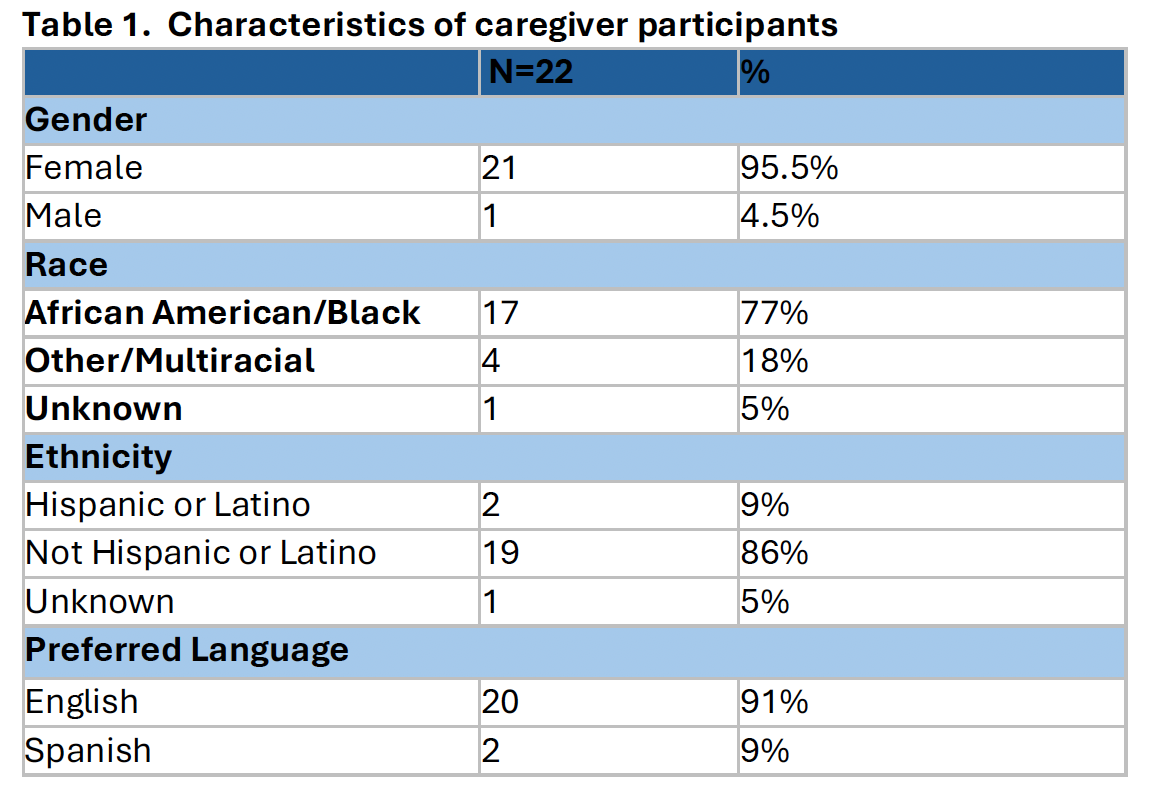
Table 1. Characteristics of caregiver participants
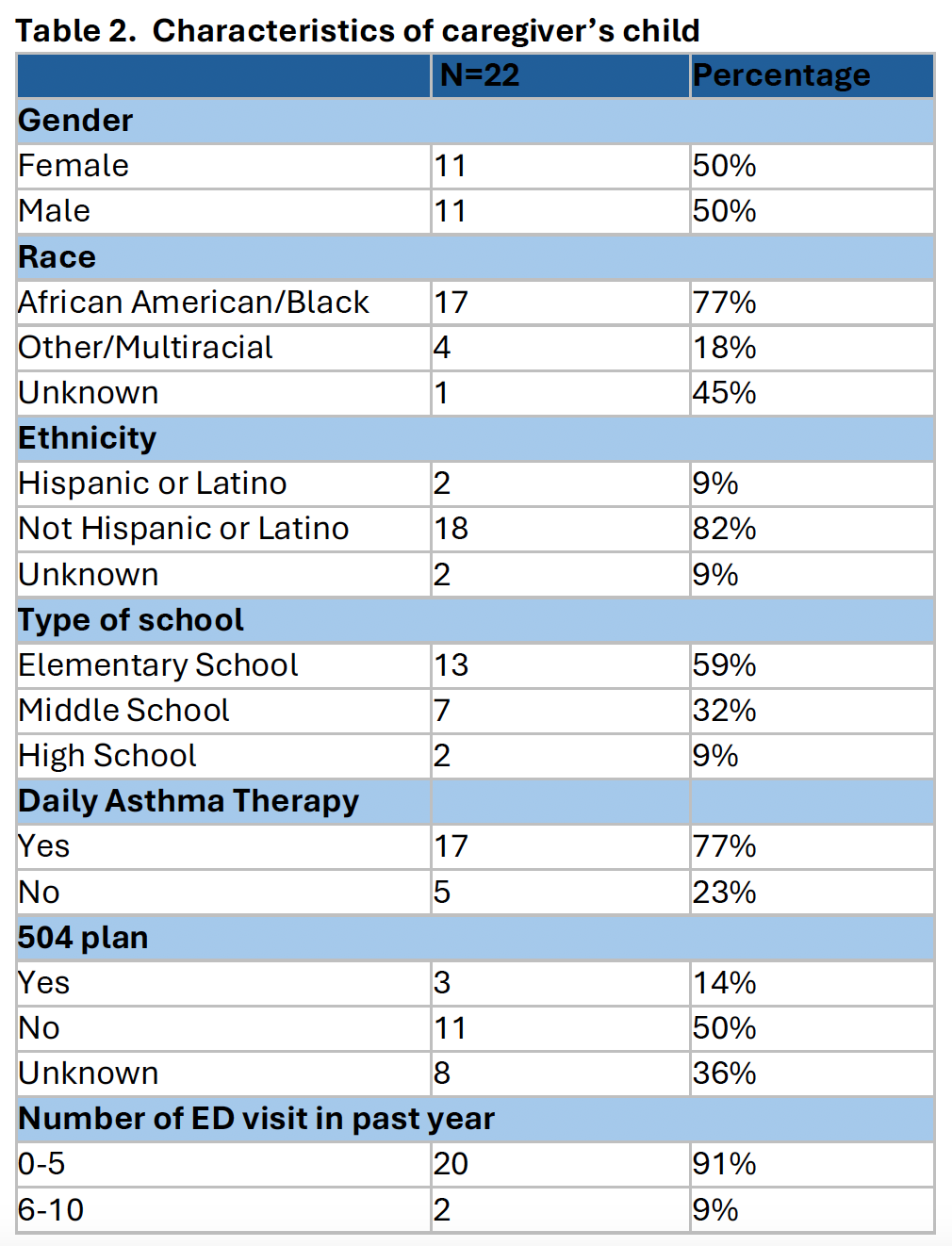
Table 2. Characteristics of caregiver's child
Table 3. Barriers and Facilitators to School Attendance Following Asthma Exacerbation