








Public Health & Prevention
Session: Public Health & Prevention 1

Kazuma Shinno, MD (he/him/his)
Resident
National Center for Child Health and Development
Setagaya-ku, Tokyo, Japan
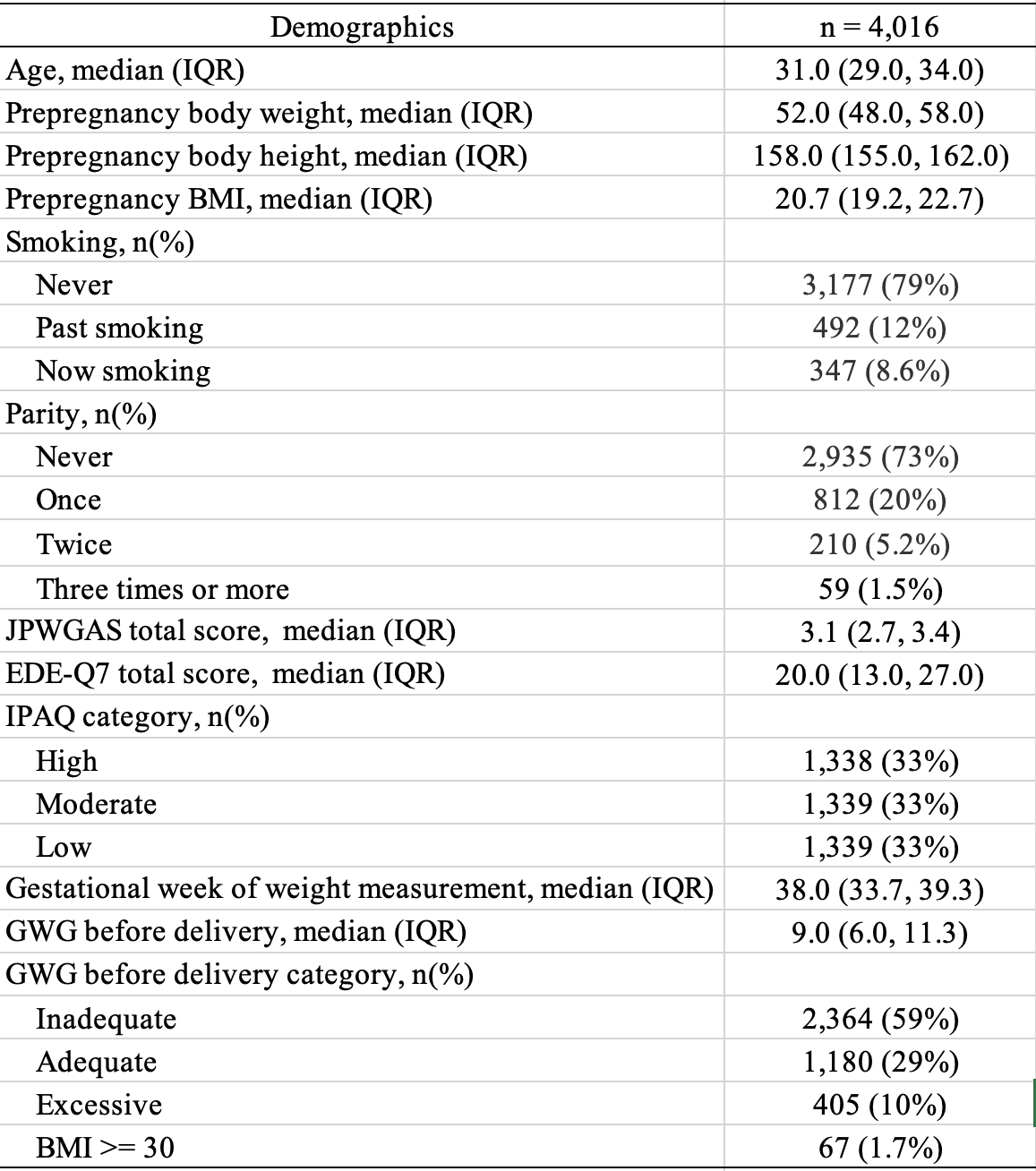 IQR: interquartile range; BMI: body mass index; J-PWGAS: Japanese version of the Pregnancy Weight Gain Attitude Scale; EDE-Q7: Eating Disorder Examination Questionnaire 7-item version; IPAQ: International Physical Activity Questionnaire; GWG: gestational weight gain
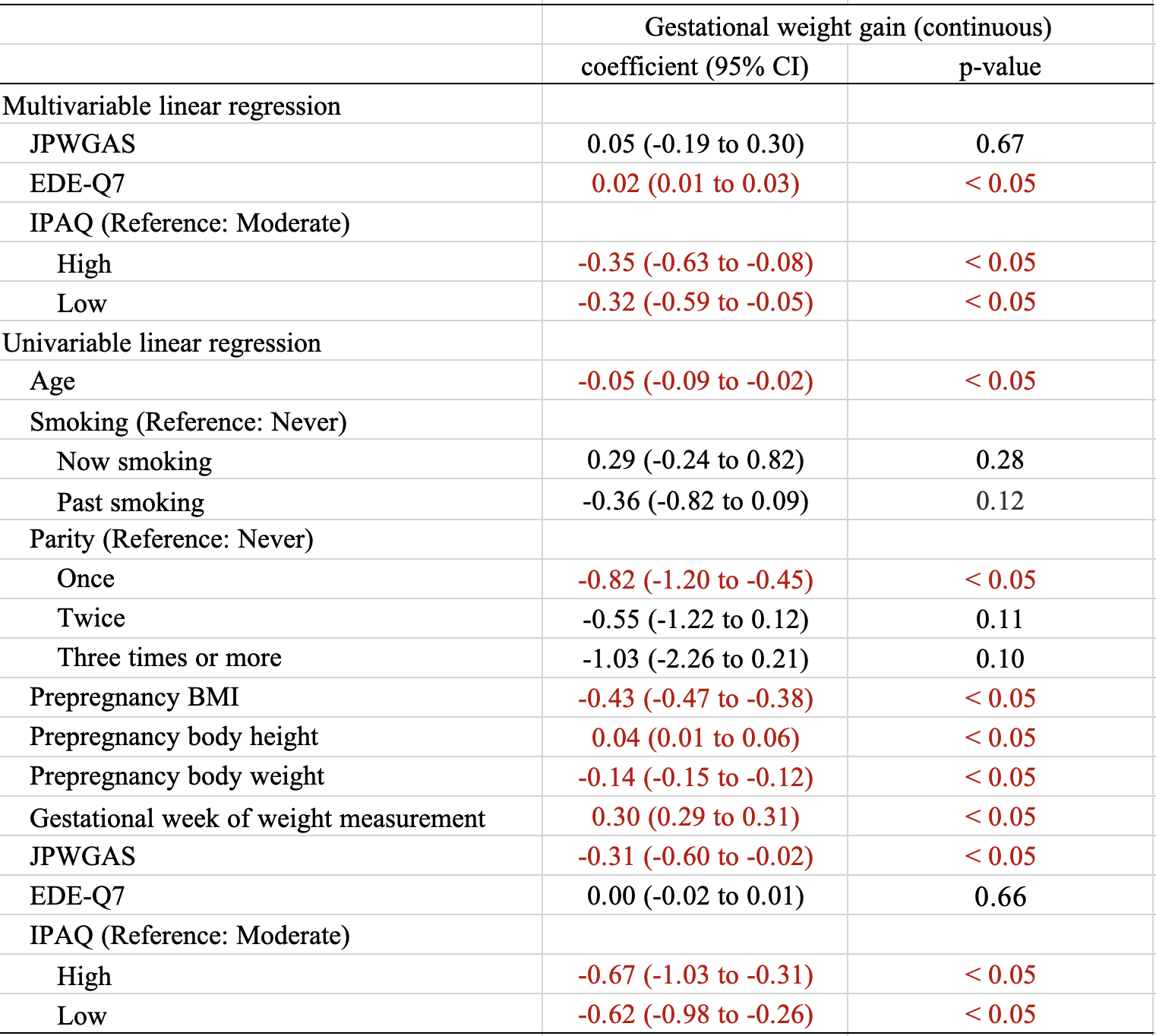 Multivariable analyses were adjusted for maternal age, parity, smoking, height, pre-pregnancy BMI, and gestational week at weight measurement. In the models for J-PWGAS and IPAQ, EDE-Q7 was additionally included as a covariate.
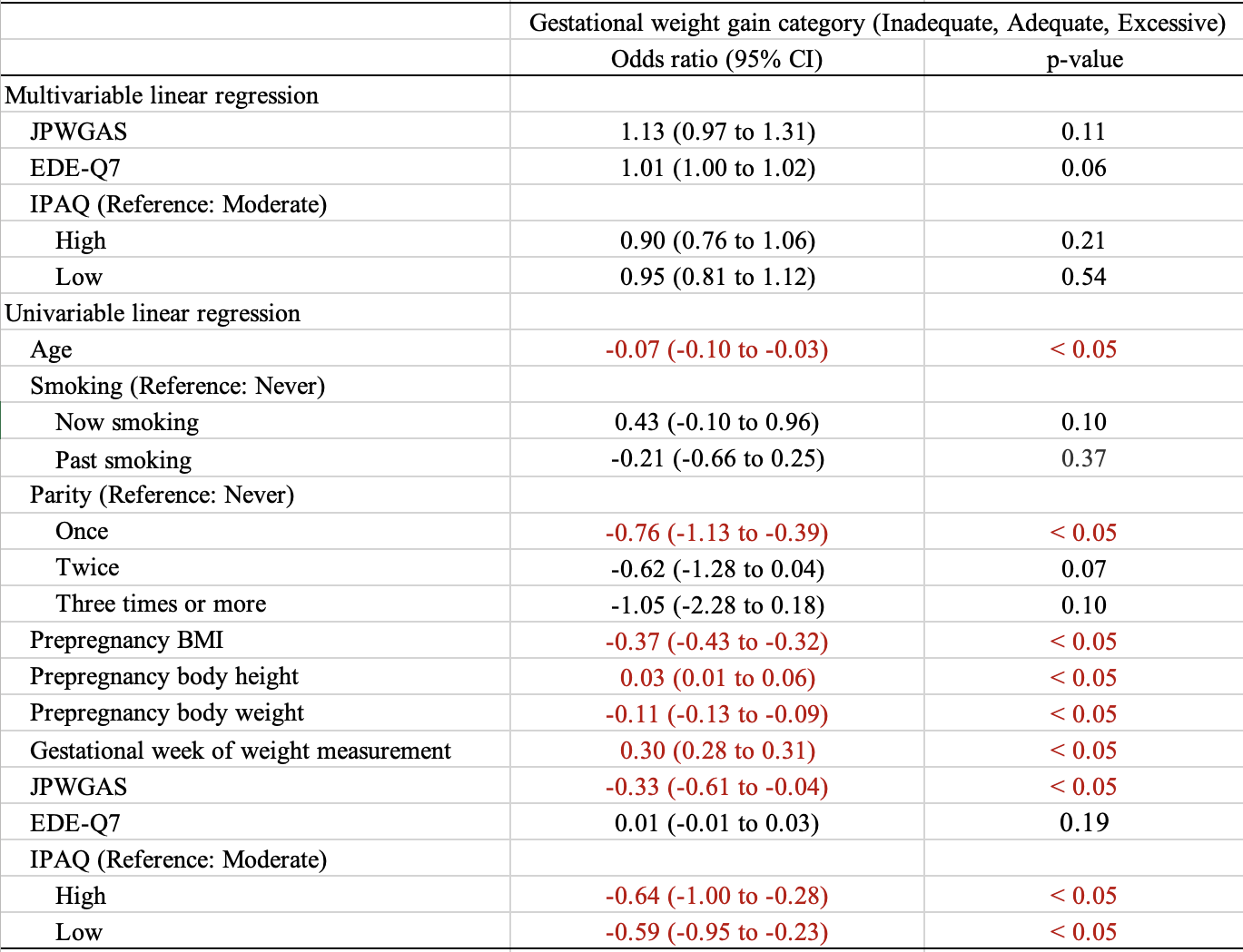 Multivariable analyses were adjusted for maternal age, parity, smoking, height, pre-pregnancy BMI, and gestational week at weight measurement. In the models for J-PWGAS and IPAQ, EDE-Q7 was additionally included as a covariate. Women with pre-pregnancy BMI >= 30 kg/m² were excluded. GWG was categorized as Inadequate (below), Adequate (within), or Excessive (above) according to pre-pregnancy BMI (kg/m²): 12-15 kg for BMI < 18.5, 10-13 kg for BMI 18.5-24.9, and 7-10 kg for BMI 25.0-29.9.