262 - School-Based Firearm Safety Education Programs for Children: A Scoping Review
Saturday, April 25, 2026
3:30pm - 5:45pm ET
Publication Number: 2252.262
Vivien K. Sun, Stanford University School of Medicine, Palo Alto, CA, United States; Helene Nepomuceno, Stanford University School of Medicine, Palo Alto, CA, United States; Hanh Nguyen, The Permanente Medical Group, Emeryville, CA, United States; Sowmya Kolluru, Creighton University School of Medicine, San Jose, CA, United States; Noor Zarrinnegar, University of California, Berkeley, Hillsborough, CA, United States; Enrique Herrera Castaneda, Stanford University, Stanford, CA, United States; Stephanie Chao, Stanford University School of Medicine, Stanford, CA, United States
Clinical Associate Professor Stanford University School of Medicine Stanford University School of Medicine Palo Alto, California, United States
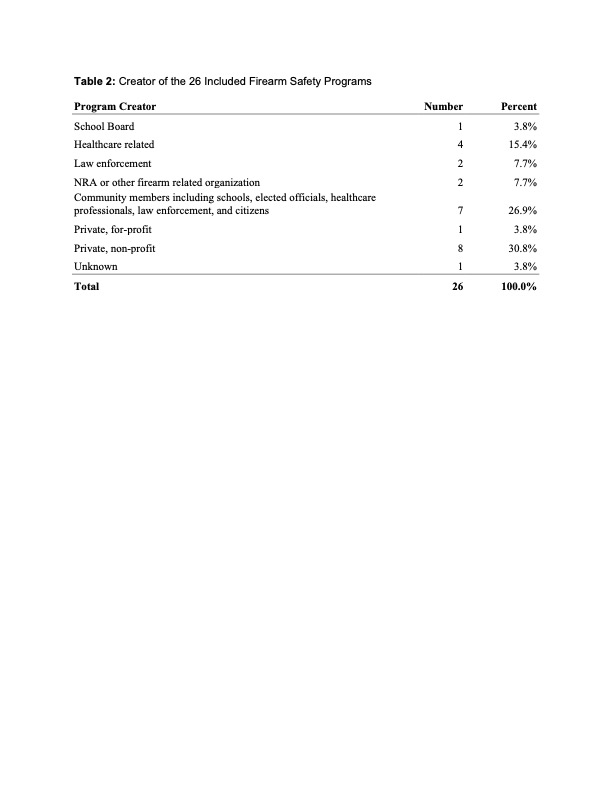
Background: Firearms are the leading cause of death among children in the US. Childhood education programs may be helpful for primary prevention of firearm injuries; however, there have been no large scale, peer-reviewed studies evaluating the effects of firearm safety curricula presented in school settings. Objective: To identify and characterize school-based K-12 firearm safety education programs in the US through a scoping review. Design/Methods: Databases and grey literature were searched in accordance with the predetermined inclusion criteria: educational programs that mention firearms, taught to a general audience of children at K-12 US schools (Figure 1). Titles and abstracts were screened to identify potentially relevant evaluation studies, which then underwent full-text screening. Other potentially relevant studies without evaluation studies underwent full text review to identify additional educational programs. Screening of titles, abstracts, full text, and references were conducted independently by two reviewers, with disagreements resolved by a third reviewer. Keyword searches were performed on Google Scholar and Google to identify additional educational programs not captured in the published literature. Data charting was completed by one reviewer and verified for accuracy by a second reviewer. Results: Of 2847 studies screened and 67 keyword searches, 26 programs met our inclusion criteria. 14 programs (54%) were developed by community groups such as schools, law enforcement, and healthcare. 8 programs were developed by non-profit organizations, 2 programs were developed by firearm interest groups, and 1 program was developed by a for-profit organization. 19 programs (70%) were developed before 2009, and of these, 13 programs were developed between 1980 and 1999. Most programs targeted elementary and middle school students, and only 9 of 26 (35%) included a high school audience. Curriculum content included topics directly related to firearms such as safe handling and use, storage, and consequences of firearm injuries and violence. Only 6 programs underwent an evaluation study, primarily based on pre- and post- survey evaluations, and results of these studies demonstrated limited program effectiveness.
Conclusion(s): Most school-based firearm safety educational programs for children lack an evidence-backed design and preliminary effectiveness data. Most programs were developed prior to 2009 and therefore do not account for the rise in pediatric firearm violence over the past decade. There remains a critical gap in evidence-based K-12 curricula on firearm safety.
Figure 1: PRISMA Diagram of Studies Included in Scoping Review
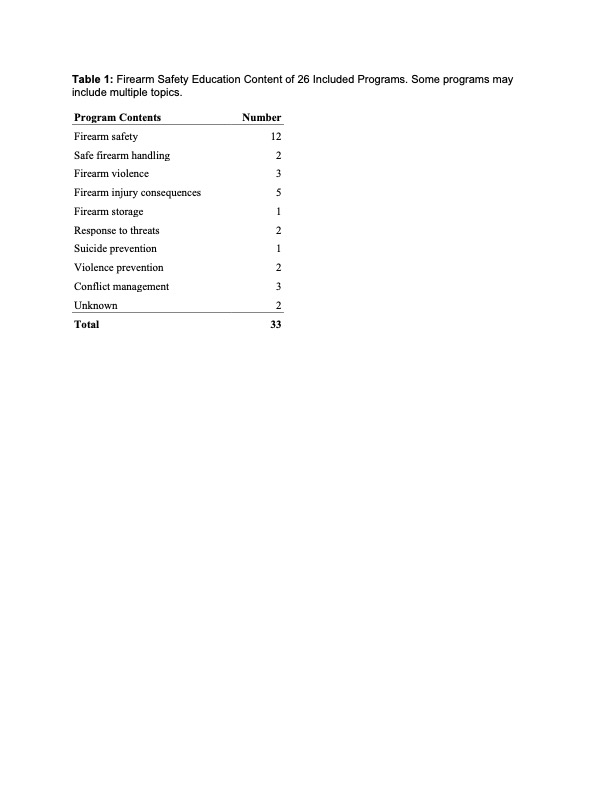
Table 1: Firearm safety education content of 26 included programs
Table 2: Creators of the 26 included firearm safety programs









.jpg)