575 - Development and Acceptability of a Parental Education Video to Wean Simple Nasal Cannula Oxygen for Hospitalized Children
Saturday, April 25, 2026
3:30pm - 5:45pm ET
Publication Number: 2560.575
Raymond Parlar-Chun, Baylor College of Medicine, Sugar Land, TX, United States; Rayhan Jhanji, Baylor College of Medicine, Houston, TX, United States; Brianna Barnett, Oklahoma State University, Fort Worth, TX, United States; Sherita J.. Love, Baylor College of Medicine, Houston, TX, United States; Marco Costilla, Texas Children's Hospital, Houston, TX, United States; Suzanne Iniguez, Texas Children's Hospital, Alvin, TX, United States; Brent Mothner, Baylor College of Medicine, Houston, TX, United States; Ricardo Quinonez, Baylor College of Medicine, Houston, TX, United States; Sampayo M. Esther, Baylor College of Medicine, Houston, TX, United States; Sowdhamini S. Wallace, Baylor College of Medicine, Houston, TX, United States
Associate Professor of Pediatrics Baylor College of Medicine Sugar Land, Texas, United States
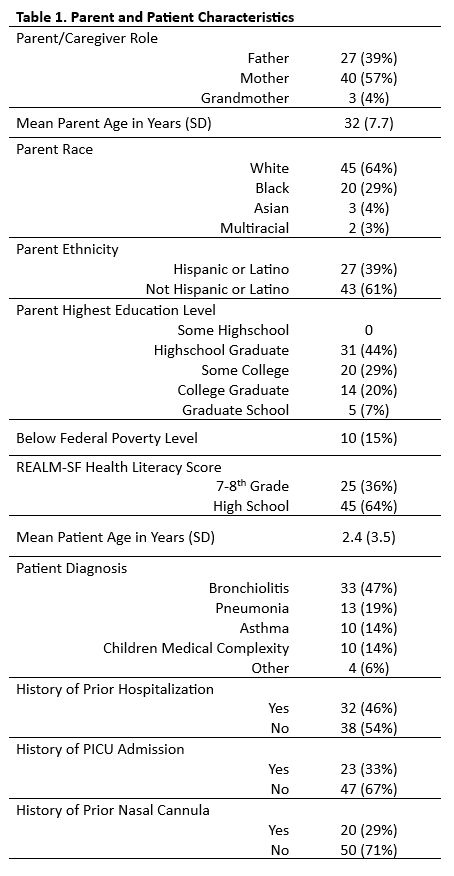
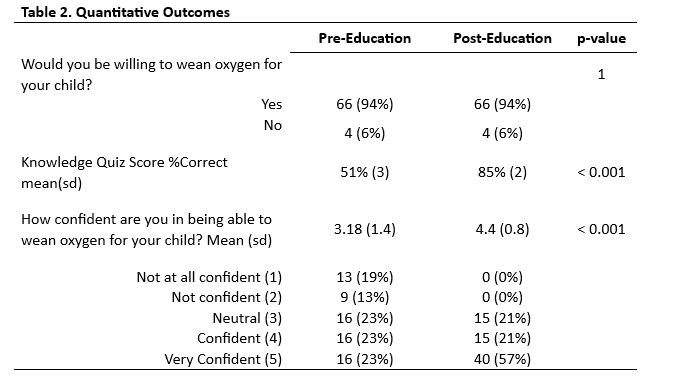
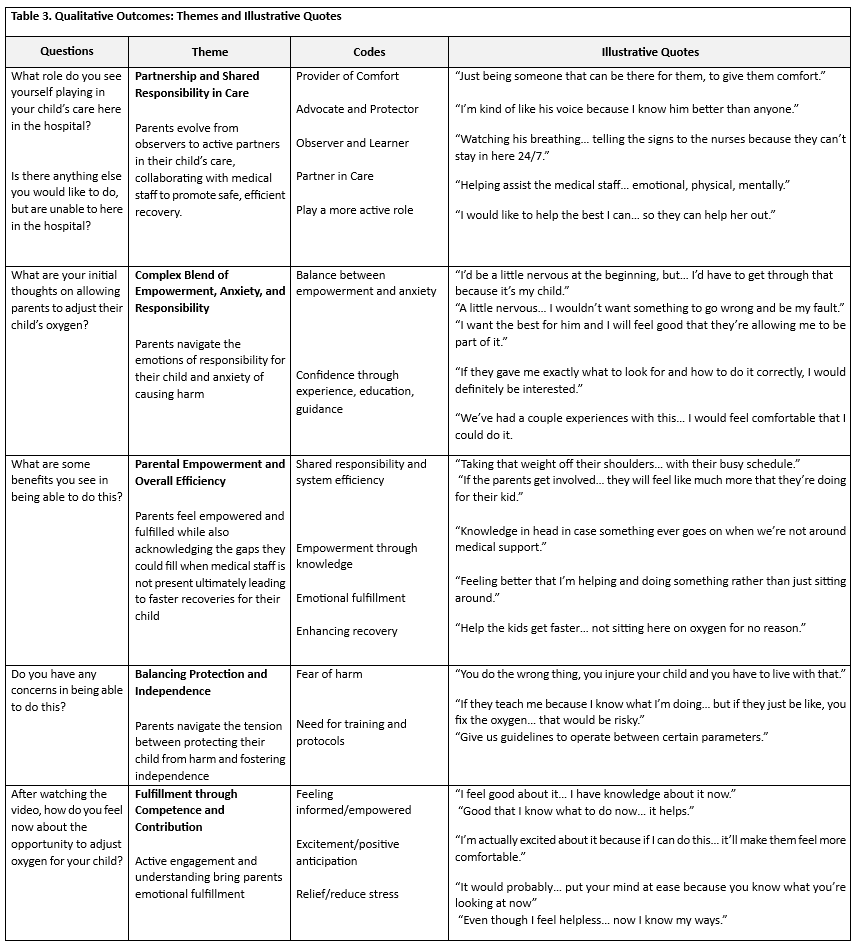
Background: Oxygen therapy is one of the most common interventions for hospitalized children. While this is traditionally managed by medical staff, parents could be an ideal partner in helping the team manage oxygen with the potential to improve patient satisfaction and patient outcomes such as length of stay. Objective: To develop an educational intervention for parents on how to wean nasal cannula oxygen and assess knowledge, confidence and parental perceptions of acceptability pre- and post-education Design/Methods: This was a convergent mixed-methods study to assess pre- and post-education outcomes in parents of children hospitalized needing oxygen from 1/2024 to 10/2025. An educational video was developed utilizing Social Cognitive learning theory and the Backwards Design framework. Content was refined through a review of the literature, healthcare content experts, and parent/family council feedback. The primary outcome was change in knowledge assessed by a 10 question pre/post education quiz. Changes in confidence and willingness to participate were also evaluated. Outcomes were analyzed with paired t-tests or McNemar's test as appropriate. Parental acceptability was measured pre-/post- via semi-structured interviews and conventional content analysis with inductive coding was performed on transcripts. Results: A diverse cohort of 70 parents participated in the education. (Table 1). In the pre-education phase, 66 (94%) parents stated overall willingness to wean oxygen for their child. Parents frequently described their role as an advocate and observer, but expressed desires to play a more active role in their child's care. After watching the video, significant gains in knowledge and confidence were seen. [Table 2] Parents believed the video taught them oxygen weaning "well" or "very well." Parents also reported feelings of empowerment and excitement in being able to contribute to care, but acknowledged a need for supervision and their partial competence. Initial thoughts on oxygen weaning included some anxiety with the lack of knowledge and concern for harming their child, but this concern was balanced with a motivation to learn and contribute to their child's well-being. (Table 3)
Conclusion(s): Even prior to education, the vast majority of parents are willing to wean oxygen for their children and express desire to partner with the team. Education resulted in significant knowledge gains, increased parent confidence, and a feeling of parental empowerment albeit with some residual anxiety. Future research should assess optimal implementation strategies to further boost parental confidence and alleviate anxiety.