223 - Evaluating the Impacts of an mHealth Screening Tool on Rural Family COVID-19 Testing
Saturday, April 25, 2026
3:30pm - 5:45pm ET
Publication Number: 2215.223
Miranda C. Judah, University of Nebraska Medical Center, Omaha, NE, United States; Jonathan Figliomeni, University of Nebraska College of Medicine, Omaha, NE, United States; Russell J. McCulloh, University of Nebraska Medical Center, Omaha, NE, United States; Gleb Haynatzki, UNMC, Omaha, NE, United States; M. Jana Broadhurst, University of Nebraska Medical Center, Omaha, NE, United States; Ellen Kerns, University of Nebraska Medical Center, Omaha, NE, United States
Research Data Navigator University of Nebraska Medical Center Omaha, Nebraska, United States
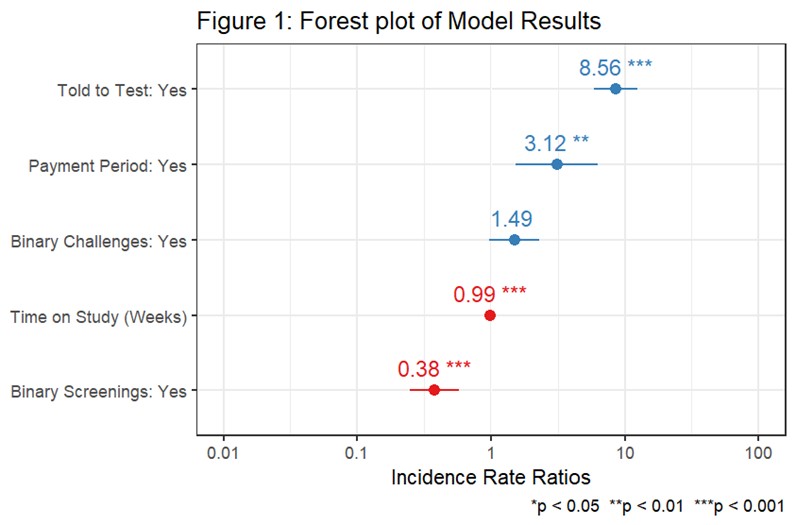
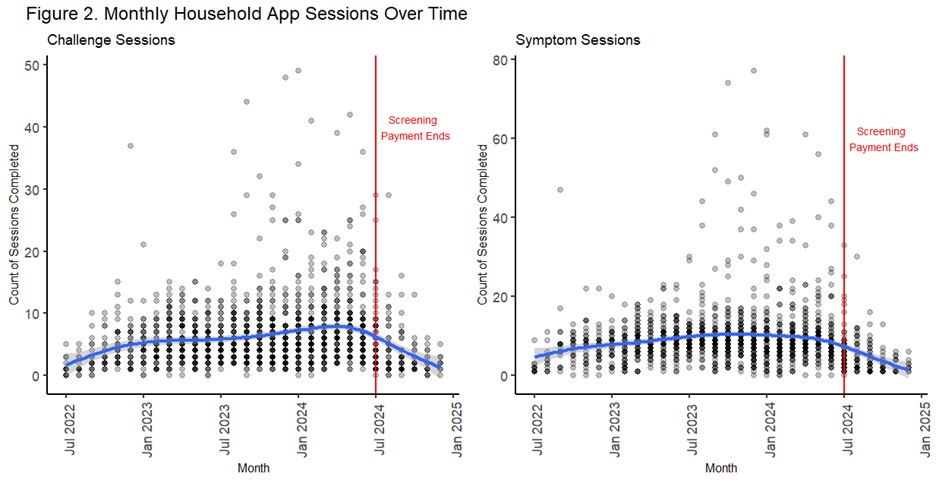
Background: The Covid-19 pandemic imposed unprecedented strain on public health systems, as health departments struggled to effectively communicate up to date information amid ever-changing guidelines. Individuals in rural communities who spoke languages other than English were particularly hard to reach. Our team developed an mHealth-facilitated public health response program that provided up to date Covid-19 screening guidelines and assisted in connecting individuals with community resources. The program, entitled Mobile Health for Migrant Health (M4M), achieved overall robust engagement, but important questions remain regarding the outcomes associated with program engagement. Objective: We aimed to evaluate the relationship between engagement with the M4M program and COVID-19 testing. Design/Methods: Participants accessed two kinds of modules in the M4M app. One asked questions about household symptoms and exposure history and would recommend isolation or antigen testing in line with the Centers for Disease Control and Prevention guidelines (symptom session). The second session type was a socioeconomic challenges tracker. Engagement was quantified by the number of times each module was completed per month. Generalized linear mixed models were used to analyze the effects of program engagement on COVID-19 testing. The primary outcome was monthly COVID-19 test reports. Explanatory variables included high symptom session use (5+/month), high challenge sessions use (3+/month), app recommendation to test, household time on study, and study remuneration period (the study remunerated for completing at least 4 symptom screenings and 2 challenges trackers per month until the last 6 months of the study). Results: A total of 99 households participated in M4M (Table 1). All explanatory variables included in the model were statistically significant except high interaction with challenge sessions (Figure 1). A household being told to test (IRR 8.6, 95% CI: 5.9, 12.5) and a household being remunerated for session completion (IRR 3.1, 95% CI: 1.5, 6.3) had the largest impact on testing. High symptom screener use was associated with decreased COVID-19 testing (IRR 0.38). Interaction with the app remained steady until renumeration for session completion ended in July of 2024 (Figure 2).
Conclusion(s): High engagement with the app did not result in higher COVID-19 testing, but these results do indicate high compliance with CDC guidelines as the app recommending a household test for COVID-19 had the largest incidence effect on COVID-19 testing.
Table 1. Demographics and engagement measures for the M4M Cohort
Figure 1. Forest plot of Model Results
Figure 2. Monthly Household App Sessions Over Time