230 - Pediatric Specialists as Policy Advocates: Evaluating a Model for Engagement in Health Advocacy and Regulatory Policy
Saturday, April 25, 2026
3:30pm - 5:45pm ET
Publication Number: 2221.230
Emily Trieu, Stanford University School of Medicine, Milpitas, CA, United States; Dyuthy Ramachandran, Stanford University School of Medicine, Cupertino, CA, United States; Guadalupe Castaneda Martinez, Stanford University School of Medicine, Vallejo, CA, United States; Wendy Liang, Stanford University School of Medicine, San Francisco, CA, United States; Julia Rickenbacher-Zhou, Stanford University School of Medicine, Stanford, CA, United States; Sydney S. Dougan, Stanford University School of Medicine, Palo Alto, CA, United States; Anisha Patel, Lucile Packard Children's Hospital Stanford, Palo Alto, CA, United States; Janine S.. Bruce, Stanford University, Stanford, CA, United States; Bridgette Y. Han, Stanford University School of Medicine, Stanford, CA, United States; lisa chamberlain, Stanford University School of Medicine, Stanford, CA, United States
Program Coordinator Stanford University School of Medicine San Francisco, California, United States
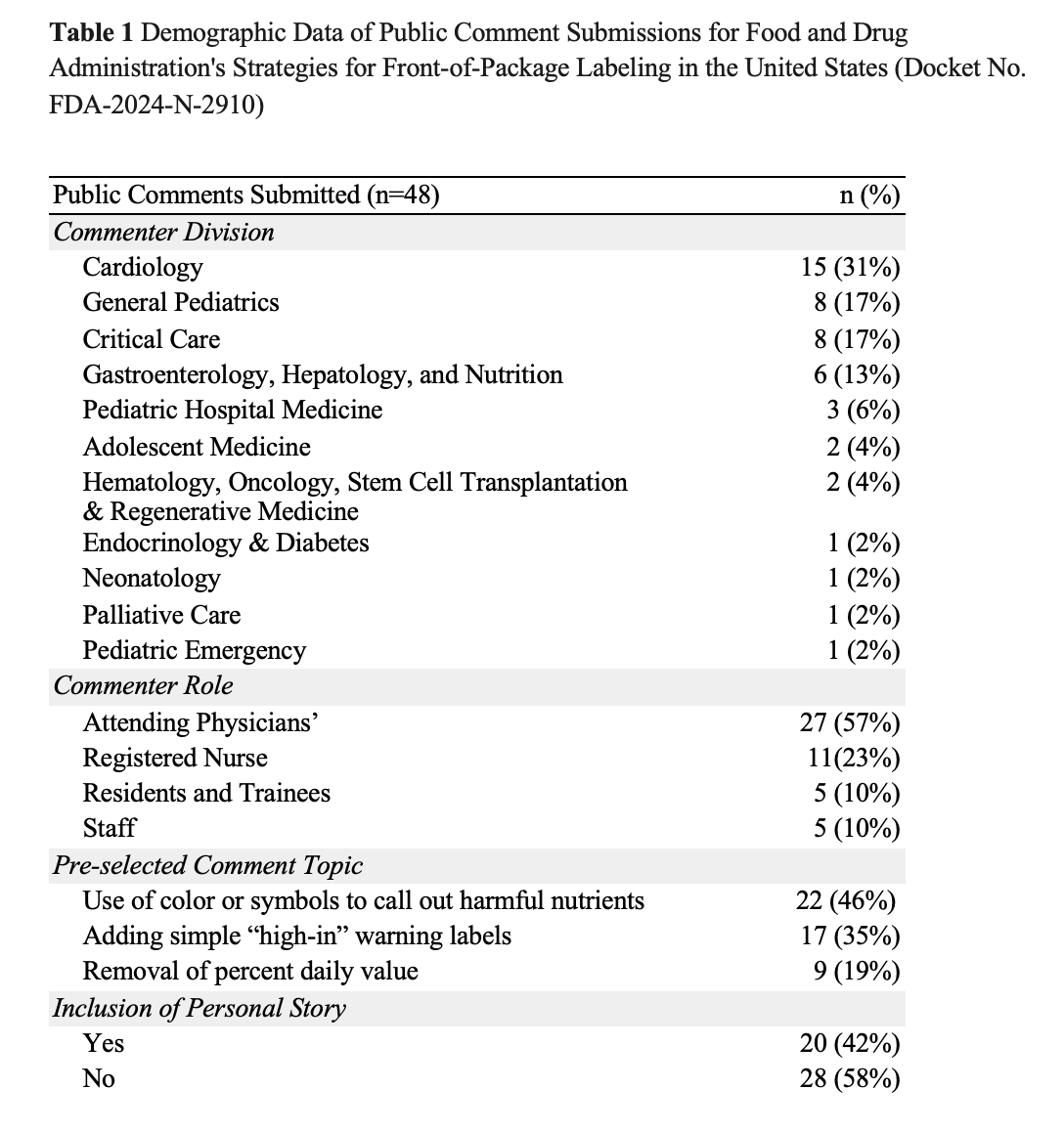
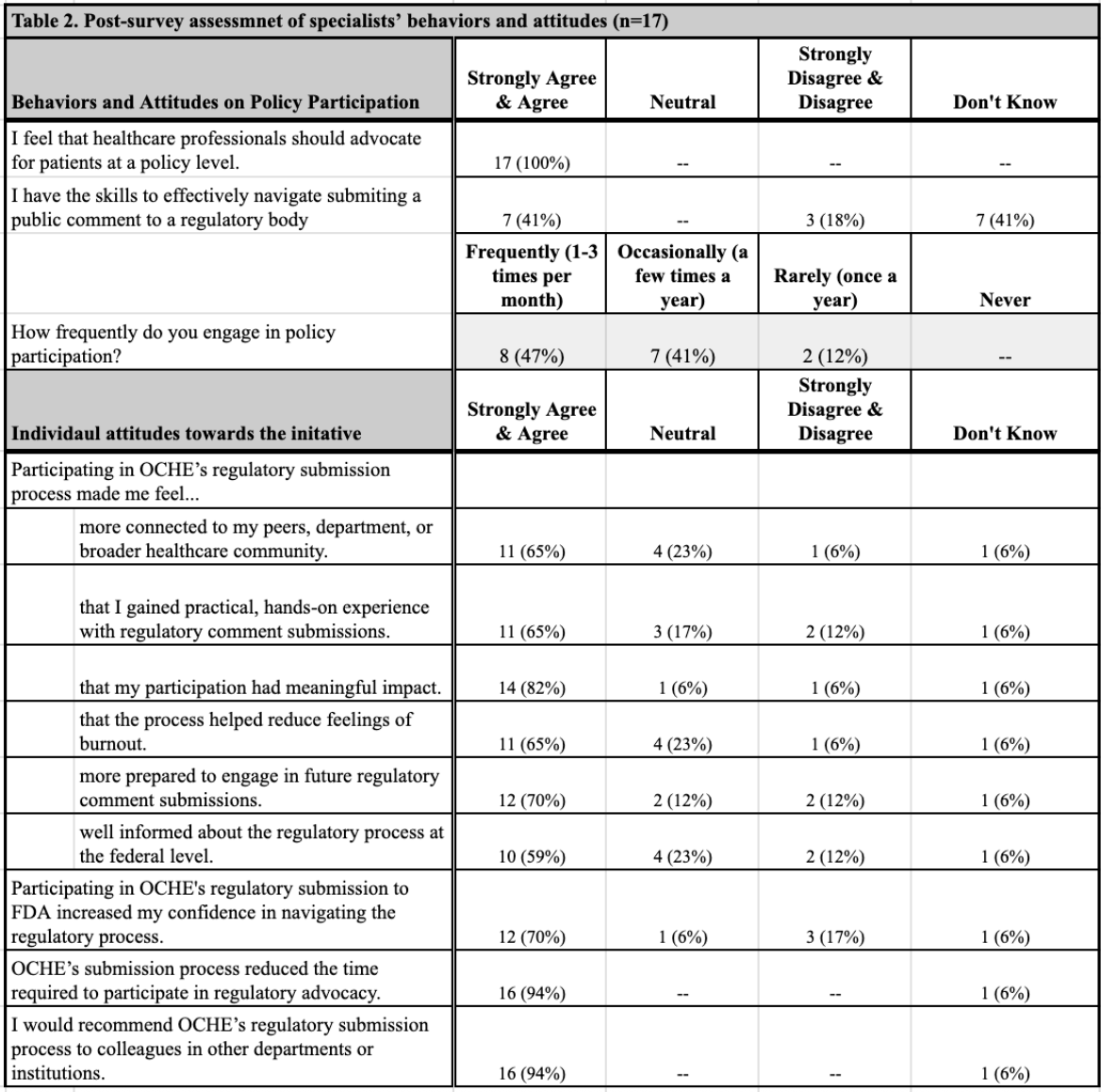
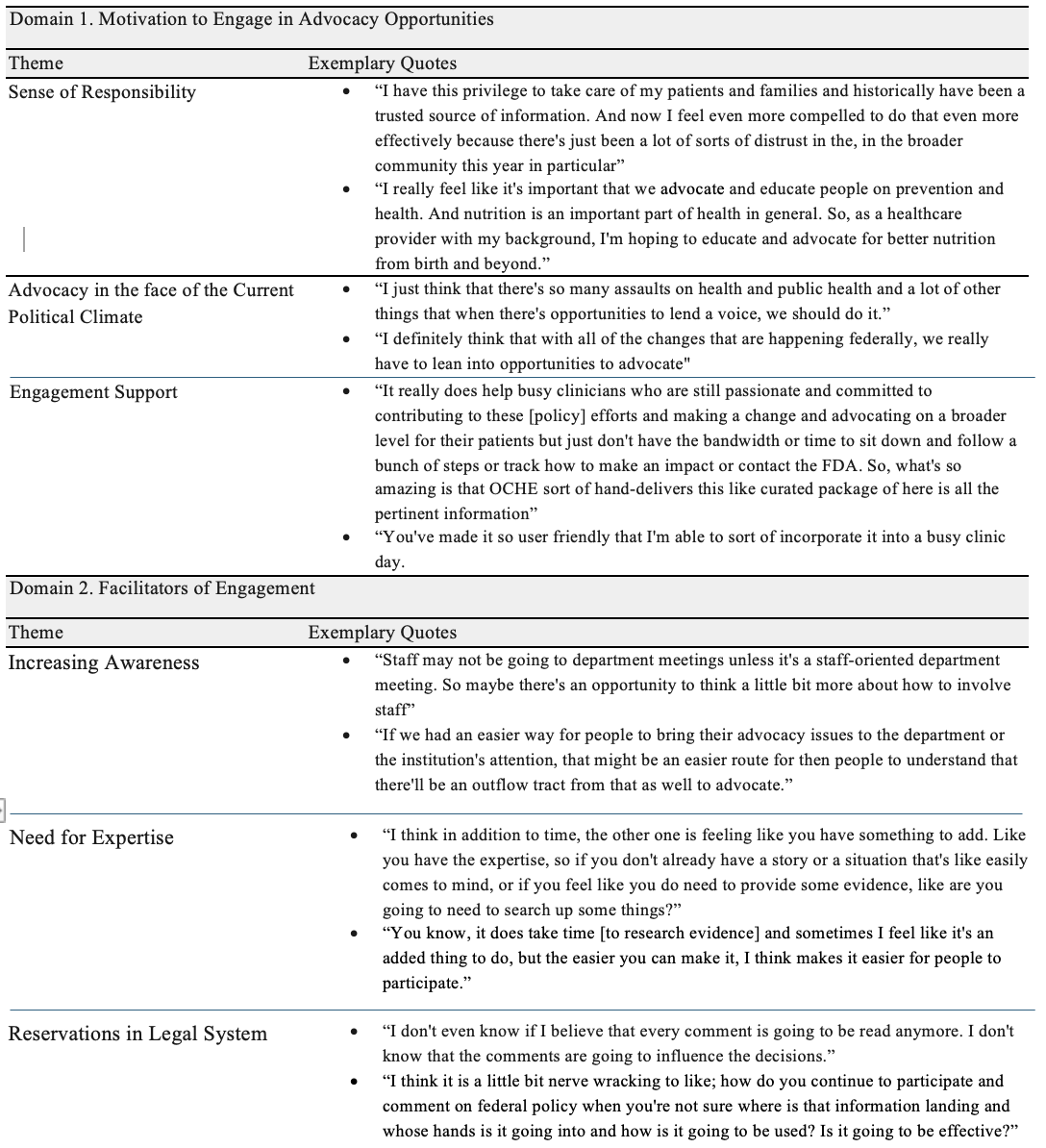
Background: A pilot demonstrated a feasible model for engaging pediatric specialists in the regulatory process to address upstream drivers of child health inequities. The Food and Drug Administration (FDA) solicited public comments on a proposed rule "Food Labeling: Front-of-Package Nutrition Information" (Jan-July 2025). The call for comments presented specialists the opportunity to advocate by sharing their unique perspectives on pediatric health. Objective: Examine pediatric specialists' perspectives on engaging in regulatory advocacy. Design/Methods: The Office of Child Health Equity (OCHE) at Stanford partnered with hospital government relations, nutrition experts, and policy organizations to facilitate specialists' (faculty, nurses, trainees, staff) participation in the FDA's public comment period for package labeling (April-July 2025). Specialists chose one of three pre-selected strategies and included optional evidence/personal experience via a streamlined submissions process. Post-submission, participants were invited to complete a survey and an interview to assess behaviors and attitudes related to policy participation and gather perspectives on their engagement with the process. Interview transcripts were coded and analyzed using a team-based thematic approach. Results: Pediatric specialists (n=48) submitted public comments addressing the pre-selected labeling strategies: (1) using color or symbols to highlight harmful nutrients (n=22), (2) adding simple "high-in" warning labels (n=17), and (3) removing the percent daily value (n=9, Table 1). Of the 48 who submitted comments, 17 completed the post-survey and reported a positive professional impact and described the submission process as easy to use (Table 2). Findings suggest an opportunity to pair the streamlined model with brief regulatory education, as few reported limited understanding due to its simplified structure. Qualitatively, participants (n=4) noted feeling responsible for engaging in advocacy, while sharing lack of awareness of advocacy opportunities as a barrier to participation (Table 3).
Conclusion(s): The evaluation of the replicable model demonstrates that a structured process can meaningfully support busy pediatric specialists in regulatory advocacy. Building on the prior pilot that an automated process promotes engagement in the regulatory process, this study highlights end-users' perspectives on what worked and how the process can be improved. The findings mark the value of structured advocacy pathways to empower specialists, reduce participation burden, and strengthen pediatric voices within federal regulatory processes.
Demographic Data of Public Comment Submissions for Food and Drug Administration's Strategies for Front-of-Package Labeling in the United States (Docket No. FDA-2024-N-2910)
Post-survey Assessment of Specialists' Behaviors and Attitudes (n=17)